Deutsche Bank’s Crypto Custody Service Goes Live for Paying Clients
Deutsche Bank says its digital asset custody service is live for paying clients. The launch moves a planned institutional service into operation, though the bank has not disclosed its scale.
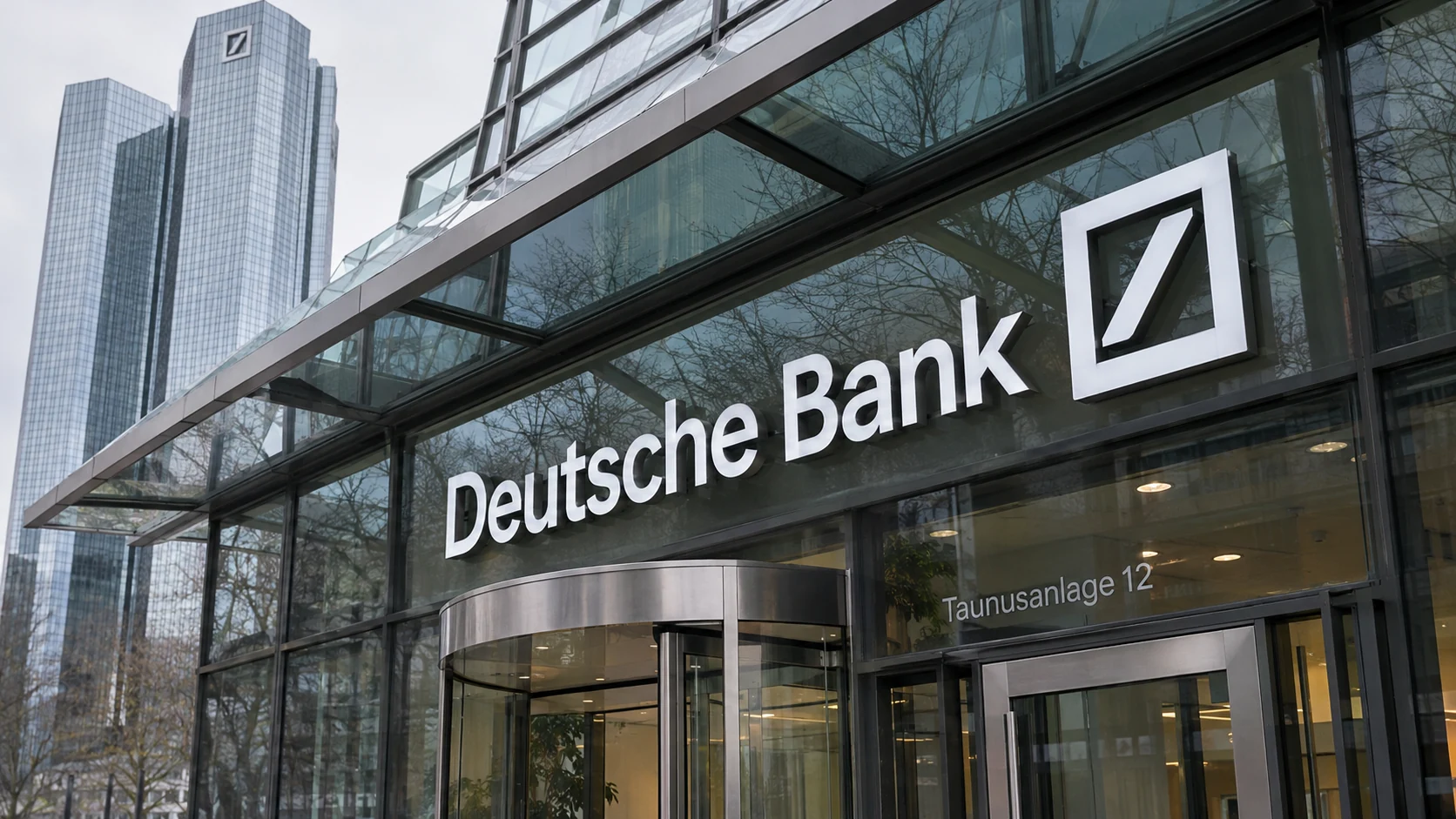
Deutsche Bank’s digital asset custody service is live for paying clients, Reuters reported on Wednesday, marking the move from an announced plan to an operating service for the German lender. The business is aimed at institutional and corporate customers seeking a bank-managed way to safeguard digital assets.
The bank had said in September that the planned European service would support assets including Bitcoin and Ether, with selected stablecoins and electronic money tokens also on its initial list. Reuters reported the service had gone live but did not give a client count, assets under custody or revenue figure. The launch therefore establishes that paying clients are using the service, not the scale of demand.
The development matters because holding a digital asset requires control of private keys, the credentials used to authorize transfers. Large financial institutions may prefer to obtain that service from a regulated provider rather than build the security, approval and recovery systems themselves. They still need to assess the contractual protections and risks of the particular arrangement.
## What the bank said it planned to offer
In its September announcement, Deutsche Bank said it would manage digital wallets and private keys on clients’ behalf and allow selected assets to be safeguarded and transferred. Its stated initial asset list included Bitcoin, Ether, USDC, EURC and EURAU. The bank said the range could change with customer demand, product approvals, risk management and regulatory requirements.
That earlier announcement was conditional on completing the applicable regulatory timeline. Wednesday’s Reuters report supplies the new development: the service is operating for paying clients. The original asset list remains useful context, but the launch report did not independently detail every asset or customer arrangement in use on Wednesday.
The bank identified customers of its corporate and investment banking businesses as the initial audience, including companies, asset managers, hedge funds, custodians and brokers. It said onboarding would be subject to its own criteria and due diligence. This is an institutional service; the announcement did not describe a general retail offering.
## Custody is different from trading
A custodian’s central role is to protect and administer assets or the credentials needed to move them. It does not follow that every custody client can trade every token, borrow against it or settle securities transactions on the same platform. Deutsche Bank’s earlier product description focused on safekeeping and transfers; tokenized financial instruments were part of its roadmap.
The distinction matters for assessing revenue. A custody contract may generate service fees, but Wednesday’s report did not disclose prices, volumes, margins or a financial target. A wider trading or settlement business would require additional services and, depending on the activity, its own permissions and controls. Investors cannot infer the eventual size of that business from the fact that custody has launched.
TTN’s report on BitGo’s institutional financing and derivatives expansion illustrates another way firms are extending beyond safekeeping. The products are different, and their credit, counterparty and operating risks should not be treated as identical.
## Security controls and their limits
Deutsche Bank’s September release described hardware-based key protection, separated responsibilities, approvals involving more than one person, distinct warm and cold storage environments and backup arrangements. The bank also said selected external providers would supply some technical components. These are controls the bank says it has designed into the service, not an independent guarantee against loss.
Warm storage is generally connected to systems that support transfers, while cold storage is kept offline. Each approach involves trade-offs between accessibility and exposure. Institutions also need clear procedures for authorization, recovery, incident reporting and the handling of assets if a provider or another participant fails.
The bank warned in its earlier disclosure that digital assets involve risks including volatility, fraud and cyber incidents, and that crypto-assets do not receive deposit-guarantee protection comparable to eligible bank deposits. Custody addresses the safekeeping of keys and assets under an agreed arrangement; it does not eliminate changes in the market value of Bitcoin or the risks associated with a stablecoin issuer.
## A broader bank infrastructure push
Deutsche Bank also entered a memorandum of understanding with Deutsche Asset Management, formerly known as DWS, to explore commercial and technical collaboration in digital assets, Reuters reported. A memorandum records an intention to explore cooperation; it is not a completed product launch or a disclosed revenue agreement. The bank has also told Reuters it wants to expand its offering into Asia.
Other banks are testing different uses of digital assets. TTN recently covered PNC and Coinbase’s USDC payments pilot, which concerns selected corporate payments rather than the same custody product. Such projects show banks exploring several parts of the market, but a pilot or custody launch does not establish broad customer adoption.
The next useful measures would be the number and type of customers, assets held, fees and the countries in which the service is available. For now, Deutsche Bank has crossed the operational threshold reported by Reuters. Whether the service becomes a material business remains a question for later disclosures.
Sources (3)
For informational purposes. This article is not investment advice.