India's Nifty Surges as Oil Prices Slide and Nasdaq Enters Correction
India's benchmark shares outperformed US technology stocks as falling oil prices eased pressure on importers and markets faced a fresh inflation test.
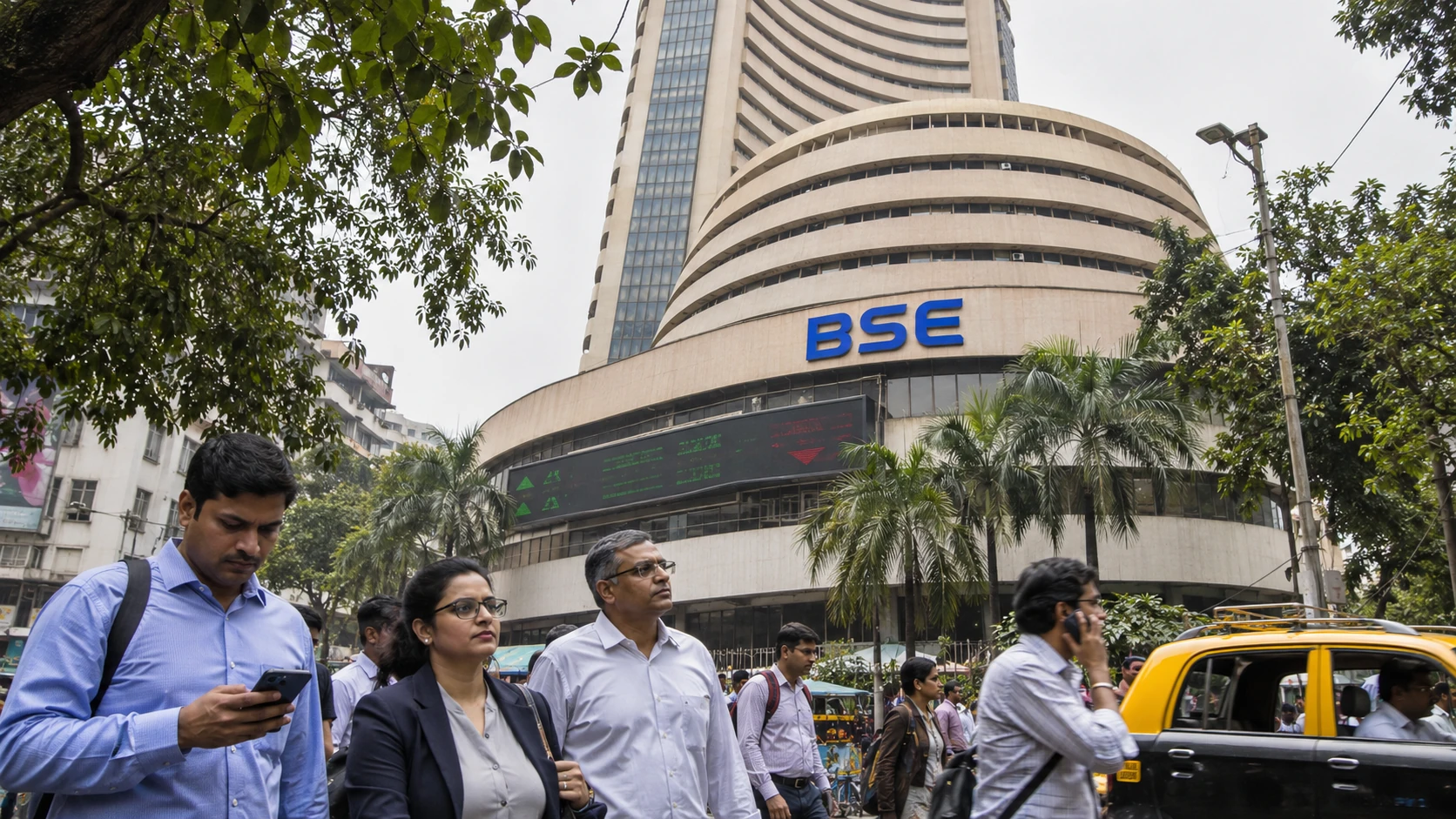
Global markets moved in different directions last week. India’s Nifty 50 rose 8.58% to 25,030.35 in five sessions, while Brent crude posted a double-digit weekly decline. In the United States, the Nasdaq Composite fell about 3.4% and the S&P 500 about 2.7%, according to market reports published over the weekend.
The effect of changing oil prices on inflation and trade balances is particularly relevant to import-dependent economies such as India. Our recent Wall Street weekly review covers the American selloff; this article focuses on why India moved in the opposite direction.
The U.S. week in numbers
For the week ended November 6, the Dow Jones Industrial Average fell 0.94% and the Russell 2000 fell 2.05%, according to the weekly review. The Nasdaq's worst day was Thursday, November 5, when it fell 5.52%, its sharpest drop since April 2025, while the S&P 500 fell 4.36%. The same source says the Nasdaq is nearly 12% below its October peak, which meets the usual definition of a correction of 10% or more.
Friday's jobs report added a second force. Employers added 165,000 jobs in October against about 65,000 expected, and the unemployment rate fell to 4.1% from 4.2%, with August and September revised up by a combined 84,000, according to the review. The market-implied probability of a December Federal Reserve rate hike rose to about 78% from 70%. Other sources placed it at about 80%.
Oil: the sharpest weekly drop since 2020
Crude prices drove the divergence. Reuters reported Brent settled at $98.32 on November 6 and was headed for a weekly loss of roughly 17%. Futures contracts and calculation windows vary among reports; the comparable conclusion is a historically large weekly decline, not a single universal percentage. WTI settled at $90.83 on Friday, according to Reuters; both benchmarks recovered modestly in the final session.
Hopes of a deal between the United States and Iran helped push prices lower, according to CNBC as cited earlier by FinanceFeeds, though oil tanker attacks in the Middle East kept supply concerns alive, the weekly review noted.
India: strongest week in almost six years
Indian markets rose in all five sessions. The Nifty 50 gained 1,977 points, or 8.5%, to close at 25,030 on Friday, and the Sensex gained 6,568 points, or 8.8%, to 81,028, according to Upstox. The Nifty Bank index rose 8.04% to 59,086. Midcap and smallcap indexes also rose, by 5.8% and 3.7% in Upstox's measure, though they trailed the large caps.
Sector moves reflected cheaper energy and returning foreign money. Capital markets stocks rose 10.7%, financial services 10.4%, realty 10.1%, consumer durables 10.0%, oil and gas 9.5% and autos 9.4%. HDFC Bank gained 13.8% and ICICI Bank gained 12.4%. The 10-year government bond yield fell 22 basis points to 7.19%, and the rupee strengthened to 94.48 per dollar on November 5.
The Nifty close of 25,030.35 was recorded directly by the National Stock Exchange on November 6. Its official session data show a 2.01% rise on Friday alone, distinct from the approximately 8.6% rise across the full trading week. That separation matters because a weekly comparison uses the preceding Friday’s close, while the daily change uses Thursday’s close. The run was concentrated in large, liquid companies, so stronger benchmark performance does not mean every stock participated. Currency and capital-flow effects can alter the investment return that foreign investors receive when gains are translated back into dollars.
What the data shows about inflation expectations
The week ahead opens with inflation. U.S. October CPI is due Tuesday at 8:30 a.m. Eastern time. Upstox cited expectations for headline prices to rise 0.3% from September, after 0.6% a month earlier, and for core prices to rise 0.2%, after 0.3%, which would leave annual rates near 3.7% and 2.5%. ING, in a separate calendar summary, expects both headline and core to rise 0.3%. Forecasts differ, and the consensus may shift before the release. U.S. producer prices follow on Friday, with forecasts of 0.4% for the headline and 0.3% for core.
India also faces its October inflation report in the coming week. Upstox described forecasts near the upper edge of the Reserve Bank of India’s tolerance band; actual figures were not yet available at publication time. A reading at the upper tolerance band would complicate the outlook for Indian interest rates. Lower oil prices could ease that pressure over time, though the October survey period largely predates this week's decline.
Market calendar notes
Indian exchanges hold a special Muhurat trading session on Sunday, November 8, as part of Diwali, and markets are closed Tuesday, November 10, for Diwali-Balipratipada. In the United States, CoreWeave will discuss third-quarter results on Tuesday, while major technology companies have more earnings ahead.
What to watch
The first question is whether the lower oil-price level persists as US–Iran diplomacy and shipping risks evolve. The second is whether the U.S. CPI report supports or weakens market expectations for a possible December rate hike. The third is whether the Nasdaq holds Friday's partial rebound, which recovered only a small part of Thursday's loss.
Limits of the data
The weekly review and the Upstox summary are secondary sources, and several figures differ between them, including the precise oil-contract comparison and the consensus CPI forecast. Weekly returns depend on the start and end points used. Index levels and probabilities will change when markets reopen.