Siemens Energy’s Record Year Shows How AI Data Centers Are Reshaping Power Demand
Siemens Energy's revenue rose 15.5% to €44.2 billion and its backlog hit €164 billion. Data centers are one demand driver, but its new targets remain forecasts.
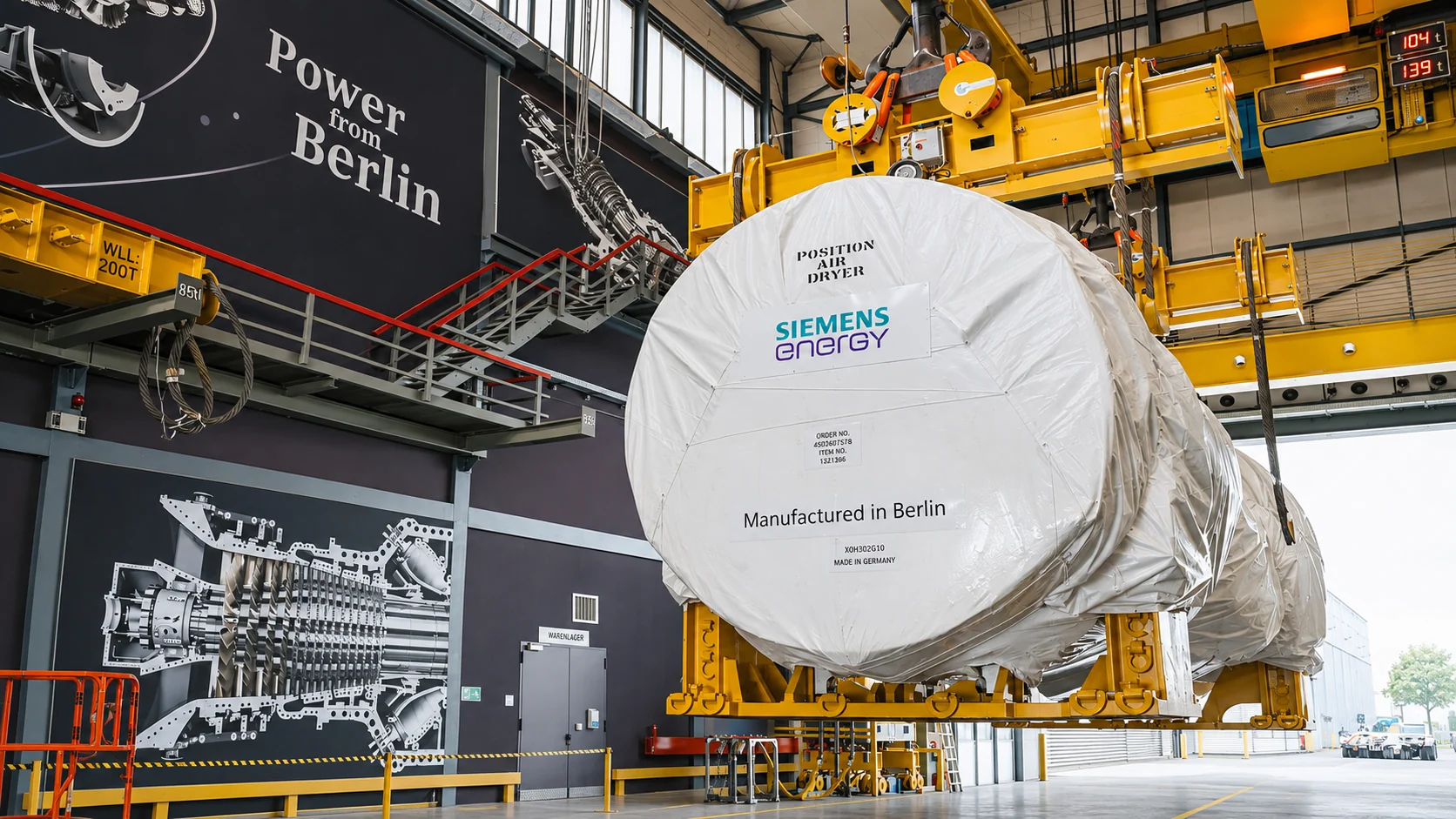
Siemens Energy reported record revenue and a sharply higher order backlog for fiscal 2026, as demand for power generation and grid equipment remained strong. The company said data-center construction, including AI-related expansion in North America, is contributing to investment in gas turbines and electricity infrastructure.
Revenue rose 15.5% on a comparable basis to €44.2 billion in the year ended September 30. Orders increased 18.8% to €68.1 billion, and the book-to-bill ratio reached 1.54, meaning new orders exceeded revenue recognized during the period. The backlog stood at a record €164 billion at fiscal year-end.
Siemens Energy’s profit before special items more than doubled to €5.49 billion, while net income increased to €4.13 billion from €1.69 billion a year earlier. Free cash flow before tax nearly doubled to €8.8 billion. The figures describe a stronger business year, but a large backlog is not the same as immediate revenue or cash: projects are delivered over time, and conversion depends on execution, capacity and customer schedules.
The company’s report offers an industrial view of the AI infrastructure boom. Data centers need more than chips and servers. They require a reliable connection to the grid and enough electricity to operate, often at sites where existing network capacity was not built for large new loads. That creates potential demand for generation equipment, transformers, switchgear and grid systems.
A record backlog reflects a long project pipeline
The backlog’s size indicates that Siemens Energy has a substantial pool of contracted work, but projects vary in timing and complexity. Large energy projects can take years to design, permit, manufacture and install. The company noted that quarterly order intake moderated from exceptionally strong levels earlier in the year, reflecting normal phasing and the large-project nature of its business.
The distinction between orders and sales is important. Orders signal customer commitments; revenue is recognized as work is performed under accounting rules. A rising backlog can support future activity, but it also places demands on production capacity, suppliers and project management. Delays or cost increases may affect when revenue is recorded and how profitable a contract proves to be.
Siemens Energy said both Gas Services and Grid Technologies achieved record quarterly revenue in the fourth quarter. For the full year, the United States stood out, with group orders up 70.8% to €27.7 billion. That geographic figure includes all of the company’s businesses and does not mean every U.S. order came from data centers.
Siemens Gamesa, the group’s wind business, reached break-even on profit before special items for the year, compared with a loss of about €1.4 billion in fiscal 2025. The recovery contributed substantially to annual profit growth, though continued execution remains important.
AI capacity expansion meets physical power constraints
Siemens Energy’s management sees electricity demand rising as transport, heating, industry and data centers expand their use of power. It expects the buildout of facilities supporting AI to encourage further investment in generation and grid infrastructure, particularly in North America. The company’s outlook is consistent with earlier TTN coverage of electricity demand as a constraint on data-center growth.
The connection between AI computing and power equipment is real, but it should be described carefully. A data-center project does not automatically become an order for Siemens Energy. Developers can choose different suppliers, equipment types and power strategies, and grid operators determine which upgrades are needed. The company’s results show that it is benefiting from a strong market for its products; they do not isolate how much growth was caused by AI.
The digital buildout has a physical supply chain: utility connections, backup systems and generation. Grid upgrades matter when new demand outpaces local transmission capacity, although long project timelines leave room for delays.
Utilities and regulators must weigh reliability, cost and emissions. Gas turbines are one source of dispatchable power; renewables, storage, nuclear, demand response and grid modernization also contribute. Siemens Energy’s results do not determine the generation mix any region should choose.
Targets point to growth, with execution still to come
For fiscal 2027, Siemens Energy forecast comparable revenue growth of 14% to 16%, a profit margin before special items of 14% to 16%, net income of about €5 billion and free cash flow before tax of around €10 billion. These are company targets, not results already achieved. Management also set 2030 goals of 12% to 14% annual comparable revenue growth and a 20% to 22% margin before special items.
The company proposed a dividend of €2.30 per share for fiscal 2026, compared with €0.70 for the prior year. It also said it plans an additional share buyback of up to €9 billion through the end of fiscal 2030. These capital-return plans accompany its growth targets and are subject to the company’s financial position and applicable approvals.
For investors, the question is whether Siemens Energy can scale production, source components and commission projects while protecting margins. The record backlog signals strong demand, not guaranteed delivery or profit. Its ability to turn AI-related power needs into durable earnings will depend on converting orders and meeting targets as the wind business stabilizes. That execution also ties into the wider data-center power buildout, where equipment, grid capacity and financing all shape delivery timelines.
Sources (3)
For informational purposes. This article is not investment advice.