Anthropic's Regional Access Policy Takes Effect, Defining Where Claude Is Available
Anthropic's Supported Regions Policy takes effect on November 12, setting access conditions based not only on a user's physical location but also on where an organization is incorporated, headquartered and controlled.
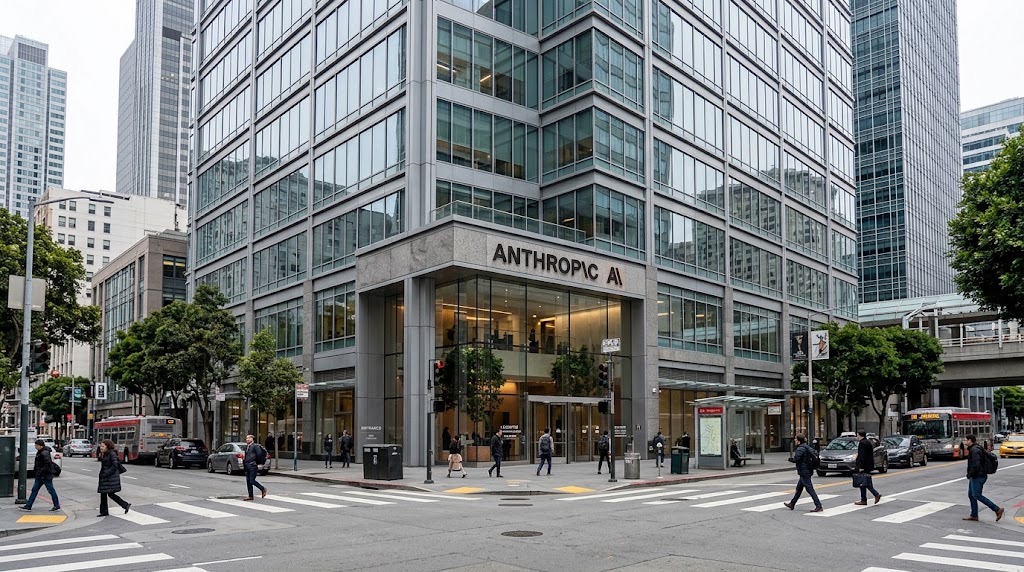
Anthropic's Supported Regions Policy takes effect on November 12, establishing a clearer framework for where businesses and individuals can access Claude and the company's other products. The policy covers Anthropic's consumer applications, developer services, API access, Claude models offered through cloud platforms and services provided by authorized resellers.
For businesses, the change is significant because regional eligibility is not determined solely by the location of an individual employee. Anthropic's policy also considers where an organization is incorporated or headquartered and whether it is majority-owned or controlled, directly or indirectly, by people or entities in unsupported regions.
That makes the rules relevant to corporate procurement, legal teams, cloud architecture and companies with cross-border ownership structures. A developer working from a supported country may not automatically be eligible to use Claude for an employer whose legal or ownership structure falls within one of the policy's restricted categories.
What the policy covers
Anthropic's Supported Regions Policy applies to its apps, including Claude.ai, Claude Code and Cowork, as well as the API and developer platform. It also covers Claude models made available through cloud platforms and authorized resellers.
The policy uses a list-based approach. Products and services are available only in the countries and regions identified by Anthropic, and a location that does not appear on the supported list is treated as unsupported. The policy identifies three broad situations in which use is not supported.
First, people cannot use Anthropic services while physically located in an unsupported region, including users and personnel of organizations that would otherwise be eligible. Second, entities incorporated or headquartered in an unsupported region cannot use the services, even through personnel physically located in a supported country. Third, the policy covers entities that are majority-owned or controlled, directly or indirectly, by people or organizations in unsupported regions, regardless of where their personnel are physically located.
Why corporate structure matters
International companies often operate through subsidiaries, regional offices, holding companies and joint ventures. A business may be incorporated in the United States while having a parent company, controlling shareholder or ownership chain connected to another jurisdiction.
Under Anthropic's policy, a supported registration address does not automatically override the ownership and control provisions. The wording explicitly includes direct and indirect majority ownership or control by persons or entities in unsupported regions. For corporate legal and compliance teams, this creates a need to review the employing company, contracting entity, headquarters and ownership chain rather than relying only on the location of an individual account holder.
Cloud providers do not automatically remove the restriction
The policy explicitly includes Claude models offered through cloud platforms and authorized resellers. Using a third-party cloud platform does not, by itself, create an exemption from the regional eligibility rules, so companies should not assume that changing the billing relationship or technical endpoint resolves an underlying eligibility issue.
Existing vendor onboarding processes may need to include regional eligibility checks alongside security, privacy, data residency and procurement reviews, particularly as organizations scale AI agents and enterprise automation deployments. Companies that rely on Claude in production workflows should also maintain a documented process for reviewing dependencies and service continuity.
Supported Regions Policy is not the Usage Policy
The regional access rules should not be confused with Anthropic's Usage Policy. They address different questions. The Supported Regions Policy defines where Anthropic products and services are available and which people or entities are eligible to use them, whereas the Usage Policy sets rules for what users may and may not do with Claude, including restrictions on prohibited activity and requirements for certain higher-risk uses.
Anthropic announced updates to both policies with a November 12 effective date. Its October announcement described the regional-policy changes as a clarification of how existing restrictions apply to individuals and organizations, while the Usage Policy update separately addresses deceptive campaigns and artificial activity. Satisfying one policy does not automatically satisfy the other.
What businesses should review
Companies that use Claude across multiple offices or subsidiaries should review the legal entity associated with each deployment, including where the entity is incorporated and headquartered, how it is owned or controlled and whether access occurs directly, through a cloud platform or through an authorized reseller. Businesses should avoid treating a successful login or active API key as definitive proof that corporate use is eligible.
A broader procurement issue for enterprise AI
The policy highlights a growing issue for companies adopting AI services across borders, alongside major infrastructure commitments such as TSMC's $1 billion investments in Anthropic and OpenAI. Access to a model is not determined only by technical availability; vendor terms, jurisdiction, corporate ownership and the legal identity of the customer also shape whether a deployment is permitted.
Anthropic's November 12 policy does not mean every international business will lose access to Claude. It makes the conditions more explicit and places greater emphasis on the organization behind the user, requiring businesses operating across borders to verify eligibility at the entity level, including their subsidiaries, ownership and control structures.
Sources and Documentation
- Anthropic, Supported Regions Policy: https://www.anthropic.com/legal/supported-regions
- Anthropic, "2026 Usage Policy update," October 8, 2026: https://www.anthropic.com/news/2026-usage-policy-update