Apple Intelligence Is Coming to China With Alibaba's Qwen
Apple plans to begin testing Apple Intelligence in China on November 4, bringing selected AI features to iPhone users through a partnership with Alibaba.
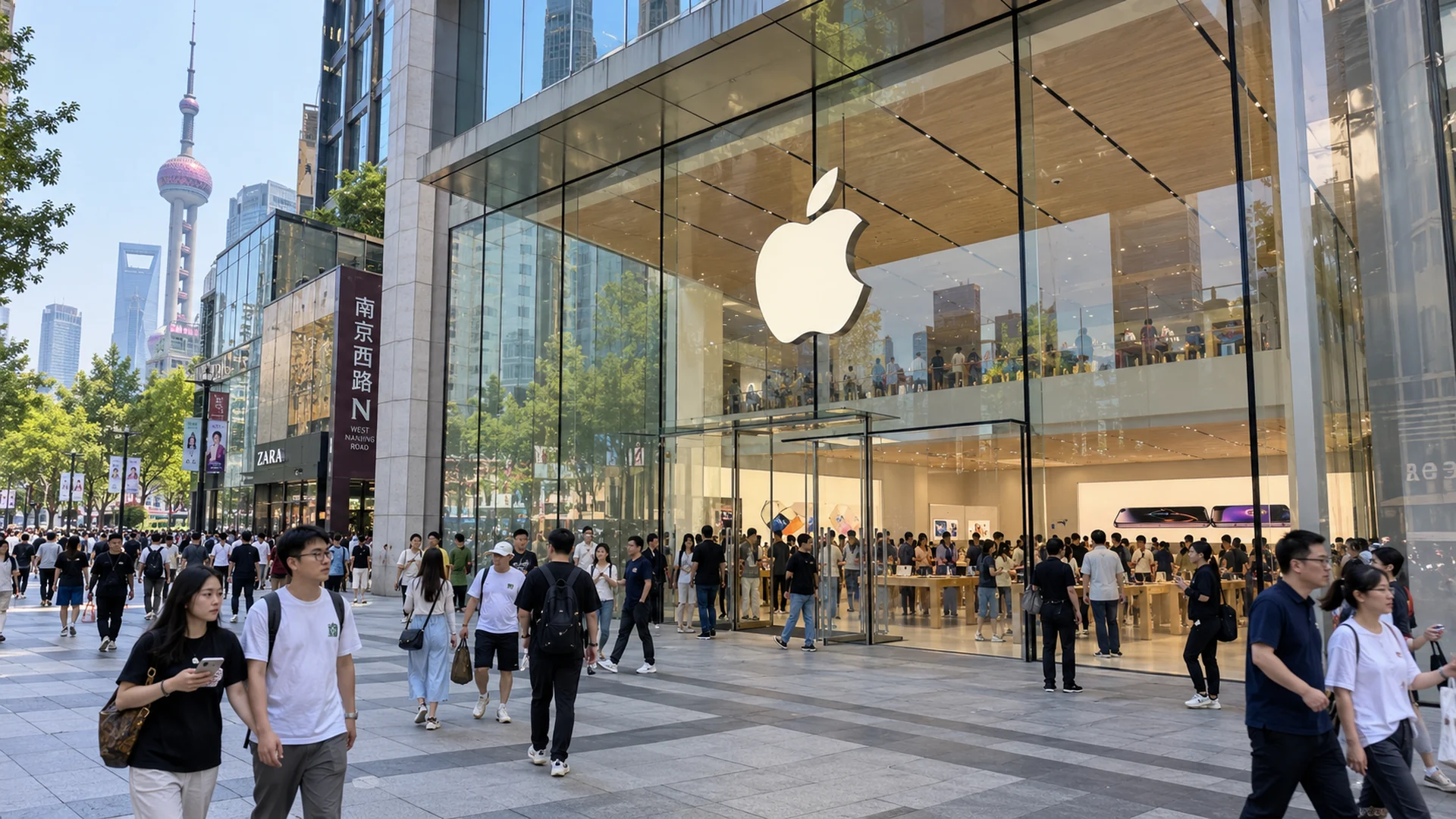
Apple has announced that its first Apple Intelligence features for mainland China will enter developer testing on November 4, with broader availability expected alongside the iOS 27.3 release in December. The October 31 announcement addresses an important gap in the company's AI rollout and introduces an arrangement with Alibaba to support selected experiences through its Qwen models.
The rollout is significant because AI-powered software has become a growing point of competition in premium smartphones. For Chinese iPhone owners, many features available in other markets have remained unavailable. Apple's announcement outlines a staged approach rather than an immediate nationwide launch of every AI capability the company has introduced.
In its October 31 announcement, Apple said initial functions would include tools for writing and proofreading, Live Translation, photo editing, notifications and visual intelligence. The company also said the newer Siri AI features and other next-generation functions unveiled at WWDC 2026 were not part of the first release.
The first features and the launch timetable
Apple said developers will be able to test the initial capabilities beginning November 4 through an upcoming iOS beta. The company expects the public rollout in December with iOS 27.3. That means the beta timetable should not be described as full consumer availability, and the December date remains a planned release window rather than evidence the software is already installed on users' phones.
Writing Tools are intended to help users rewrite, proofread and summarize selected text. Live Translation supports communication across language barriers in compatible experiences. Clean Up is designed to remove unwanted elements from photographs. Other announced functions include Genmoji, priority mail and notification features, and visual intelligence capabilities.
The features are integrated into ordinary smartphone activities. Apple has generally sought to place AI assistance inside applications and system experiences rather than require every task to be completed in a separate chatbot interface. The approach could make AI tools easier to discover in common workflows, although real-world usefulness will depend on accuracy, language support and performance.
How Alibaba's Qwen fits into the system
Apple said some experiences will include support from Alibaba's Qwen models, including functions related to Siri, Writing Tools and visual intelligence. That does not establish that Alibaba operates all Apple Intelligence services in China. The partnership concerns selected capabilities within a wider product architecture that also includes Apple's own models and software.
The distinction matters for understanding both companies' strategies. Apple retains control over the iPhone platform and customer experience, while Alibaba supplies AI technology appropriate for particular local uses. As The Verge reported, the initial Chinese rollout will not include Apple's newer AI-powered Siri.
For Alibaba, distribution through an extensively used device platform could make Qwen more visible to consumers. Yet the announcement does not disclose commercial terms that would justify assigning a particular amount of revenue to the partnership. Any financial impact will depend on implementation, usage and arrangements not fully explained in the public materials.
Why China requires a distinct AI strategy
China has specific rules governing the provision of generative AI services, and international technology providers must account for local compliance requirements. Partnerships with established domestic companies can help support localized capabilities. They also create additional responsibilities for quality control and coordination between software components.
A country-specific approach can make a global product less uniform. Users in different markets may receive different capabilities, software release dates or model-backed services. Maintaining a consistent experience while accommodating those differences is a substantial engineering challenge, especially when the tools are embedded across messaging, photos, writing and voice interactions.
Apple's launch therefore illustrates a larger market trend: the deployment of AI at global scale increasingly depends on local rules and commercial arrangements. Technical capability is only one part of getting a feature into consumers' hands.
Competition in the Chinese smartphone market
The stakes are commercial as well as technological. Chinese smartphone manufacturers have continued investing in AI assistants, image processing and locally adapted services. Apple competes on hardware, applications, brand and ecosystem integration, but missing software functions can change how users compare premium devices.
Adding Apple Intelligence could narrow a feature gap without guaranteeing a measurable improvement in sales. Demand also depends on product pricing, hardware upgrades, competing devices and general economic conditions. Investors should avoid attributing a future change in iPhone sales entirely to a software launch.
Apple's integrated approach may offer a distinctive experience if the software performs reliably. A writing assistant available directly within the operating system can be useful without requiring a separate installation. Conversely, software that produces inconsistent results or is unavailable in frequently used applications may deliver limited practical value regardless of its technical sophistication.
A staged release, not the full AI roadmap
Apple's statement makes clear that the first Chinese version does not encompass all the capabilities discussed at WWDC 2026. In particular, the new AI-powered Siri functionality is excluded. That limitation should remain prominent in coverage because marketing terms such as Apple Intelligence can otherwise suggest a single identical product available everywhere.
Developer testing should help reveal whether the initial set of tools functions consistently across supported devices and languages. However, public assessments of performance will remain preliminary until the broader software release is available and users can test it across real-life situations.
The announcement also leaves open questions about availability on devices beyond the iPhone, regulatory steps and the timing of more advanced functions. Apple has not provided enough information to treat all those milestones as confirmed.
What investors and users should watch
The immediate checkpoints are the November 4 developer beta, Apple's subsequent software notes and the planned December release. Product reliability, supported languages and the scope of Alibaba-backed functions will help determine how substantial the rollout feels to users.
For Apple, the strategic question is whether extending AI capabilities to China improves the competitiveness of the iPhone ecosystem in a demanding market. For Alibaba, the question is whether Qwen gains deeper consumer distribution and a sustainable role in major device experiences.
Neither outcome can be assumed before launch. What is confirmed is that Apple has committed to a staged introduction of AI tools in mainland China and that Alibaba will support parts of the experience. The rest will become clearer as developers and consumers encounter the software.
For related coverage of how costly AI infrastructure is changing technology companies' finances, read TTN Finance's analysis of Intel and Amazon.
Sources and methodology
Primary disclosures and independently reported information inform this report. Editorial analysis and interpretations are TTN Finance's own.