Boeing’s 737 Delay Pushes Its Cash Recovery Further Out
The planemaker reported positive quarterly free cash flow, but slower production and a weaker 2027 outlook put its recovery timetable under pressure.
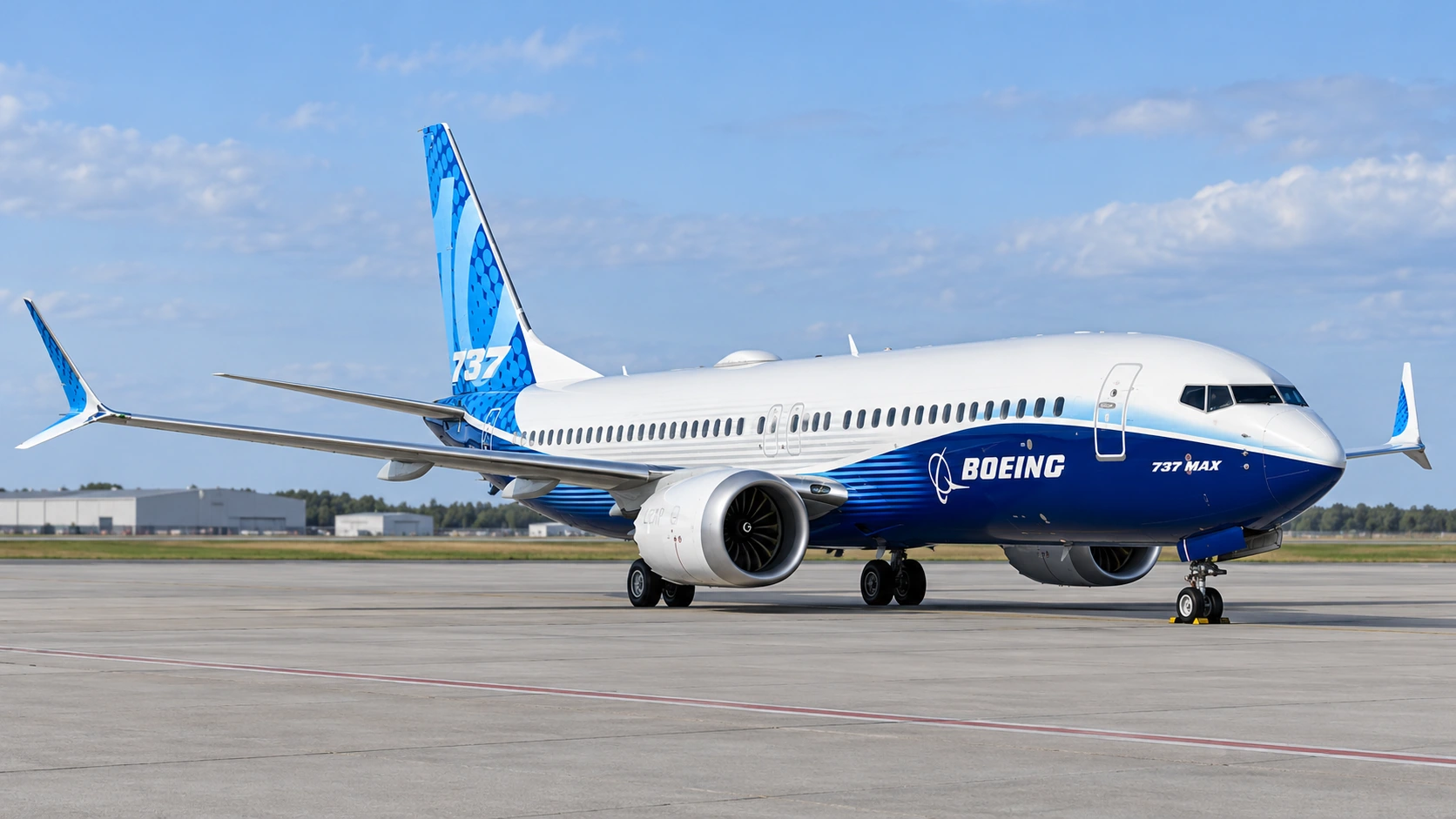
Boeing's recovery is taking longer to reach the factory floor. The planemaker now expects to achieve a 737 production rate of 47 aircraft a month in early 2027, rather than this summer, Reuters reported after Tuesday's earnings call. Its roughly $3 billion free cash flow outlook for next year also fell short of Wall Street's $5.5 billion expectation, according to the report.
The immediate tension is between a business generating cash again and a production system that has yet to deliver the pace investors expected. Boeing's third-quarter release showed $464 million of free cash flow. Across the first nine months, however, that measure remained negative by $359 million. A positive quarter therefore does not establish that the full year's cash recovery has already been secured.
Revenue rose 4% to $24.188 billion, while the company recorded a $116 million net loss. Boeing's non-GAAP core loss was 34 cents a share. The contrast between sales growth and a bottom-line loss is a reminder that delivering more business and retaining more of its value are separate tasks. Our guide to reading earnings results explains why the outlook can matter as much as the reported quarter.
Orders are abundant; conversion is the constraint
Boeing ended September with a record total backlog of about $745 billion. Its commercial aircraft business accounted for roughly $612 billion and more than 6,300 airplanes. That order book supports a long runway of potential work. It is neither cash already received nor a guarantee that every future aircraft will be produced at the margin originally expected.
For shareholders, the important conversion is from an order into a completed, accepted delivery with its associated costs and payments. An assembly delay can extend the time that materials and partially completed aircraft tie up resources. Raising output also requires the preceding stages to keep pace. Additional capacity at one workstation cannot by itself resolve a shortage of usable components arriving from another.
Reuters identified wing production as a continuing constraint on the 737 ramp. That makes the timetable more consequential than a monthly production target viewed in isolation. A rate has to be supported repeatedly by the broader manufacturing system. Briefly achieving a higher number is less useful than sustaining it without creating another round of disruption, rework or unfinished inventory.
The commercial business still loses money
Boeing delivered 161 commercial airplanes during the quarter and 475 in the first nine months. Those totals cover its commercial aircraft portfolio, not just the 737. The commercial division generated $10.720 billion of quarterly revenue but lost $697 million from operations, an operating margin of negative 6.5%.
These figures help explain why a large order book does not settle the investment debate. Revenue can grow while a segment consumes economic value if production and delivery costs remain too high. The relevant recovery would combine dependable output, profitable aircraft economics and stronger cash conversion. None of those measures can substitute completely for the others.
Our free cash flow explainer also distinguishes operating cash from the money left after investment in equipment and facilities. Boeing reported $1.496 billion of operating cash flow and $1.032 billion of capital expenditure in the quarter. Subtracting the second from the first produces the $464 million free cash flow figure; presenting operating cash alone would overstate the amount remaining after that investment.
A later recovery changes the financing calculation
The company held $20.7 billion of cash and marketable securities against $45.9 billion of consolidated debt at quarter-end. Those balances describe liquidity and obligations, not an immediate repayment schedule. Still, the longer a recovery takes, the longer resources remain committed before the business can use the expected cash for other purposes.
The same distinction appears in our coverage of Tesla's cash flow and operating profit: cash generation and earnings can tell different stories within one reporting period. For Boeing, subsequent delivery figures will test the manufacturing timetable, while future financial reports will show whether those deliveries translate into sustained positive cash after capital spending. Tuesday's results leave that conversion, rather than demand for aircraft alone, at the center of the recovery.
Sources and methodology
Sources checked October 27, 2026. Company statements, reported findings and forecasts are attributed in the text. Financial and operational implications are editorial analysis.