China's Solar Technology Export Proposal Targets Manufacturing Know-How
China proposes controls on 12 solar manufacturing technologies, with immediate registration requirements and consultation on the draft running to November 15.
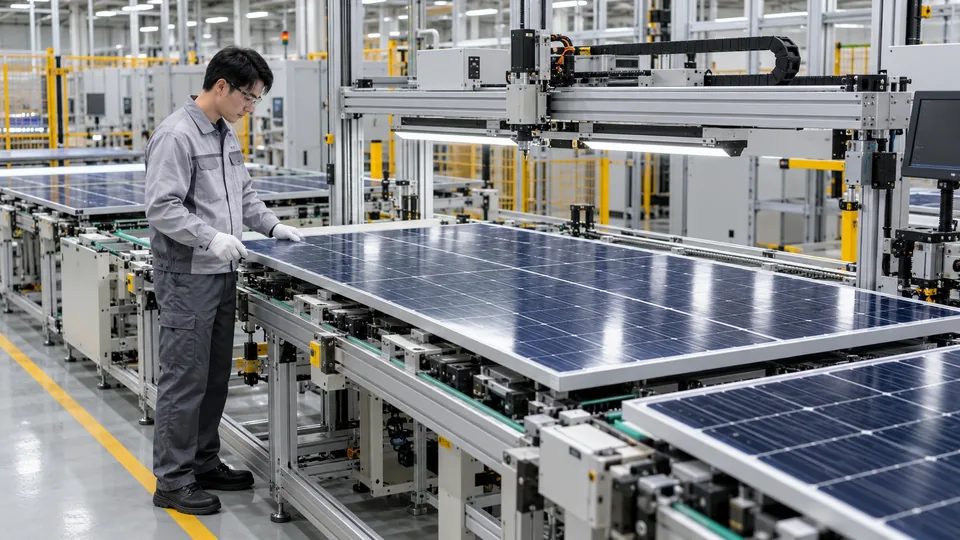
China has proposed tighter controls on the overseas transfer of solar manufacturing technologies, drawing a distinction between selling finished equipment and sharing the processes needed to manufacture it.
A Reuters report published Sunday, October 18, brought fresh attention to the proposal. The underlying announcement was issued on October 16 by China's commerce and science ministries. It covers 12 photovoltaic technologies within a broader proposed revision spanning 40 technologies across solar power, artificial intelligence and biomedicine.
The proposal has not become a blanket ban on solar panel exports. Some technologies would be prohibited from export and others restricted, subject to the final rules. A separate temporary registration requirement already applies to relevant technology transfers while consultation continues through November 15.
The immediate requirement and the proposed controls differ
The ministries' announcement requires registration before specified technology exports during the interim period. It includes transfers of technology ownership, overseas licensing and changes that place ownership or actual control with an overseas entity. Transactions already started but not completed are also covered by the registration requirement.
That immediate procedural obligation should be distinguished from the proposed final classifications. November 15 is the consultation deadline, rather than a confirmed date when every proposed prohibition or restriction takes effect.
For businesses, the practical analytical question is which part of a transaction transfers technology: a license, a manufacturing process or control of intellectual property may be relevant even when no shipment of finished panels is involved.
Advanced production processes are in focus
According to pv magazine's account of the draft, the proposed prohibitions include specified perovskite and perovskite-silicon tandem manufacturing technologies. The restricted category includes selected polysilicon, wafer and advanced crystalline-silicon cell processes, including TOPCon, back-contact and heterojunction technologies.
The technical thresholds matter. A reference to a broad technology family does not mean every process or product in that family is covered. Nor does the draft justify treating all Chinese solar technology as unavailable overseas.
The commercial significance lies in the difference between purchasing output and acquiring production capability. A company may be able to buy a panel while facing a different regulatory process for obtaining the know-how needed to make a comparable product in another country.
The proposal is part of the same policy package covered in The report on China’s proposed AI technology controls. The solar provisions raise a separate manufacturing question.
Technology and finished equipment face different questions
A restriction on transferring production knowledge can affect a proposed overseas factory without preventing every shipment of a finished solar product. A buyer comparing suppliers needs to identify which transaction is covered: equipment, manufacturing services, licensed processes or an investment. The draft's treatment of those activities should be read directly rather than inferred from a broad solar-industry label. Its economic effect will depend on the final scope, the approval process and the alternatives available to the businesses concerned.
Supply chain concentration gives the proposal weight
The International Energy Agency's Energy Technology Perspectives 2026 puts China's share of solar supply-chain production capacity at around 85%, rising to approximately 95% for photovoltaic wafers. The report also finds that final assembly capacity outside China can conceal dependence on upstream stages.
Those capacity figures describe the industry's structure, not the precise volume affected by this proposal. They nevertheless explain why changes to technology access can matter beyond direct exporters.
TTN's assessment is that companies planning overseas factories will need to examine technology access alongside equipment, capital and energy. More domestic assembly does not automatically remove reliance on external production expertise.
The next substantive development will be the final catalogue and its treatment of specific technologies. Until then, the evidence supports a narrower conclusion: China is proposing tighter control over selected manufacturing capabilities while requiring interim registration. It does not establish an immediate global shortage of finished solar panels or a quantifiable increase in their prices.
Sources (4)
- China's Ministry of Commerce and Ministry of Science and Technology: Announcement No. 48 of 2026
- Reuters: China proposes export controls on solar-manufacturing technologies
- pv magazine USA: Proposed restrictions on perovskite and tandem manufacturing technology
- IEA: Supply chain risks and industrial competitiveness, Energy Technology Perspectives 2026