Claude Adds Bank-Account Connections, With Read-Only Access and New Privacy Boundaries
Anthropic’s U.S. Personal Finance beta can analyze connected balances and transactions. It cannot move money, and disconnecting an account does not erase earlier conversations.
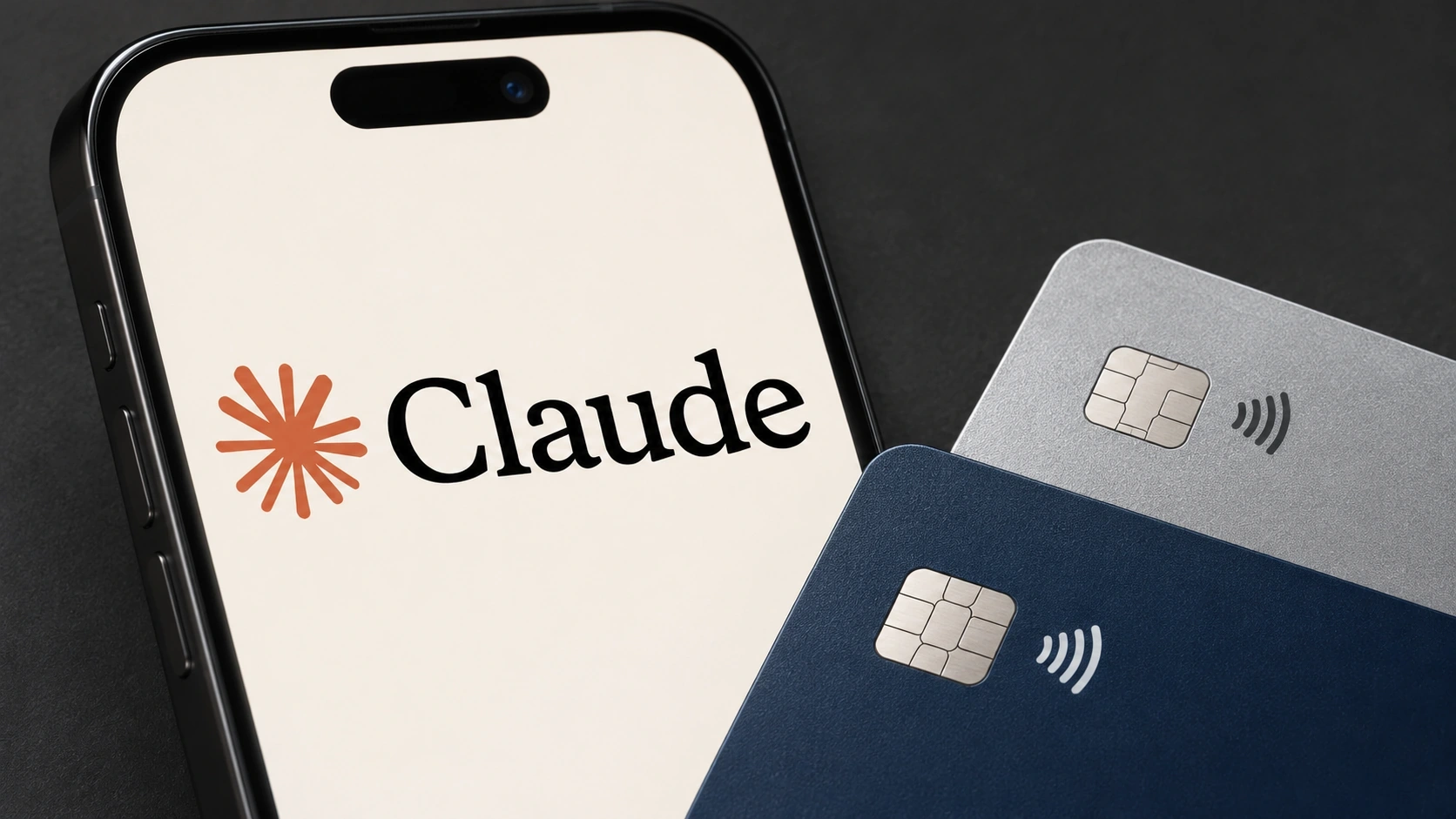
Anthropic is adding bank-account connections to Claude through a Personal Finance beta announced on November 5, extending its AI assistant from general explanations about money to analysis of a user’s own financial records. The feature uses Plaid to connect selected accounts. Its access is read-only: Claude cannot transfer funds, manage an account or invest on the user’s behalf.
The beta is rolling out gradually to U.S. subscribers on Pro, Max and Ultra plans. It is not available on Free, Team or Enterprise plans, according to Anthropic’s help documentation. Announcing a rollout therefore does not mean every eligible subscriber already has the feature. The company describes a tool for understanding money, rather than a service designed to provide investment advice.
The commercial proposition is straightforward. A person can ask about spending across connected accounts instead of assembling the same information manually. But connecting an assistant to financial records changes the basis of the interaction. The usefulness of an answer depends on the records retrieved, their age and the way the assistant interprets them, as well as the quality of its language model.
A bank connection supplies evidence, not a complete financial picture
Anthropic says Claude can read bank and account names, account types and identifying suffixes, balances, credit limits and up to two years of transactions for the accounts a user chooses to share. That can support questions about recurring charges or recent spending. It does not establish a complete picture of every asset, obligation and future expense a household has.
The documentation says linked investment and loan accounts supply balances and credit limits, rather than holdings, trades, rates or contractual terms. A combined balance is therefore different from a portfolio analysis or a calculation using a loan’s actual interest provisions.
That distinction matters when a conversational answer moves from describing records to evaluating a choice. An account balance can be accurately retrieved and still be insufficient to determine whether a large purchase is affordable. Future income, irregular bills and obligations outside the connected accounts can change the answer. The connection narrows one information gap, but it does not remove the need for a clearly defined financial question.
Read-only access addresses one risk, while data quality remains
The sign-in flow goes through Plaid, and Anthropic says Claude does not request or see the user’s bank password. Separating analysis from transaction execution is a meaningful boundary: a mistaken explanation cannot directly become an instruction that moves money through this feature. It is also a limit on the convenience the product can offer. Finding an unwanted subscription does not mean the assistant can cancel its payment from the account.
Anthropic’s help page identifies practical sources of disagreement with a bank’s own records. Balances can be a day or two old, an account linked through separate logins may be counted twice, and a bank that cannot be read can be left out of the spending figures. These are important qualifications for a product whose answers may appear precise.
The analytical challenge is reconciliation. Moving money between accounts, paying a card balance and making a purchase are different economic events. Any system summarizing household cash flow needs to distinguish those events so that totals remain meaningful. This is a description of the reporting problem, not a claim that Claude necessarily mishandles a particular transaction. A useful answer needs a traceable connection to the records supporting it.
TTN’s discussion of the work left for people when AI takes on a task applies to that boundary. Faster categorization has value, but the saving is smaller if a person must repeatedly reconstruct the underlying ledger to trust the result. Accuracy and transparency belong in the product’s usefulness assessment alongside speed.
Training exclusions and deletion are separate questions
Anthropic says conversations inside the Personal Finance hub are excluded from model training. Financial information shared outside that hub follows the user’s ordinary privacy settings. The scope matters: the company is describing a particular product area, rather than announcing a universal exemption for every money-related conversation in Claude.
Disconnecting a bank also has a narrower effect than deleting a financial history. It stops further reading from that connection, while material already present in chats, artifacts or shared links remains until removed. Anthropic’s general consumer retention guidance says deleted conversations disappear from chat history immediately and are removed from back-end storage within 30 days, subject to stated exceptions. Unlinking and deletion should consequently be understood as different controls.
The broader issue is familiar from AI access-control design: deciding what a system can read is only part of governing what happens to information afterward. Financial records can reveal sensitive patterns even when only a few account digits are displayed. Limiting access, limiting reuse and handling retained outputs address different parts of that exposure.
Personal Finance gives Anthropic a direct role in how consumers interpret their accounts. The first test is whether it produces reliable, explainable summaries from the limited data it receives. The company’s stated ambition to explore work with licensed professionals and regulated firms remains a future direction. Today’s release is a read-only beta, with its value and limits both defined by that narrower scope.