Curve Opens Stablecoin Trading on Stellar in a Move Beyond Ethereum’s Software
Curve’s Stellar rollout opens a new venue for stablecoin liquidity. Earlier testing preceded the launch, while FXSwap remains a later step.
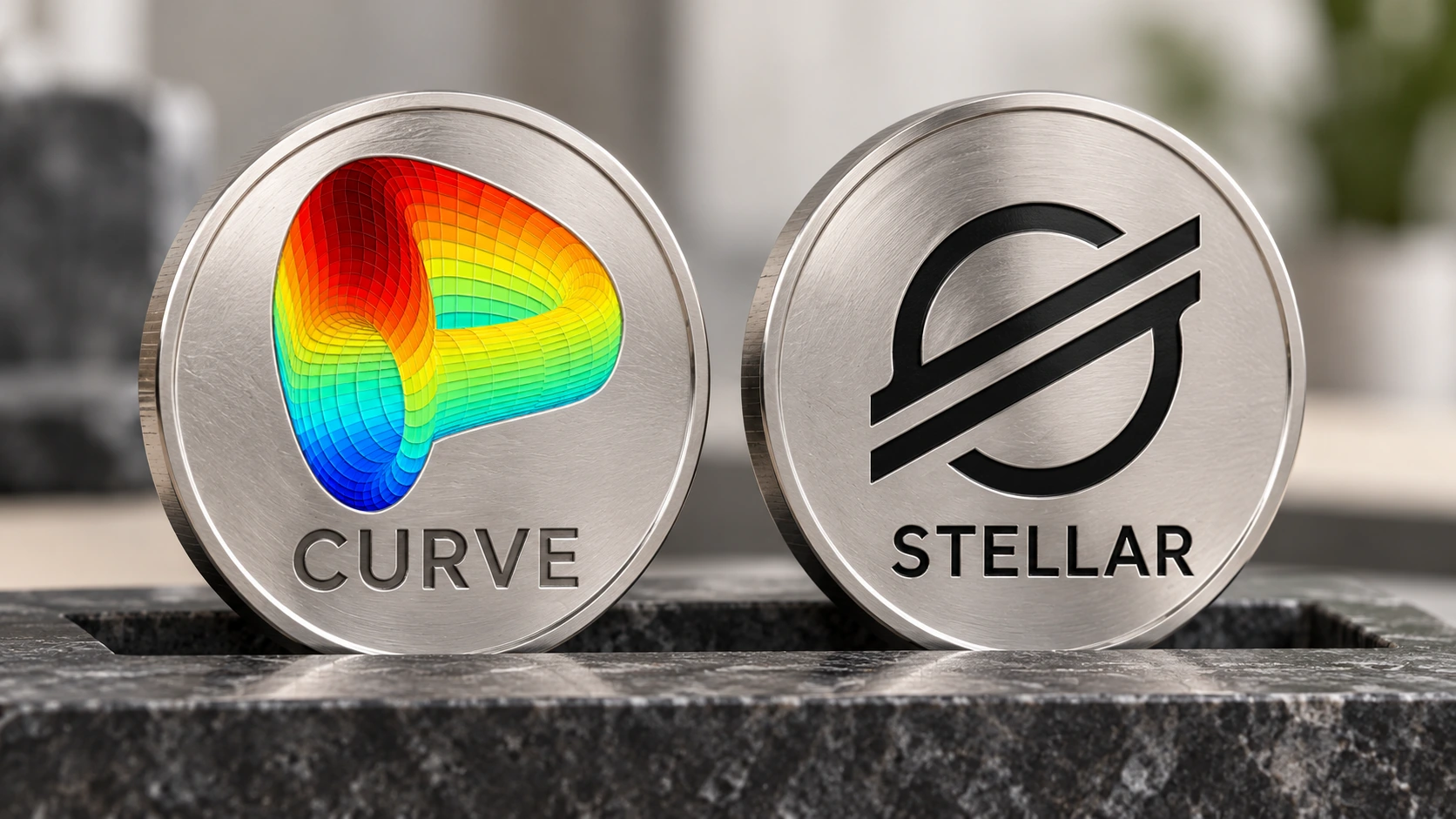
Curve Finance has opened its StableSwap exchange on Stellar, extending the decentralized trading protocol beyond the Ethereum-compatible networks where it built its business. The public rollout, reported Thursday by The Block, brings a new venue for exchanging assets with closely related prices. A second product, FXSwap, is planned for a later release after its audit is complete.
Users can create pools, trade assets and provide liquidity, according to the launch report. The significance is a new implementation for a different blockchain environment, rather than simply adding another deployment on software compatible with Ethereum. It also creates a practical test of whether additional exchange infrastructure can attract usable liquidity on Stellar.
Public release follows an earlier engineering project
The launch did not begin with Thursday's announcement. In an August governance report, Curve development company Swiss Stake described a Stellar Development Foundation-funded project that followed a first-quarter feasibility study and began implementation in the second quarter. It said a dedicated Rust engineer had been hired and that an early StableSwap implementation had undergone testing on both Stellar testnet and mainnet.
That history distinguishes initial code deployment from an open product rollout. Testing contracts on a production network does not necessarily mean the public interface, supporting services and intended user flows are ready for general use. The earlier report described work continuing through the second half of 2026 and a path toward Curve's first implementation outside the Ethereum Virtual Machine ecosystem.
The Ethereum Virtual Machine is a software environment used to execute smart contracts on Ethereum and compatible networks. Moving an application beyond that environment involves a different implementation and integration boundary. It should not be described as merely transferring the same website to another address, or as a guarantee that every product and feature from the original ecosystem is available.
Liquidity determines what traders can actually do
Curve's documentation describes its core exchange as an automated market maker: users trade against pools of deposited assets rather than requiring a matching buyer or seller for every individual order. StableSwap concentrates liquidity for assets expected to remain near a fixed or adjusted ratio. That makes the design relevant to similarly priced tokens, including stablecoins linked to the same currency.
The design does not remove the need to assess the assets inside a pool. Two dollar-linked tokens can have different issuers, redemption terms and collateral risks. A shared target price is an economic relationship, not proof that either asset will always trade at one dollar. TTN's guide to decentralized finance explains how software rules interact with collateral, pricing and liquidity risks.
For a trader, execution depends on how much liquidity is available relative to the order and on the pool's composition. For a liquidity provider, fee income has to be assessed alongside the risks of the assets and the contract. A new deployment creates a venue; it does not by itself establish deep markets, substantial fee revenue or a particular return for depositors.
FXSwap is a separate product and timetable
The Block reported that Curve intends to add FXSwap after its audit, without giving a release date. Curve's technical documentation describes FXSwap as a two-asset automated market maker designed for markets with external price discovery. Its liquidity can recenter around a changing reference price, unlike a pool organized around assets that are expected to remain close to a fixed ratio.
That difference is particularly relevant to currencies. A dollar-linked stablecoin and a euro-linked stablecoin track different units of account; the exchange rate between them can move even when both issuers maintain their respective pegs. An additional mechanism is needed to manage that changing relationship. An audit milestone and a software design still do not establish that the future Stellar product is already operating.
The wider setting is the effort to make blockchain-issued assets easier to use after issuance. The recent Stellar-based index-fund launch illustrates that trend, but does not establish a Curve listing, unrestricted investor eligibility or an automatic pool for that fund. Issuance, exchange access and legal transfer restrictions remain distinct questions.
The useful evidence after launch will be funded pools, executable trades and integrations that actually use the venue. Thursday's rollout adds infrastructure for those markets to develop. Whether it produces deeper stablecoin trading will depend on assets, participants and sustained liquidity, rather than the announcement alone.
Sources and methodology
Sources checked October 29, 2026. Official decisions, company statements and reported findings are attributed in the text. Financial and operational implications are TTN editorial analysis.
- The Block, October 29, 7:00 a.m. EDT: public Stellar rollout and FXSwap status
- Swiss Stake, August 18: governance report, Annex A on Stellar funding, Rust implementation and earlier testing
- Curve: exchange and automated-market-maker documentation
- Curve: FXSwap technical overview and differences from fixed-ratio pools
- Curve: separate Stellar application endpoint