DoorDash Agrees to Buy Instacart in a $17 Billion Grocery Deal
DoorDash’s Instacart deal would combine delivery and grocery technology. Shareholders get payment choices, while closing could take until 2028.
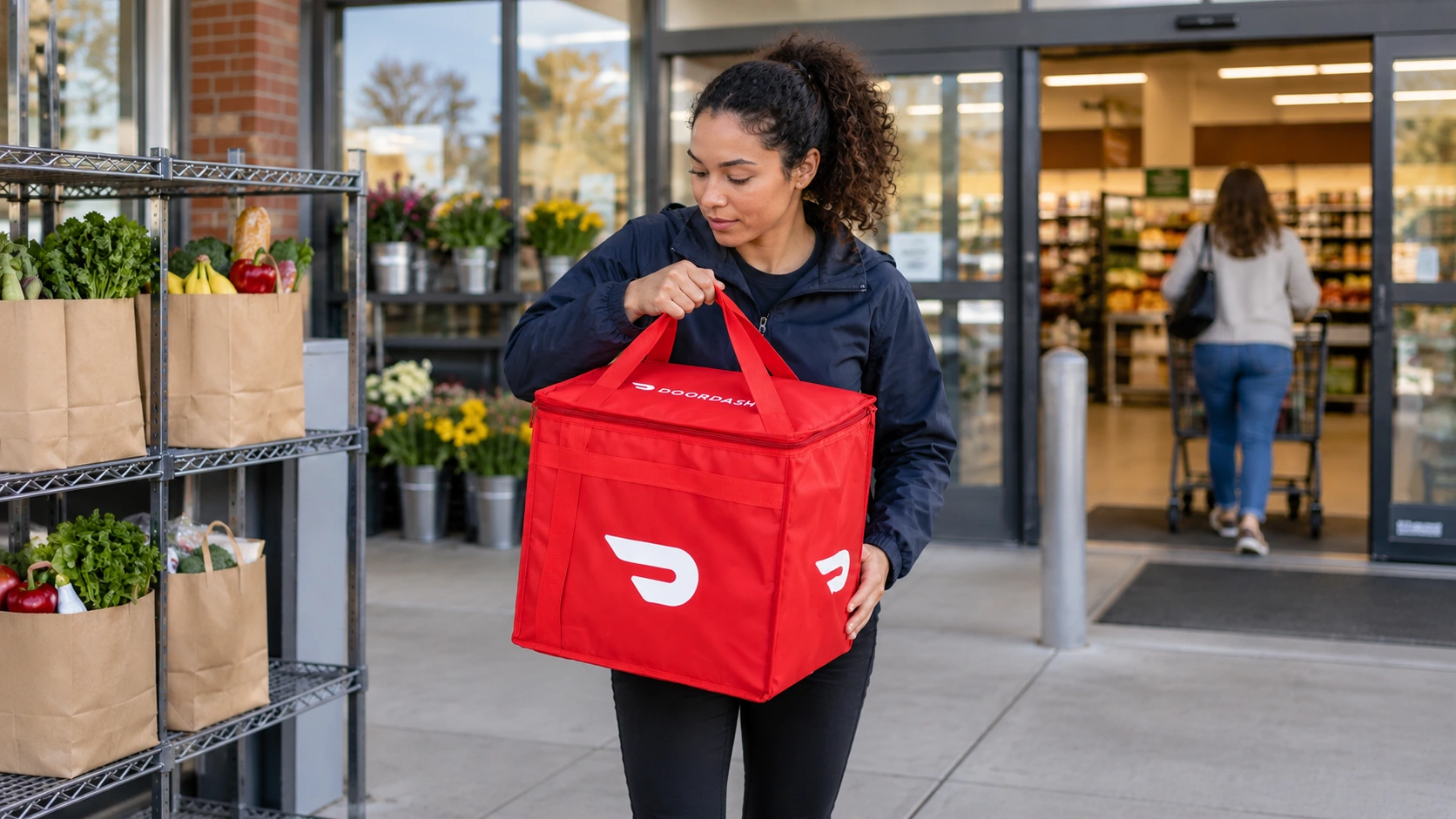
DoorDash agreed Thursday to acquire Instacart in a cash-and-stock transaction valuing the grocery technology company’s equity at approximately $17 billion. The signed agreement turns earlier acquisition talks into a concrete offer, but leaves shareholders facing a long period before the companies expect to combine.
The offer values each Instacart share at $65, a 26% premium to its October 22 closing price. At least three-quarters of the aggregate consideration will be cash. Closing is expected in late 2027 or the first half of 2028, subject to shareholder and regulatory approvals. Until then, the businesses remain independent.
DoorDash is buying more than another delivery app. Instacart supplies grocery ordering, fulfillment technology and advertising services to retailers. The combination would give DoorDash a larger position across the different stages of an online grocery purchase, from a retailer’s storefront and product promotions to picking the order and delivering it.
The payment election has limits
Instacart investors can elect $65 in cash, 0.3372 DoorDash shares, or a combination of $48.75 in cash and 0.0843 DoorDash shares for each share they hold. Those choices are subject to allocation rules that keep the overall stock component at no more than 25% of the consideration.
That cap matters because an election is not an unconditional promise that every investor receives the form of payment requested. If too many shareholders choose stock, the available shares are allocated proportionately. The stock alternative also introduces exposure to DoorDash’s share price while the transaction is pending, unlike a fixed dollar cash payment.
The companies’ announcement says DoorDash expects to retain Instacart’s brand, app and enterprise technology products. Maintaining a consumer-facing brand is compatible with combining delivery networks and back-end services. It does not mean that the companies will operate as separate economic competitors after a completed acquisition.
Both companies enter the deal with growing businesses
Instacart’s separately released third-quarter results show gross transaction value of $10.528 billion, up 15% from a year earlier, and 91.4 million orders, up 10%. Revenue increased 17% to $1.095 billion. Gross transaction value measures activity on the platform, rather than revenue that belongs entirely to Instacart.
Advertising and other revenue increased 23% to $331 million, faster than the 14% growth in transaction revenue. GAAP net income was $147 million, compared with adjusted EBITDA of $342 million. The adjusted measure excludes expenses included in accounting earnings; it should not be treated as an interchangeable profit figure.
The advertising business helps explain the strategic appeal. A grocery platform can earn money both from arranging purchases and from brands seeking visibility when shoppers make decisions. Combining those activities with a larger delivery network could broaden the commercial opportunity, though the eventual return depends on execution and retailer relationships.
DoorDash reported quarterly revenue of about $4.6 billion, up 34%, and 993 million orders, up 28%. Those headline growth rates include Deliveroo. Excluding that acquisition’s contribution, revenue increased 23% and orders 17%, a useful distinction when separating underlying expansion from the effects of buying another business.
DoorDash also set out a multi-year path to at least $500 million in annual synergies after investments. It expects to reinvest more than the total synergies during the first year after closing, with positive net synergies from year two. That is management’s future plan, rather than savings already appearing in either company’s earnings.
The waiting period is part of the investment case
Instacart cancelled its scheduled November 5 earnings call and suspended financial guidance following the agreement. Investors will therefore need to track the transaction alongside operating disclosures from a business that still has to compete and retain customers while the deal is reviewed.
The proposed closing window makes the time and completion risk behind merger spreads especially relevant. An agreed offer price describes the transaction’s terms. It does not establish the value an investor can realize immediately or guarantee that approvals arrive on schedule. The next material milestones are regulatory progress, shareholder approval and evidence that the businesses sustain their performance during the wait.
Sources and methodology
Sources checked October 29, 2026. Official decisions, company statements and reported findings are attributed in the text. Financial and operational implications are TTN editorial analysis.