Fed Independence Has Boundaries and Accountability
Congress sets the central bank's mandate. Operational independence concerns how monetary-policy decisions are made within that mandate.
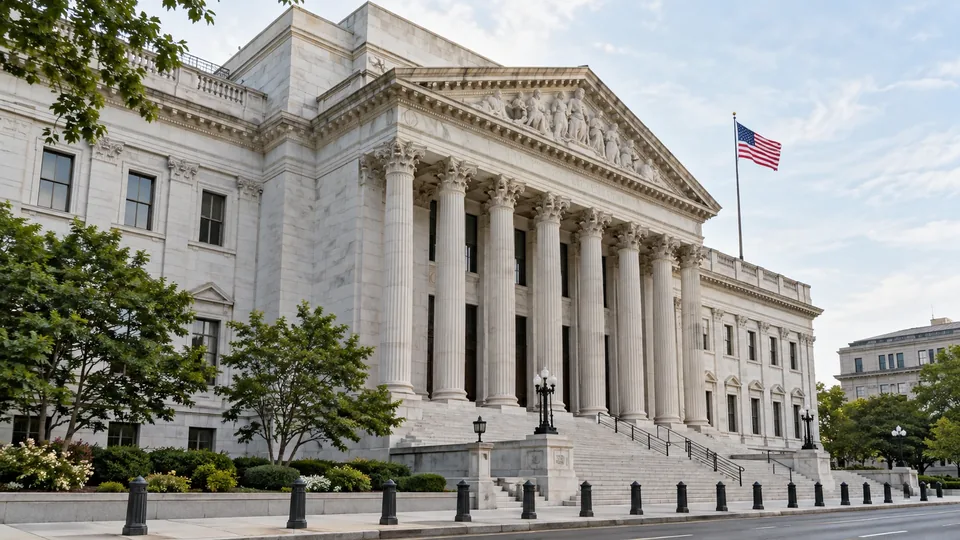
Federal Reserve independence concerns how monetary-policy decisions are made within a framework established by elected lawmakers. Congress sets the central bank's statutory objectives and oversight arrangements. The Fed has operational discretion to pursue those objectives, rather than receiving an instruction from the White House before each interest-rate decision.
That arrangement separates a policy goal from the choice of instruments used to pursue it. It does not place the Federal Reserve outside government, remove public accountability or guarantee that every policy decision will be correct. Independence is an institutional design, not a claim of infallibility.
Congress sets the framework
The Federal Reserve describes its monetary-policy responsibilities in terms of maximum employment, stable prices and moderate long-term interest rates. Congress created that framework and can change the law. Day-to-day disagreement about rates does not itself change the statutory structure.
Within that framework, officials assess the economy and decide how to use monetary-policy tools. A preference expressed by an elected official is different from a decision formally taken by the Federal Open Market Committee. Reporting should distinguish criticism, a proposed legal change and an actual change in authority.
The Fed's longer-run inflation objective is expressed in terms of the annual change in the price index for personal consumption expenditures. It is not a promise that every monthly inflation reading, or every consumer's personal expenses, will rise at exactly that rate. The guide to consumer inflation measures explains why the choice of index matters.
Monetary policy is a committee process
The FOMC brings together members of the Board of Governors and Reserve Bank presidents under a defined voting structure. Reserve Bank presidents who are not voting at a particular meeting still participate in discussions. An individual official's speech therefore cannot automatically be treated as the committee's next decision.
Meeting statements, published minutes and other communications provide different views of the process. A statement announces the decision and its public explanation. Minutes provide additional detail about discussion. Economic projections, when released, describe individual participants' assessments under their assumptions; they do not constitute a binding committee promise.
Consider a hypothetical official expecting two rate cuts over the next year. If inflation or employment develops differently, that projection can change. Revising it is not necessarily a departure from a commitment, because the original estimate was conditional. Treating every projection as a scheduled decision misrepresents the information being published.
Why insulation from short-term pressure matters
Monetary policy can involve an uncomfortable timing problem. A decision that supports spending now may create inflationary pressure later, while a decision intended to restrain inflation can impose immediate costs on borrowers and employment. Election cycles and the economic effects of policy do not operate on the same schedule.
The argument for operational independence is that officials should evaluate those tradeoffs against the assigned objectives rather than the immediate political benefit of a particular rate. The Fed's own explanation emphasizes insulation from short-term pressure alongside accountability to Congress and the public.
Independence does not mean officials can ignore society's preferences. The democratic role lies in setting the mandate, appointing officials through the applicable process and scrutinizing performance. The central bank's role is to explain how its decisions pursue that mandate and what evidence would cause its assessment to change.
Accountability requires explanations and evidence
Fed leaders testify before Congress and the institution publishes reports and financial information. Oversight allows lawmakers and the public to question both results and decision-making. Independence and scrutiny are intended to coexist rather than represent mutually exclusive choices.
A useful assessment compares policy explanations with the information available at the time, then examines how officials responded as conditions changed. Judging a decision only by a later outcome can conceal uncertainty that was real when it was made. Conversely, invoking uncertainty cannot excuse an explanation that ignores relevant evidence.
For a hypothetical illustration, suppose inflation declines after rates rise. That sequence alone does not establish how much of the decline came from policy rather than improving supply or cheaper imports. A fair evaluation asks which channels changed and how the outcome compares with plausible alternatives, rather than attributing every improvement or setback to one institution.
Independence does not isolate financial markets
Even with discretion over a policy rate, the Fed does not set every mortgage rate, bond yield or foreign exchange price. Markets respond to expected policy, inflation, risk and financing conditions. Long-term yields can rise even when the current policy rate is unchanged.
The related distinction appears in international bond-market spillovers and differences between central banks. Operational independence describes authority over decisions. The economic results still emerge through markets, institutions and shocks that policymakers can influence but cannot fully control.
Sources and methodology (4)
Primary references for definitions and methodology. All numerical teaching examples in this article are hypothetical and are not current prices, forecasts or actual company results.
TTN analysis for informational purposes. This article is not investment, tax or legal advice.