Bank of England Faces First Rate Increase Since 2023 as Energy Inflation Returns
Economists expect a rise from 3.75% to 4.0%. Guidance on further increases could matter as much as the November 5 decision itself.
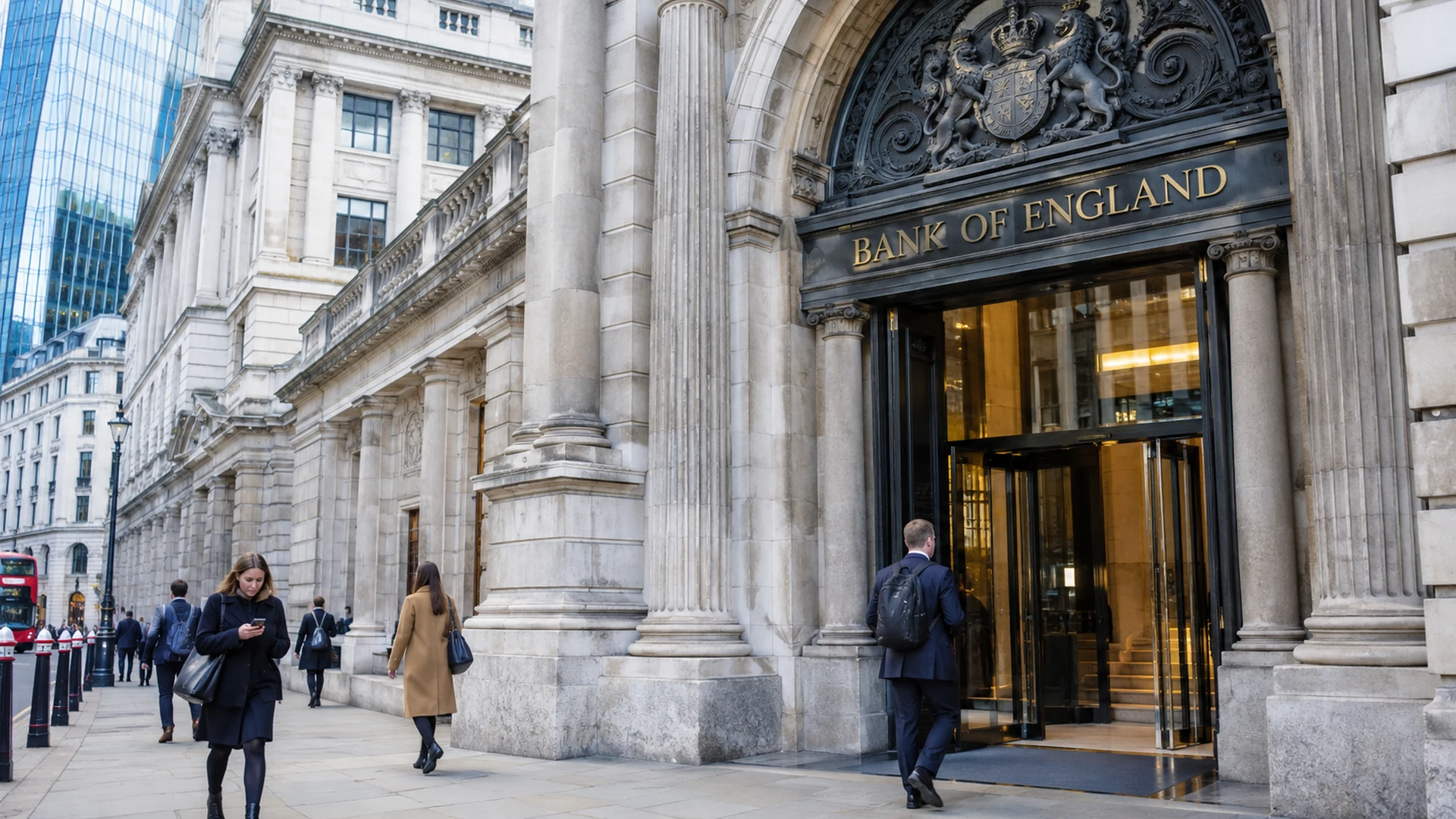
The Bank of England is expected to raise Bank Rate from 3.75% to 4.0% at its November 5 meeting, according to economists surveyed by Reuters. Higher energy costs have renewed inflation concerns. No decision has been announced, and the Monetary Policy Committee could still vote differently from the survey consensus.
Why the rate discussion has changed
Britain’s inflation problem has become harder to treat as a temporary rise in imported costs. Consumer prices were 3.5% higher in September than a year earlier, according to the figures cited in Reuters’ November 2 report. That was above the 3.0% inflation rate the Bank of England had forecast in July. The discrepancy matters because monetary policy must act ahead of price changes, rather than wait for every additional increase to materialise in official statistics.
Higher energy costs can spread from utility bills and fuel into transport, manufacturing and services. Interest rates cannot increase energy supply, but they can restrain demand and the second-round inflation effects that arise when businesses and workers expect continuing price increases.
Governor Andrew Bailey has warned that waiting for conclusive proof of these effects could mean acting too late. Yet higher borrowing costs also cool credit, property activity and consumer spending at a moment when the economy remains uneven. For households refinancing mortgages, a quarter-point increase is not merely an abstract financial-market event. It can add to monthly payments while energy and other essential costs are already elevated.
An unusually complicated vote
The Monetary Policy Committee voted six to three to keep the rate unchanged in September, revealing a genuine difference in judgment. Some members emphasise spare capacity and the danger of weakening demand unnecessarily. Others worry that inflation persistence will prove more expensive to reverse if action is postponed. Reuters’ poll points to a possible seven-to-two vote for a November increase, though the actual decision could differ.
Markets and economists are also separated by their expectations for next year. Interest-rate markets have priced the possibility of three or four further quarter-point increases in 2027, implying a Bank Rate between 4.75% and 5.0%. Analysts quoted by Reuters are more circumspect. The Bank could signal that a November increase is a precaution against an inflation shock rather than the opening step of a predetermined tightening cycle.
This divergence is important for sterling and British government bonds. Financial assets respond not only to the rate announced this week but to expectations for the entire path of policy. A hike accompanied by careful language about uncertainty could be interpreted differently from the same hike alongside explicit warnings about further increases. A more cautious message might reduce expectations for 2027 even as the Bank delivers an immediate rise.
What borrowers and businesses should watch
Mortgage lenders and property buyers will pay attention to what happens to medium-term swap rates, which influence fixed mortgage products. The relationship is not mechanical: lenders may already have incorporated the anticipated move into their pricing. Still, guidance that changes market expectations can alter mortgage offers even when the immediate policy-rate decision itself was widely expected.
The decision is only the beginning
Thursday’s statement, the vote split and Bailey’s explanation will therefore carry as much weight as the rate number. Analysts will look for evidence that the committee expects inflation to subside, for changes to growth assumptions and for any distinction between short-term vigilance and longer-term policy restraint.
Sources and methodology
Primary sources and supporting reporting.