Lloyds Nearly Doubles Quarterly Profit but Holds Its Annual Targets
Lloyds reported £2.33 billion in quarterly pretax profit. Lower remediation costs helped, while deposit competition limited the earnings outlook.
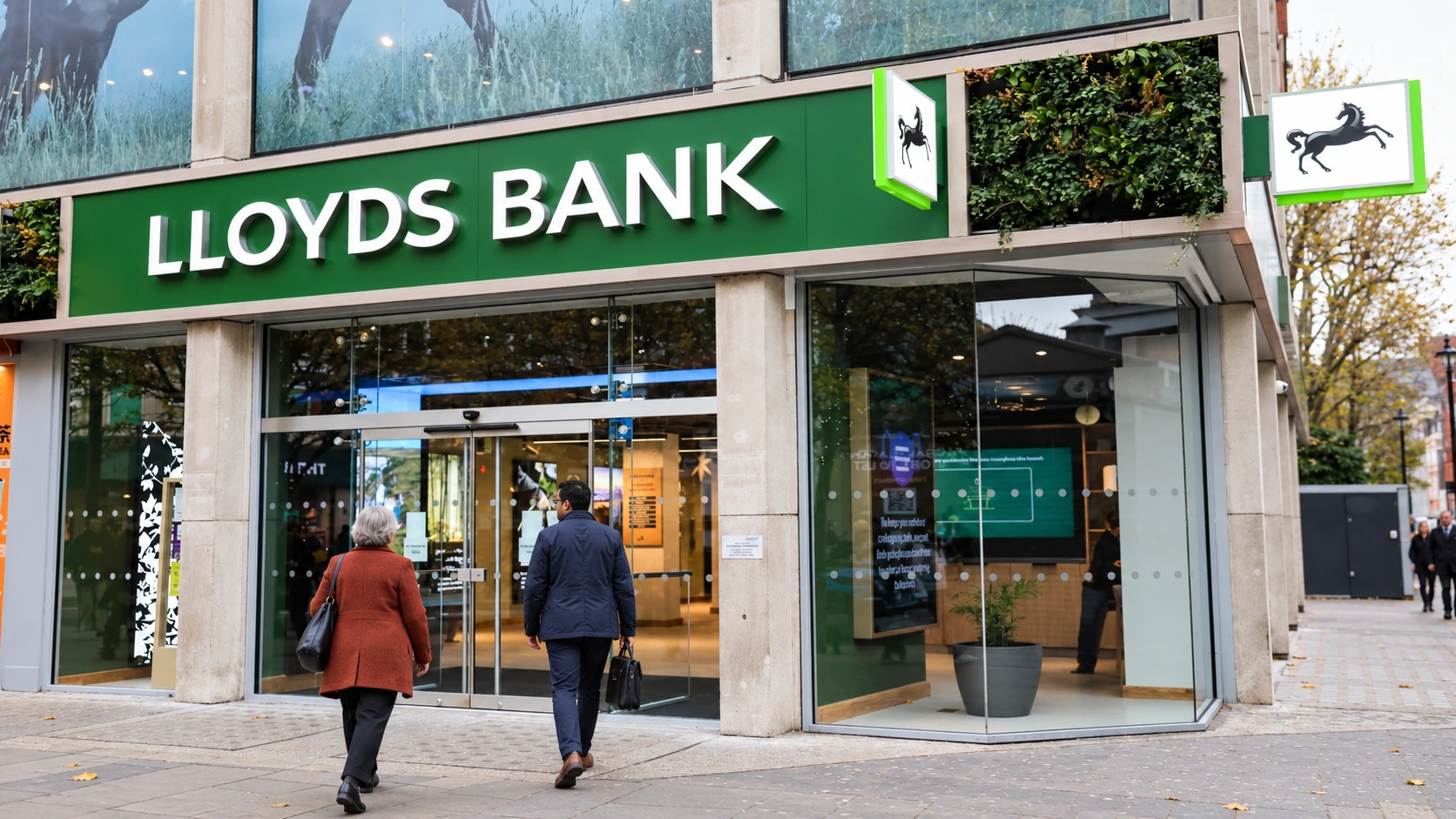
Lloyds Banking Group nearly doubled third-quarter pretax profit to £2.33 billion, but kept its annual financial targets unchanged on Thursday. The British lender's results show stronger interest income and a much smaller remediation bill, alongside competition for customer deposits that is limiting how much of the improvement can flow through to margins.
Statutory profit before tax increased 99% from £1.174 billion in the year-earlier quarter. Reuters reported that the result matched analysts' expectations and that the shares fell about 6% in early trading as investors reacted to the absence of upgraded targets. That was an initial trading response, rather than a closing price or a measure of the quarter's operating performance.
The comparison benefits from a lower remediation bill
Lloyds recorded £22 million in quarterly remediation costs, compared with £875 million a year earlier. The reduction explains a substantial part of the improvement in reported profit. A comparison that treats the entire increase as new revenue or a sudden acceleration in lending would therefore overstate what changed in the underlying business.
There was operating growth as well. Quarterly underlying net interest income increased 10% to £3.806 billion, and total net income rose 9% to £5.072 billion. The bank's net interest margin reached 3.25%, compared with 3.22% in the preceding quarter and 3.06% a year earlier. The sequential increase was three basis points, or 0.03 percentage point, rather than three percentage points.
Net interest income reflects the difference between what a bank earns on interest-bearing assets and what it pays for funding. A bank can increase that income by lending more, improving the spread, or benefiting from hedges that reset over time. The margin alone consequently does not explain the whole change in earnings.
Hedges help while deposits remain competitive
In its presentation, Lloyds attributed the quarter's margin improvement to income from its structural hedge, partly offset by pressure in mortgages and deposits. The hedge supplied £1.9 billion in income in the quarter. It is a mechanism for managing the interest-rate exposure of parts of the balance sheet, rather than evidence that all customer borrowing rates rose by the same amount.
Underlying customer lending rose £4 billion during the quarter to £495.5 billion. The presentation shows commercial lending as the main growth contributor, while mortgage balances increased more modestly. Deposits increased £1.9 billion to £502.8 billion, with commercial deposits growing and retail balances broadly stable. That combination supports balance-sheet growth without demonstrating that attracting deposits has become cheaper.
Competition for savings can raise a bank's funding costs even when customers leave their money in place. The relevant question is what the institution must pay to retain those balances. Strong lending growth and a modestly rising margin therefore need to be read together with management's comments about deposit pricing, rather than treated as proof that competitive pressure has ended.
Credit costs and capital remain separate checks
Lloyds' presentation reports a £313 million quarterly impairment charge and says arrears remained low and stable. The charge was below the preceding quarter, while the nine-month impairment total increased to £930 million. Provisions respond to observed credit performance, model changes and the economic outlook; they are not the same thing as cash already lost on every affected loan.
The lender ended September with a common equity tier 1 capital ratio of 13.3%. This regulatory measure compares core capital with risk-weighted assets. It should not be read as the share of deposits sitting idle in cash. Lending growth can consume capital as well as generate interest income, giving shareholders another reason to examine the balance sheet alongside the earnings headline.
The bank's factbook reiterates full-year targets including more than £14.9 billion in underlying net interest income, a cost-to-income ratio below 50% and a return on tangible equity above 16%. It also retains an approximately 13% year-end CET1 objective. These remain management targets; quarterly progress is evidence relevant to them, not a guarantee of their delivery.
For investors, the distinction between improvement and a positive surprise is central. TTN's guide to earnings expectations explains why a much higher profit can still disappoint when the market hoped for a stronger outlook. The recent Barclays results and buyback announcement provide a useful banking comparison, but each lender has a different business mix. At Lloyds, the next useful evidence will be whether hedge income and lending growth can continue to offset funding competition as the unusually favorable remediation comparison fades.
Sources and methodology
Sources checked October 29, 2026. Official decisions, company statements and reported findings are attributed in the text. Financial and operational implications are TTN editorial analysis.