Micron Reaches Taiwan Labor Deal, With Separate Strike Plans Still Unclear
The memory-chip maker and its Taichung union withdraw from mediation, while the status of a separate Taoyuan warning strike remains unconfirmed.
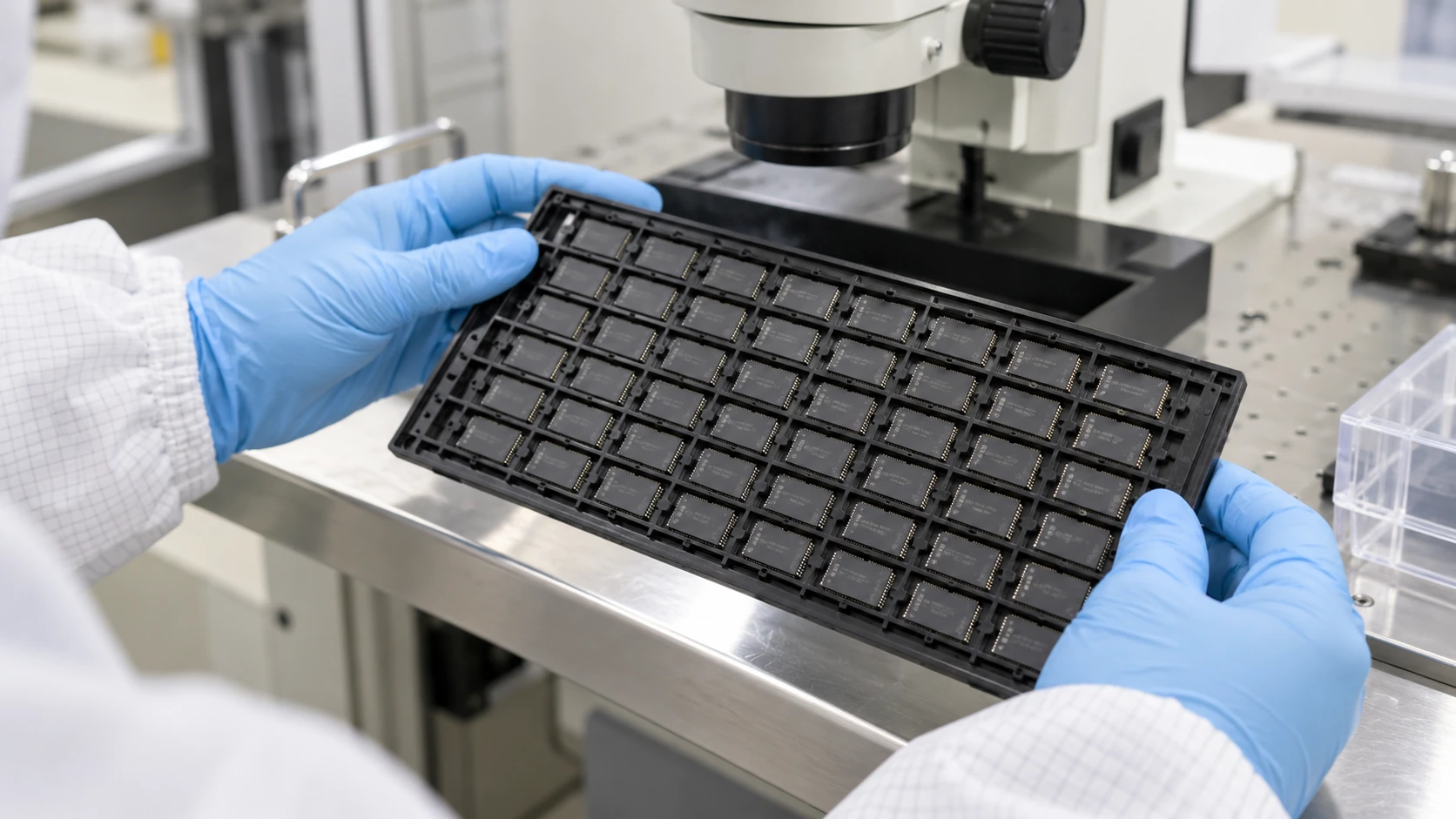
Micron Memory Taiwan and the union at its Taichung operations have signed a labor-management agreement and withdrawn from mediation scheduled for October 22, Reuters reported Wednesday, citing their joint statement. Financial terms were not disclosed.
The agreement does not establish that a separate Taoyuan union has canceled its planned one-day warning strike. That union had not confirmed its intentions to Reuters. The distinction matters for investors assessing labor risk at an important manufacturing base for the U.S. memory-chip maker.
Two unions, two different positions
Tuesday’s reporting described the Taoyuan dispute as a demand for a clearer profit-sharing system and an acceptable one-off bonus. The union had selected October 22 to coincide with mediation involving Taichung. A settlement with one bargaining group should therefore not be presented as proof that every outstanding issue across the company’s Taiwan workforce has been resolved.
For shareholders, the immediate question is operational continuity. The announced agreement supplies evidence of progress in negotiations, but it does not disclose a measurable change in chip output. There is no basis in the available statement to calculate additional deliveries, a revenue benefit or the cost of the settlement.
That uncertainty runs in both directions. A warning strike does not automatically mean an entire manufacturing system stops, just as a labor agreement does not automatically raise its capacity. Assessing a production effect would require details about participation, affected tasks, duration and the ability to maintain those tasks safely.
Why memory manufacturing matters to the AI buildout
Micron’s technical documentation explains why memory is more than a commodity attachment to an AI processor. High-bandwidth memory, or HBM, stacks multiple DRAM dies vertically and connects them through pathways in the silicon. Its wide interface moves large quantities of data between memory and computing hardware.
That arrangement addresses a different constraint from the number of calculations a processor can perform. An accelerator waiting for information cannot fully use its computing resources. Memory capacity determines how much data can be kept close at hand; bandwidth determines how quickly it can be moved. Those measures should not be treated as interchangeable.
HBM also depends on packaging that places memory close to the processor. Micron’s HBM4 material describes the need for a compatible processor interface and appropriate packaging. This helps explain why replacing a missing component is not simply a matter of buying any memory chip with a similar storage capacity.
The company lists more than 2.8 terabytes per second of bandwidth per stack for its HBM4 product. That is a product specification, not a measure of this week’s factory output or the performance of an entire server. It illustrates the role of specialized memory without showing how a particular labor action would affect customer shipments.
For buyers building AI systems, the relevant commercial unit is a usable combination of processors, memory and packaging that arrives when needed. More capacity in one component does not necessarily offset a shortage elsewhere. This is part of the wider supply-chain constraint on turning chip orders into working AI capacity.
The financial effect depends on terms and continuity
Labor compensation and production continuity affect the economics through different routes. A higher recurring payment would increase costs, while an avoided interruption could protect deliveries and customer relationships. Which effect dominates depends on facts that the public agreement has not supplied. A settlement headline alone cannot establish whether quarterly profit expectations should rise or fall.
A one-time bonus and a recurring profit-sharing formula would also have different implications. The first primarily concerns a particular payment; the second can change how future operating gains are distributed. Investors would need the final terms and their accounting treatment before translating either into a margin estimate. Neither structure should be assumed from the announcement.
The next useful evidence would be confirmation of the Taoyuan union’s plans, any disclosure of material agreement terms and a company assessment of operational effects. Until then, Wednesday’s news supports a narrower conclusion: Micron has reached a deal with its Taichung bargaining group, while the separate dispute and its production implications require their own confirmation.
Sources and methodology
Sources checked October 21, 2026. Reported findings and company statements are attributed in the text; discussion of their financial implications is editorial analysis. The generated cover is illustrative.
- Reuters, October 21 at 06:23 UTC: company-union joint statement and unresolved Taoyuan strike status
- Reuters, via MarketScreener, October 20: bonus dispute and separate union’s planned warning strike; background
- Micron: high-bandwidth memory architecture and its role in AI; technical background
- Micron: HBM4 packaging, processor compatibility and specifications; company technical background