Microsoft’s Reported Nscale Exit Puts Grid Access at the Center of AI Investment
Reports say Microsoft has left Nscale’s Loughton data center agreement. The project highlights the financial cost of capacity without timely grid power.
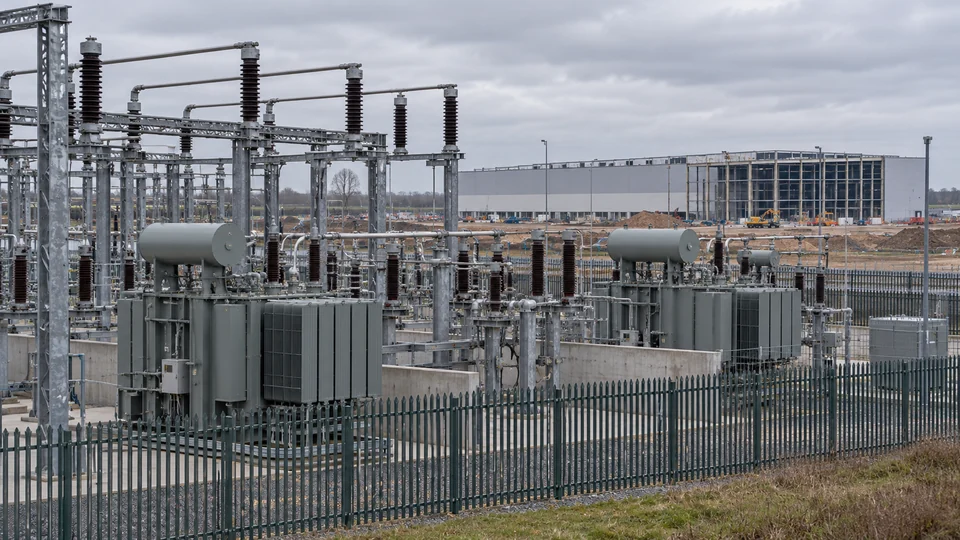
Microsoft has withdrawn from an agreement for Nscale’s proposed data center in Loughton, Essex, according to reporting published Sunday by The Telegraph and subsequently covered by Reuters and the Financial Times. The reported exit concerns one British project, rather than the companies’ entire infrastructure relationship.
Reuters said the original report did not specify Microsoft’s reason for leaving. It also reported that grid officials had told Nscale power was not expected until the 2030s. Microsoft had not immediately responded to Reuters. The available reporting supports scrutiny of the connection delay; it does not supply Microsoft’s own explanation for its decision.
A large project with a dated timetable
Nscale’s September 2025 announcement set out a 50-megawatt Loughton development, with potential expansion to 90 megawatts. It envisaged 23,040 Nvidia GB300 processors and an initial delivery in the first quarter of 2027. These were announced plans, not a statement that the capacity was already operating.
An October 2025 announcement placed Loughton inside a broader Microsoft agreement covering deployments in several countries. That history matters when interpreting Sunday’s news: the loss of a site-specific commitment cannot be used to infer that every other deployment has been canceled.
Nscale told Reuters that the wider relationship remained intact and that it was examining other ways to supply the Loughton site with electricity. The company also maintained its commitment to developing the location. Those statements describe its intentions, not confirmation of a replacement connection or tenant.
Electricity timing becomes a financing issue
The financial problem is straightforward. Construction, equipment orders and financing costs can precede customer revenue. If usable power arrives later than expected, the period between spending and cash generation can widen. Whether the developer or customer bears that cost depends on terms that have not been fully disclosed for this project.
For investors, an announced megawatt figure therefore needs a date and a delivery condition. Planned capacity, equipment installed and capacity available for a paying customer measure different stages of execution. A large contract value cannot substitute for that information.
This is a specific subsequent development in the delivery risks examined in The report on power, construction and debt in AI infrastructure. It adds a reported customer decision to the broader investment debate.
A connection date and a usable facility are separate milestones
Securing an electricity supply does not alone establish that a data center can begin serving a customer. Equipment installation, testing and acceptance may still stand between construction and revenue. The relevant commercial timetable is the date the contracted service becomes available under the agreement, rather than a single engineering milestone considered in isolation.
Delay can also affect different commitments unevenly. A building may retain value for another use while specialized equipment faces a different resale market or replacement cycle. Interest and maintenance costs can continue even when customer receipts have not started. The amount at risk depends on what has actually been purchased and the flexibility of the associated contracts, neither of which can be reconstructed from the announced megawatt capacity.
A replacement tenant would address demand for the location, but would not automatically resolve the timing of usable power. An alternative power proposal would address another constraint, but would still need a workable timetable and economics. Keeping those questions separate avoids treating any one new announcement as proof that the whole project has recovered.
The appropriate financial comparison is therefore between the original funding and delivery assumptions and a documented revised plan. Public information reviewed for this article does not provide that complete comparison. The reported withdrawal is material evidence of execution risk, while the size and allocation of any eventual losses remain unresolved.
What the reports do not establish
Neither the reports nor the original announcements reviewed here establish the value of a cancellation payment, the amount of equipment stranded or the effect on Nscale’s eventual profit. Assigning a precise loss would require further disclosure.
TTN’s assessment is that the important next evidence will be a workable power arrangement, a revised commissioning date and the commercial status of the capacity. Until then, the reported exit demonstrates a delivery problem at one location, with implications for how investors assess infrastructure commitments.