China’s Tech Giants Reportedly Order $35 Billion in Nvidia Cards
ByteDance, Alibaba and Tencent are seeking workstation GPUs. Reported orders show demand for AI capacity, but deliveries and revenue remain uncertain.
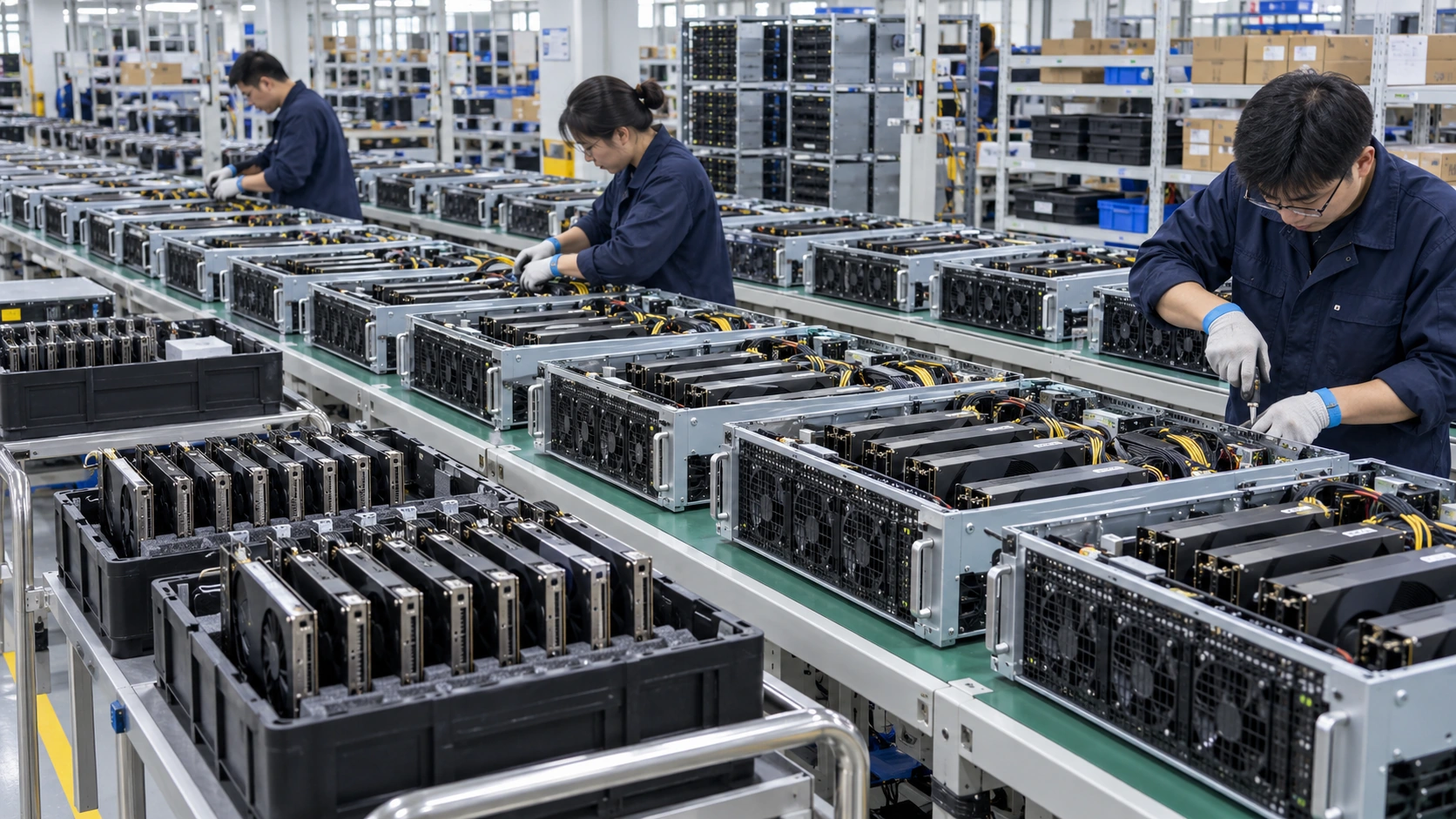
ByteDance, Alibaba and Tencent have ordered more than three million Nvidia RTX PRO 5500 graphics cards with a combined sticker value above $35 billion, Reuters reported Tuesday, citing people familiar with the matter. Nvidia cannot guarantee fulfillment, the report said. The buyers did not respond to requests for comment.
The scale is striking, but the distinction between an order and a sale matters. A request for scarce computing equipment becomes revenue only after the relevant delivery and accounting conditions are met. Investors should avoid treating the reported total as a new addition to Nvidia’s recognized sales.
A workstation card with an AI role
Nvidia’s official product page describes the RTX PRO 5500 as a Blackwell workstation GPU with 84 gigabytes of GDDR7 memory. Its intended uses include running trained language models, graphics, simulation and scientific computing. The published specifications are preliminary and subject to change.
Running a trained model is called inference: it is the work performed when a service produces an answer or processes a customer request. It differs from training a model. The same buyer can therefore need different hardware for different parts of its AI operation, rather than a single interchangeable pool of chips.
A filing shows the delivery risk
A separate October 13 disclosure by Tansun Technology records a contract for 20,000 RTX PRO 5500 cards. It warns about supply constraints, overseas technology controls and possible delays or quantities below expectations. That older filing supports the existence of procurement activity; it does not independently establish the three companies’ newly reported orders.
For customers, the practical question is how much usable capacity arrives, when it arrives and what each completed task costs. Memory capacity, cooling, software compatibility and utilization all affect the answer. A purchase headline alone cannot establish the economics of the applications that will run on the equipment.
Memory capacity does not settle the deployment economics
Nvidia's product description places the RTX PRO 5500 in centralized, rack-mounted workstation deployments and describes both air- and liquid-cooled options. That is useful context for the reported purchasing interest. A workstation-branded product can be installed in shared enterprise infrastructure; the label alone does not establish that each card will sit beside an individual employee's desktop.
The memory specification helps explain one aspect of demand, but it is not a complete performance comparison. A deployed language model needs memory for its parameters and working data, while throughput also depends on the model, numerical precision, software and the way requests are grouped. A larger memory allocation can make a workload fit without proving that it is the lowest-cost way to serve that workload.
The distinction becomes important when comparing a card price with a finished computing service. The card requires a compatible system, power, cooling and operational support. The economic denominator is useful work delivered over time, not simply the number of cards purchased. High utilization can spread those surrounding costs across more requests; an idle installation cannot do that merely because its hardware was scarce.
Delivery timing creates another layer of uncertainty. A company may place orders to secure future capacity while the final mix of equipment remains dependent on supply and applicable controls. That can make procurement intentions informative without making the entire reported sticker value a guaranteed revenue stream. The separate Tansun filing is relevant precisely because it discloses risks around delivery rather than promising unconditional fulfillment.
The report does not identify an independently verified shipment schedule for all three buyers. Nor do the product specifications establish that any particular export authorization has been granted. Those questions require their own evidence. Investors can recognize significant interest in computing capacity while keeping order size, permitted shipment and completed sale as three separate stages.
What the headline can and cannot tell investors
The report points to persistent demand for Nvidia products in China under trade restrictions. It is not a company-confirmed revenue forecast. Order conversion, delivery schedules and margins will be more informative than the largest possible purchase value.
Sources and methodology
Reporting checked October 20, 2026. Market moves are time-specific snapshots, not live prices or closing results. Analysis is TTN’s interpretation. The generated cover is illustrative and does not document an actual shipment, person, location or event.