OPEC+ Keeps December Oil Production Targets Unchanged Amid Supply Disruptions
Seven producers held December targets steady. Disrupted shipments mean the quota decision alone cannot show how much oil will reach buyers.
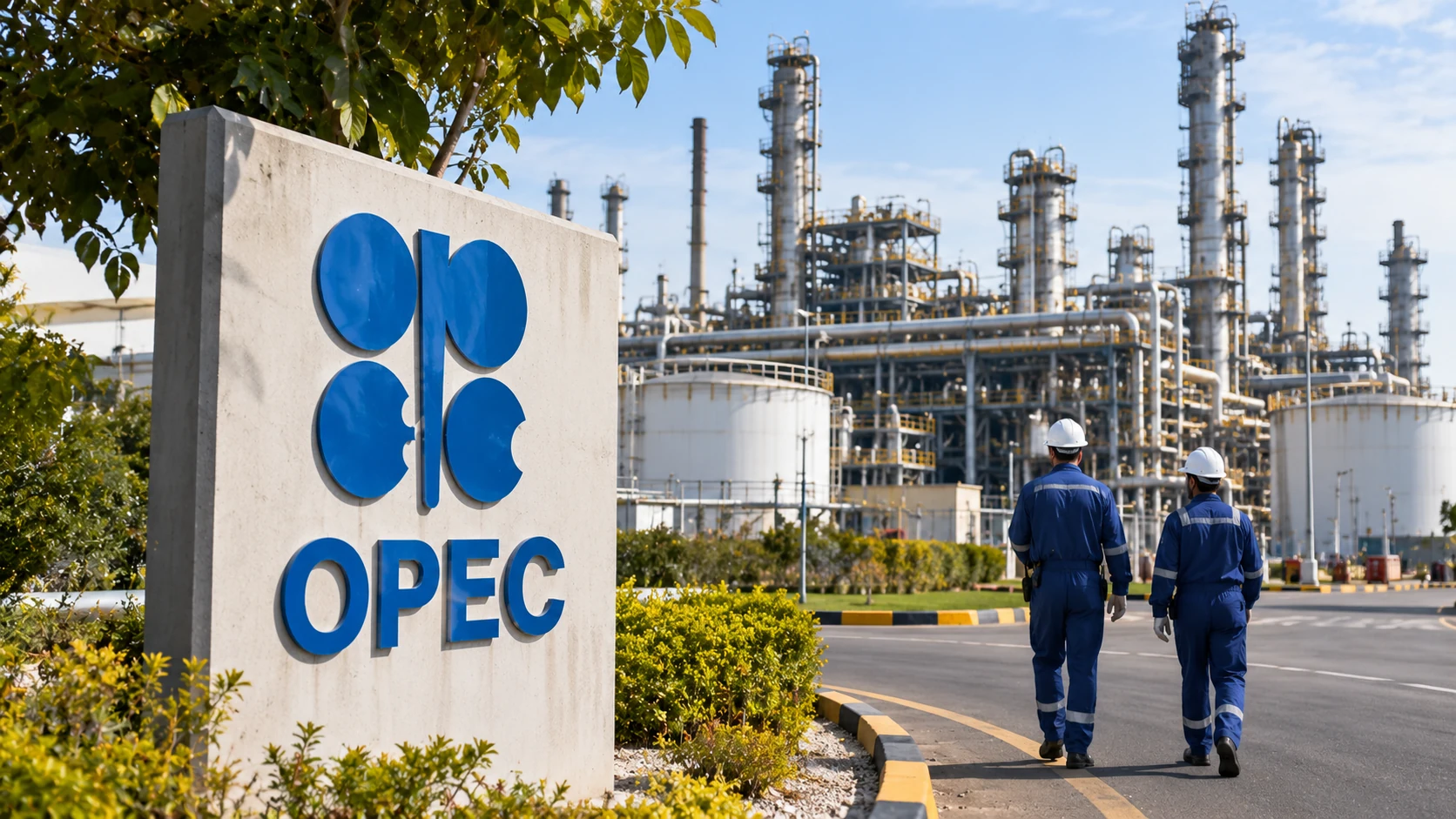
Seven OPEC+ producers agreed on November 1 to keep their required oil production levels unchanged for December 2026, according to an official statement from OPEC. The decision maintains previously established production requirements for the seven participating countries rather than announcing another increase in supply.
The announcement provides policy continuity, but it does not mean that all seven countries will produce or export at their full allocations. Supply disruptions associated with the US-Iran conflict have complicated flows from the Gulf, according to Reuters. Traders therefore need to distinguish the barrels permitted under the agreement from the volumes that actually reach customers.
What the seven producers agreed
The countries met virtually on Sunday to review market conditions and the outlook for demand and supply. Their statement reaffirmed a commitment to compliance with the wider OPEC+ cooperation framework and confirmed that the next monthly meeting is scheduled for November 29.
Why unchanged targets do not guarantee stable supply
An oil supply target is a commitment or ceiling within a negotiated framework. The physical market depends on production facilities, storage, pipelines, terminals, tankers and access to shipping routes. A disruption at one point in that chain can reduce deliveries even when producers are permitted to pump more crude.
Reuters reported that Gulf members had been seeking to rebuild exports disrupted during the US-Iran conflict, but many were still operating below their required production levels. That gap complicates a conventional interpretation of the announcement.
If a producer cannot meet its target, keeping the target unchanged does not necessarily restrict additional output. It may instead leave room for the country to recover production or shipments toward an existing allocation. Equally, the headline policy number may overstate the amount of oil readily available to buyers.
The condition of transport links matters alongside production figures. Refineries and trading firms can face higher costs when shipping routes are disrupted or journey times change. Freight, insurance and the availability of particular crude grades can affect delivered prices even without a formal change in OPEC+ quotas.
The market must watch more than Brent
The November decision came during a period of heightened uncertainty about the availability of Gulf barrels. It is therefore possible for benchmark oil prices to move significantly even when the policy statement itself is unsurprising. News about diplomatic negotiations, shipping access and production recovery can have a more immediate effect on expected supply than an unchanged quota.
The larger negotiation concerns 2027
Beyond the December target, the group faces a structural issue: how to set future production baselines. These baselines determine the reference levels from which quotas and adjustments are calculated. They affect both the distribution of future capacity to produce and the political balance within the alliance.
Reuters has reported that the group is working on assessments of members' production capacity as it prepares for 2027. Such reviews can be sensitive because countries have different investment plans, resource bases and views about how much output they should be allowed to supply.
What to monitor before November 29
Three categories of evidence will help determine how the oil market interprets the next meeting. The first is physical production and export data, which show whether disrupted volumes are returning. The second is information about shipping and refining conditions, especially where logistical constraints raise costs or delay deliveries. The third is any official progress toward the 2027 capacity assessments and baselines.
Sources and methodology
Primary sources and supporting reporting.