Why Prediction-Market Cases Turn on Jurisdiction and Preemption
The legal classification of an event contract can affect state and federal authority. Conflicting appellate decisions require precise comparison.
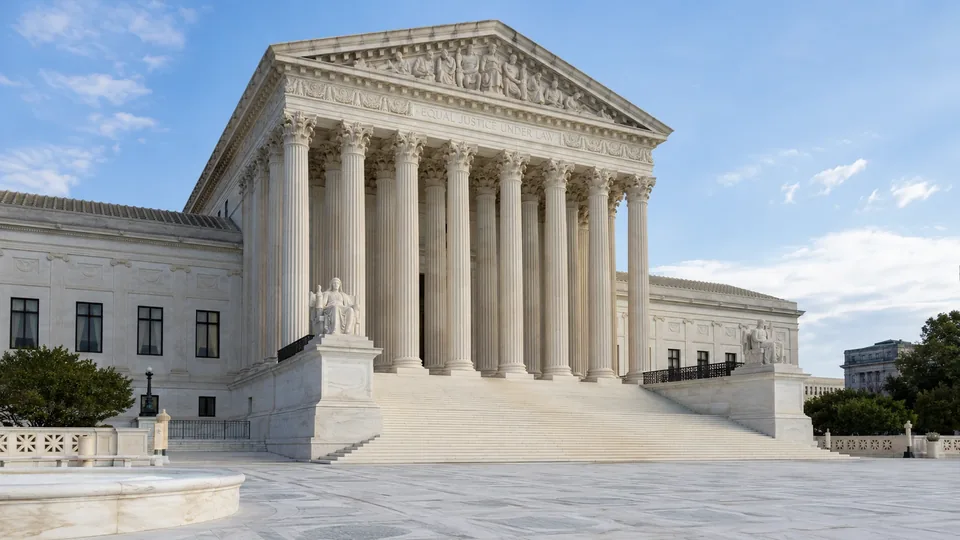
Prediction-market litigation often asks which authority can regulate a particular event contract. Federal derivatives regulation and state gambling law can address the same activity from different starting points. Describing a platform as federally registered does not explain the full scope of every dispute involving its products.
A legal account must distinguish an argument by a regulator or company from a holding by a court. It must also distinguish a temporary restriction, a preliminary injunction and a final judgment. Those distinctions determine what a ruling actually changes for the parties and the market.
Identify the contract and the legal claim
A contract settling according to an election, sporting event or economic statistic raises a concrete question about its terms and the relevant statutory category. Broad descriptions such as prediction market can obscure differences between products. Registration of a venue and the treatment of a particular contract are related but separate matters.
The Commodity Exchange Act's jurisdictional provisions are part of the primary legal framework. A preemption argument asks whether federal law displaces the state requirement at issue. That requires reading the statutory scope, the particular state action and the reasoning offered for displacement.
An agency's position is evidence of its argument
On April 28, 2026, the CFTC announced that it had sued Wisconsin following state litigation against prediction-market companies. The release asserted federal exclusivity and described related proceedings. It provides a dated example of the jurisdictional dispute and of the agency's position; it is not itself a judicial ruling that resolves every state-law question.
A complaint asks a court for relief. An opinion explains the court's reasoning, while the associated order states the operative result. Parties' press releases can help locate those documents, but a claim of victory should be tested against the relief actually granted.
Procedural posture can explain different outcomes
Imagine two hypothetical cases involving similar contracts. In the first, a court pauses enforcement while proceedings continue. In the second, another court refuses a requested pause. Those outcomes differ, but they do not alone demonstrate that the courts have issued irreconcilable final interpretations of the same federal question.
The requested relief, evidentiary record and legal basis must be compared. One decision could turn on a procedural obstacle that the other never considered. Another could address a narrower set of contracts or defendants. Those differences can matter as much as the result announced in a headline.
A circuit split requires a comparison of holdings
Federal courts of appeals review decisions within their respective jurisdictions. A relevant circuit conflict involves disagreement between appellate courts on an important legal issue. A disagreement between trial judges is not automatically a circuit split, and a state appellate decision is not a federal circuit decision.
A useful comparison records the court, case number, date, legal question, material facts and holding for each opinion. It also checks later proceedings, including rehearing or a superseding opinion. A sentence from a dissent describes that judge's view rather than the court's controlling holding.
This article explains how to assess such a conflict. It does not declare a current circuit split or a nationwide settlement of prediction-market legality based only on an agency release. A current case report needs the actual opinions and subsequent orders for the identified proceedings.
Supreme Court review is a separate event
Supreme Court Rule 10 describes review on certiorari as discretionary and identifies considerations including important conflicts between appellate courts. Filing a petition is a request for review. Granting review is a later decision, and deciding the merits comes after a further stage.
A party's announcement that it plans to petition therefore cannot support a claim that a Supreme Court hearing has been scheduled. Docket entries, orders and the question presented establish what has occurred. A denial of review should not be presented as a new merits opinion resolving the underlying argument.
Read the order's operative language
A court's discussion can be broader than the relief it actually grants. Identifying who is bound, which conduct is addressed and when the order operates helps establish the immediate consequence. A quotation from the reasoning alone may omit those limits. Comparing disputes requires the holding and operative order, rather than relying on a headline that two courts took different sides.
Market access and contract economics remain distinct
Legal uncertainty can affect which customers a platform accepts, what products it offers and the costs of operating across jurisdictions. Those commercial effects depend on the order's scope and the platform's response. An order concerning one product should not automatically be extrapolated to all event contracts.
Even where access is permitted, a displayed contract price remains subject to liquidity, fees and settlement rules. Our prediction-market probability guide covers those economic limits. Regulatory status and the reliability of a market-implied forecast answer different questions.
Sources and methodology (4)
Primary references for the definitions, methods and risks discussed above. Examples labeled hypothetical or illustrative are not current market quotations.
TTN analysis for informational purposes. This article is not investment, tax or legal advice.