Shell Lifts Buyback to $5 Billion as Refining Powers Quarterly Profit
Shell nearly doubled adjusted earnings from a year earlier and expanded its buyback. Strong refining margins helped offset lower crude prices.
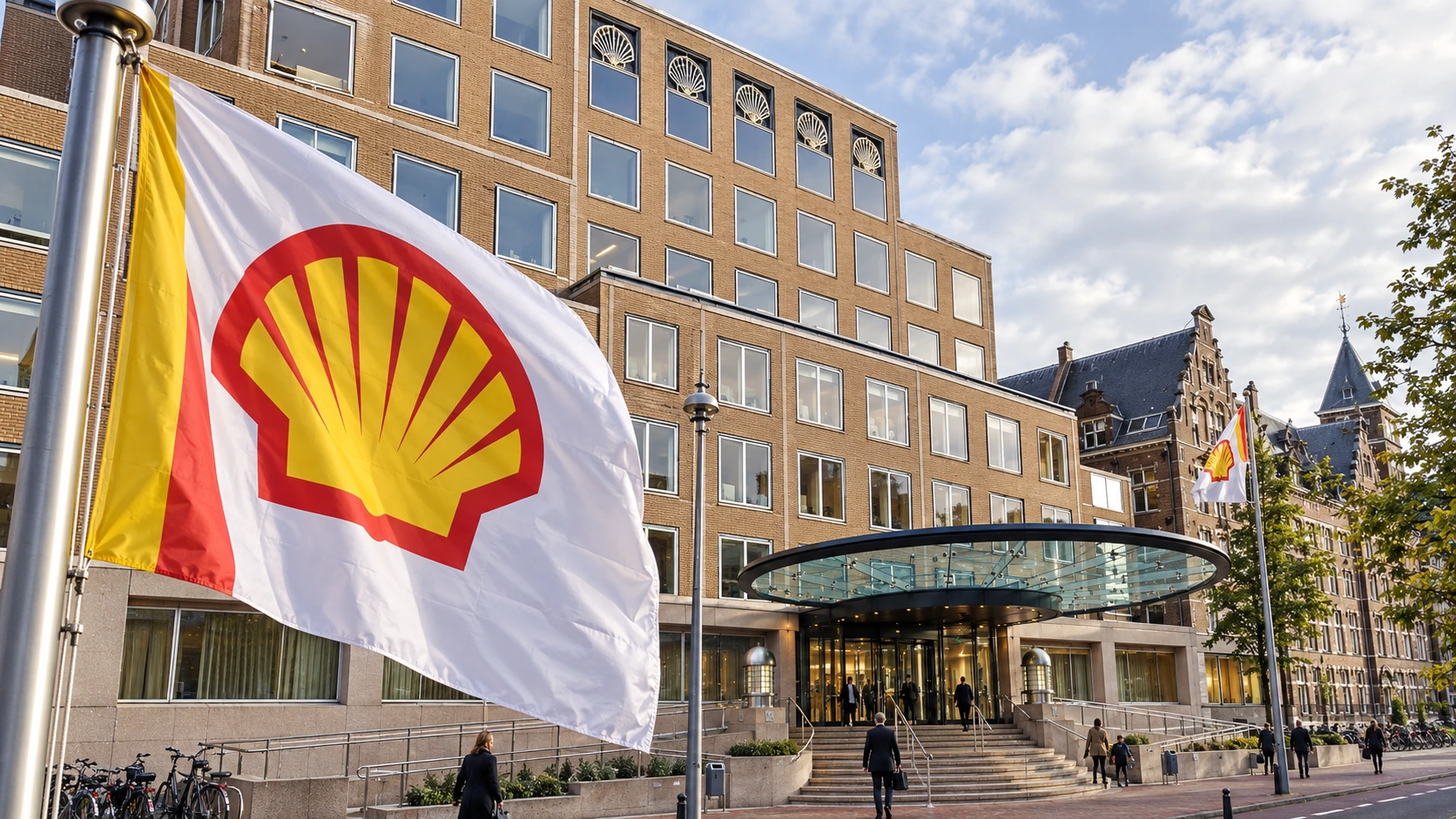
Shell announced a $5 billion share buyback for the next three months on Thursday after strong refining earnings helped lift third-quarter adjusted profit to $10.8 billion. The larger repurchase program channels more of the energy company's cash toward shareholders, even as it pays for acquisitions and expands its liquefied natural gas business.
The buyback increases from $3 billion in the preceding program. Adjusted earnings of $10.814 billion compared with $5.432 billion a year earlier and $9.836 billion in the second quarter. Reuters reported that the result exceeded an analyst forecast of $10.33 billion. Those comparisons describe Shell's adjusted measure; income attributable to shareholders under its financial statements was higher, at $12.057 billion.
Refining supplied the biggest earnings lift
Shell's investor slides show why an integrated energy company can earn more even when crude prices fall. Its indicative refining margin rose to $42 a barrel from $24 in the second quarter, while the quarterly average Brent crude price declined to $97 from $104. The refining measure tracks the environment for turning crude into fuels, rather than the price of the crude itself.
The spread between input costs and the value of finished products matters alongside the headline oil price. A producer exposed mainly to extracting crude and a group with substantial refineries can therefore experience the same market differently. Shell's results provide a concrete example of that distinction; they do not establish that higher refining margins will persist into the next quarter.
Chemicals and Products generated $3.855 billion in adjusted earnings, up from about $2.9 billion in the preceding quarter. Integrated Gas contributed $3.037 billion, while Upstream contributed $3.189 billion. Shell attributed the overall improvement to stronger refining margins, higher realized LNG prices and increased Integrated Gas volumes, partly offset by weaker trading contributions in crude and oil products and lower realized liquids prices.
Cash generation supports a larger distribution
Operating cash flow reached $21.043 billion. That was substantially above the year-earlier result but slightly below the second quarter's $21.432 billion. Earnings growth and cash growth consequently tell different quarter-to-quarter stories. Timing effects, including payments, asset sales and movements in working capital, help explain why the two measures should be examined separately.
Shell's unaudited statements report $16.322 billion in free cash flow, including the effects of investing cash flows. Cash capital expenditure reached $7.922 billion and included consideration for the ARC Resources acquisition, while divestment proceeds supplied $2.7 billion. As TTN's guide to free cash flow explains, an acquisition-heavy quarter requires attention to the company's definition and reconciliation, rather than a mechanical comparison of the headline numbers.
The company ended September with net debt of $39.7 billion, down from $41.8 billion at the end of June. That provides a second check on the distribution decision: a large buyback is easier to sustain when cash generation can cover investment and shareholder payments without steadily increasing financial obligations. One strong quarter, however, is a snapshot of that capacity rather than a permanent payout guarantee.
Ordinary shares and US receipts receive different amounts
Separately, Shell declared a quarterly dividend of $0.3906 per ordinary share. Each U.S. American Depositary Share represents two ordinary shares, making the corresponding gross amount $0.7812 per ADS. The distinction matters for U.S. holders comparing the dividend announcement with the security in their brokerage account. ADS dividends default to payment in dollars.
The dividend and buyback also have different mechanics. A dividend pays eligible holders cash, while a repurchase reduces the shares outstanding if the acquired stock is canceled. Our explanation of stock buybacks examines why the price paid and the cash used affect the benefit to remaining shareholders.
Shell now places 2026 cash capital spending at $23 billion to $25 billion, including roughly $4 billion for ARC. Its presentation also retains a $20 billion to $22 billion annual range for 2027 and 2028. The next test is whether operating cash remains strong as the newly acquired production enters a full quarter and refining conditions change. Thursday's higher buyback reflects cash already generated; the later spending ranges remain management plans.
Sources and methodology
Sources checked October 29, 2026. Official decisions, company statements and reported findings are attributed in the text. Financial and operational implications are TTN editorial analysis.
- Shell, October 29: quarterly press release and segment performance
- Shell: third-quarter unaudited results and financial reconciliations
- Shell: third-quarter investor presentation, price markers and capital framework
- Shell, October 29: ordinary-share dividend and ADS entitlement
- Reuters, October 29: earnings consensus and increase in buybacks