Starbucks’ Coffeehouse Recovery Meets a Revenue Decline After Its China Deal
Starbucks’ US comparable sales rose 7.7%, but its China deal is shrinking reported revenue. An extra week also boosts the new annual earnings forecast.
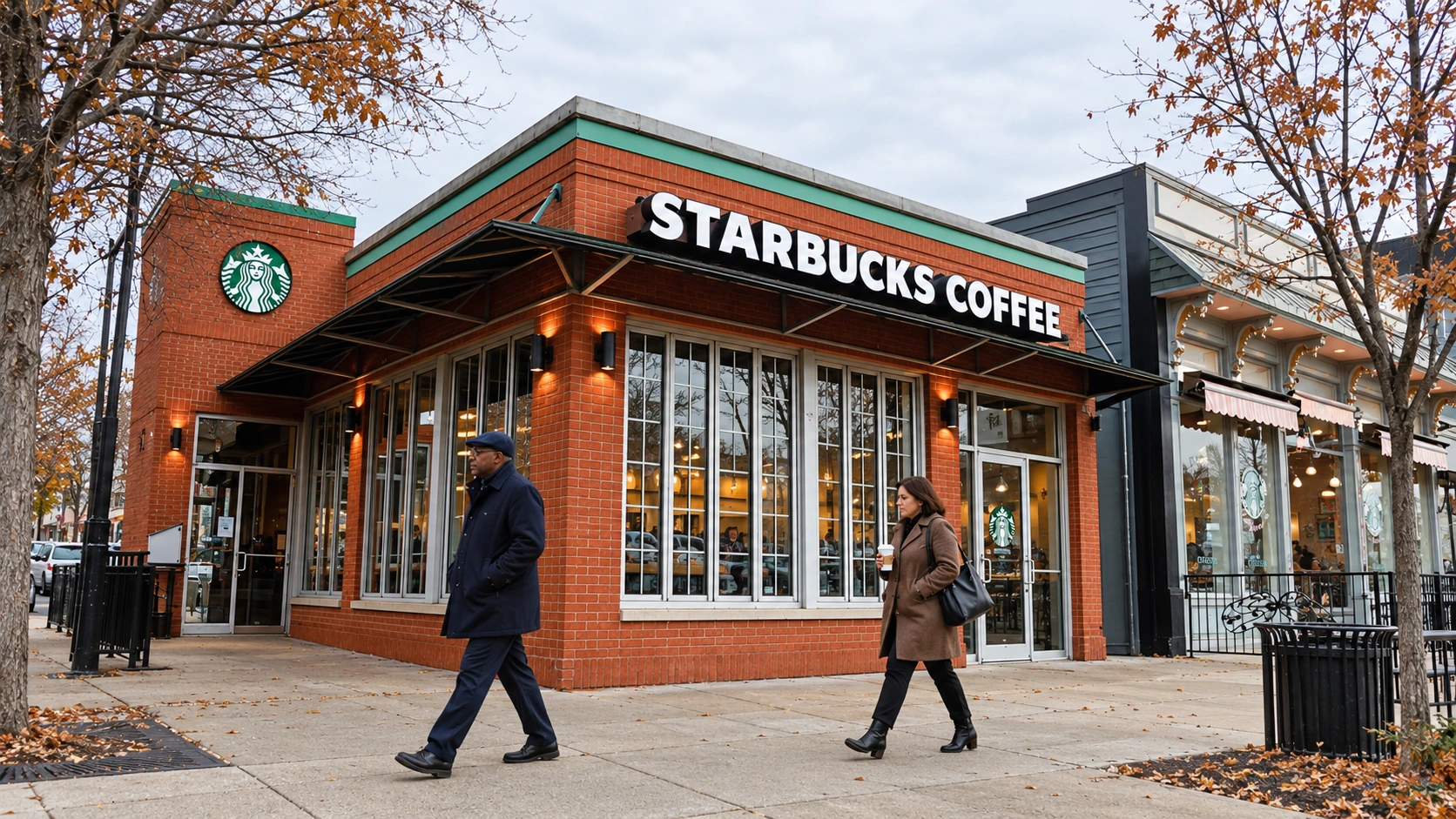
Starbucks forecast higher annual adjusted earnings Thursday as its coffeehouse recovery gathered pace, but said reported revenue would decline following the restructuring of its Chinese business. The results separate improving demand at existing stores from the effect of moving a large market outside its company-operated retail accounts.
For fiscal 2027, Starbucks expects adjusted earnings of $3.15 to $3.25 a share. Reuters reported an analyst benchmark of $3.14, compiled by LSEG. The company also announced a $1 billion share repurchase plan, according to Reuters. Its stronger profit outlook arrived alongside a forecast for an approximately 1% decline in consolidated revenue.
The apparent contradiction has an accounting explanation. Under a licensed joint-venture model, Starbucks no longer records all Chinese store sales as its own retail revenue. Royalty and related income replace a different set of receipts and expenses. A smaller reported revenue base can therefore coexist with continued activity in the coffeehouses carrying its brand.
Customers return, but larger checks do more of the work
US comparable coffeehouse sales increased 7.7% in the fourth quarter, with transactions up 2.4% and average spending per transaction up 5.2%. Globally, comparable sales rose 7.2%. These figures measure the eligible existing-store business rather than total consolidated revenue, which fell to about $9.1 billion.
The transaction component is particularly useful when judging a recovery. A larger average bill can reflect prices, a different product mix or additional items in an order. More transactions provide a separate sign that customers are using the stores more often. The two measures should not be treated as if all the sales growth came from additional visits.
The percentages also combine multiplicatively. Multiplying a 2.4% increase in transactions by a 5.2% increase in spending produces approximately 7.7% sales growth after rounding. Simply adding the two gives a slightly different result. This is a calculation illustrating the company’s operating measures, not a separate estimate of customer behavior.
As explained in TTN’s guide to reading retail results, a chain’s sales can reveal where consumers are still willing to spend. They do not establish that every age group, market or competing retailer is benefiting equally. Starbucks’ recovery is evidence about its own business, rather than a comprehensive reading of household finances.
The calendar adds to the earnings outlook
Fiscal 2027 contains 53 weeks instead of 52. Starbucks estimates the additional week will contribute roughly $700 million in revenue and slightly more than 10 cents to adjusted earnings per share. Its North American comparable-sales growth target is approximately 4%, measured on a comparable 52-week basis.
That extra week changes the interpretation of annual growth. It supplies another period of trading without requiring existing stores to increase their daily sales. Investors comparing next year’s forecast with this year’s earnings need to distinguish the calendar contribution from changes in demand, staffing, productivity and the ownership structure of the business.
It would also be misleading to deduct exactly 10 cents from the forecast and describe the result as official guidance. The company says slightly more than that amount, and it has not supplied a separate replacement earnings range on that basis. The published forecast remains the 53-week figure.
Profitability improves as the store portfolio changes
Fourth-quarter adjusted earnings reached 80 cents a share, compared with reported accounting earnings of 59 cents. The difference includes restructuring and other adjustments. Starbucks reported a 10.8% accounting operating margin and a 14% adjusted margin. Both improved, but they describe different treatments of costs rather than two interchangeable readings of profit.
The company also closed approximately 250 North American company-operated coffeehouses under its latest portfolio review. Store closures can improve the economics of the remaining network, while making headline growth less representative of the experience at every location. The financial test is whether recurring sales and operating improvements persist after the restructuring work.
The share repurchase plan adds another capital-allocation decision. Buying back stock can reduce the share count, but it does not establish stronger coffee sales or guarantee a higher stock price. TTN’s earnings comparison guide explains why an above-consensus forecast can still leave unresolved questions about the quality and durability of growth.
Starbucks enters the next year with a stronger existing-store performance and a materially different reporting perimeter. The next results will show how customer visits, spending per order and margins develop within that smaller revenue base. Those measures will be more informative than treating the China-related decline as proof that the coffeehouse recovery has stopped.
Sources and methodology
Sources checked October 29, 2026. Official decisions, company statements and reported findings are attributed in the text. Financial and operational implications are TTN editorial analysis.