Slovakia Approves Tesla Driver Assistance as European Rollout Expands
Slovakia has recognized provisional approval for Tesla’s supervised driving system. The decision opens a path to rollout, while drivers remain responsible for the vehicle.
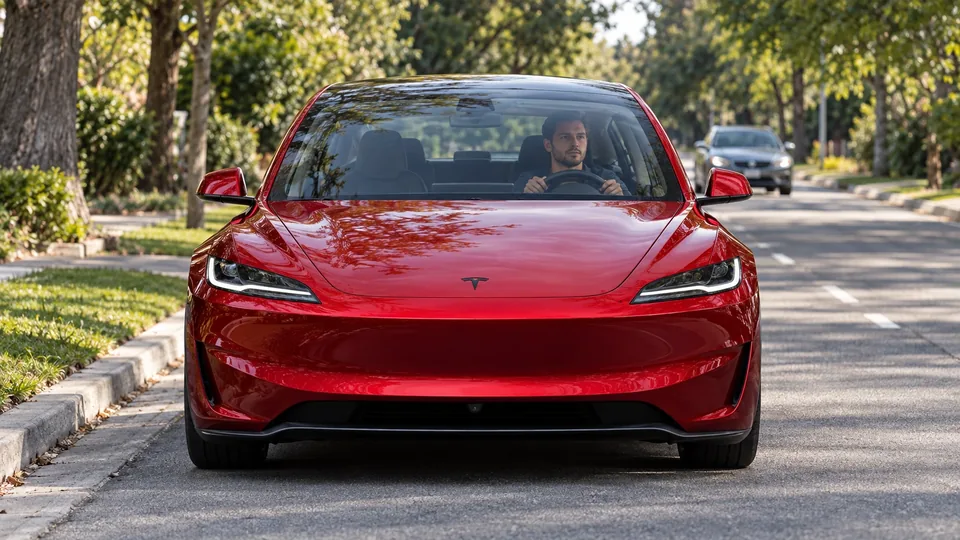
Slovakia has authorized the use of Tesla’s supervised driving-assistance software, adding another national approval to the company’s European expansion. Tesla said rollout would begin soon, Reuters reported Friday.
The Slovak transport ministry said it had recognized the system’s provisional type approval. Its statement identifies the technology as Full Self-Driving (Supervised), an advanced assistance package, and explicitly says the driver remains fully responsible for driving.
That distinction belongs at the center of the announcement. Permission to use supervised assistance does not mean permission to leave the driver’s seat empty, stop monitoring traffic or operate a driverless taxi service.
What Slovakia actually recognized
According to the ministry, the Dutch RDW authority issued provisional approval in April, which other member states can recognize for their own territory. Slovakia said it had taken that step on Friday. National recognition and a blanket authorization across the European Union are different milestones.
The ministry describes a camera- and neural-network-based system that can assist with accelerating, braking, steering, lane changes and intersections. It also says the system monitors driver attention and can issue warnings or deactivate when the driver is inattentive.
Reuters reported last week that Tesla had begun using the name Tesla Assisted Driving on European websites. American readers will recognize the related US branding, Full Self-Driving (Supervised). A change in the product’s name does not remove the requirement for an attentive driver.
Approval is one step; activation is another
Tesla’s support documentation says availability depends on factors including vehicle configuration, hardware, software version and region. Vehicles also need a software update before the features become available. The approval headline therefore does not establish that every Slovak Tesla owner can activate the system immediately.
The company’s statement that rollout would begin soon should be read as a plan, not a confirmed delivery date for a particular car. Owners need the eligibility and activation information attached to their own vehicle. US subscription terms should not be assumed to apply to Slovakia.
For the wider technology business, the distinction is commercially important. Regulatory access creates an opportunity to sell software, but does not reveal how many drivers will subscribe, how often they will use it or how many will retain it after trying it.
A new addressable market is not recognized revenue
For Tesla, regulatory access expands the group of customers who may be able to buy or use a feature. Converting that opportunity into revenue depends on eligible vehicles, the offer made to owners and their willingness to pay. None of those quantities can be calculated from a national approval alone. An estimate based on every vehicle in the country would therefore require assumptions beyond the announcement.
Customer adoption and operational performance also need separate evidence. High initial interest could reflect curiosity, while recurring use would indicate a different relationship with the product. Neither measure substitutes for evaluating whether the enabled assistance performs within its operating limitations. A successful rollout needs clear instructions as well as access.
The ministry's description and Tesla's vehicle-specific documentation are consequently more useful to an owner than a generic label such as autonomous. They identify the requirement for supervision and the conditions affecting availability. The immediate change is the country's recognition of the provisional approval, with customer activation and commercial results still to be demonstrated.
The next test is deployment, not the label
Useful evidence will include confirmed customer availability, eligible hardware, local terms and the actual functions enabled. Those details are more informative than treating every national authorization as a completed deployment.
The same gap between access and commercial results appears in The reporting on Germany’s planned industrial AI agreement with Nvidia. Announcements can expand the market for a technology before its operational and financial results are measurable.
Slovakia’s decision removes a regulatory barrier within that country. It does not settle the separate questions of EU-wide access, driverless operation or customer adoption. For now, the next concrete milestone is the rollout Tesla says will follow.
Sources (4)
- Slovak Ministry of Transport: recognition of provisional Tesla FSD approval, October 16, 2026
- Reuters: Tesla says Slovakia approved the system and rollout will begin soon, October 16, 14:31 UTC
- Tesla Support: Full Self-Driving (Supervised), driver responsibilities and feature availability
- Reuters: European naming change to Tesla Assisted Driving, October 9; background
For informational purposes. This article is not investment advice.