Trezor Warns CryptoBilis Buyers After Suspected Wallet Hardware Tampering
Trezor is warning buyers from former reseller CryptoBilis after one suspected Safe 5 implant report. It has not examined the unit or confirmed losses.
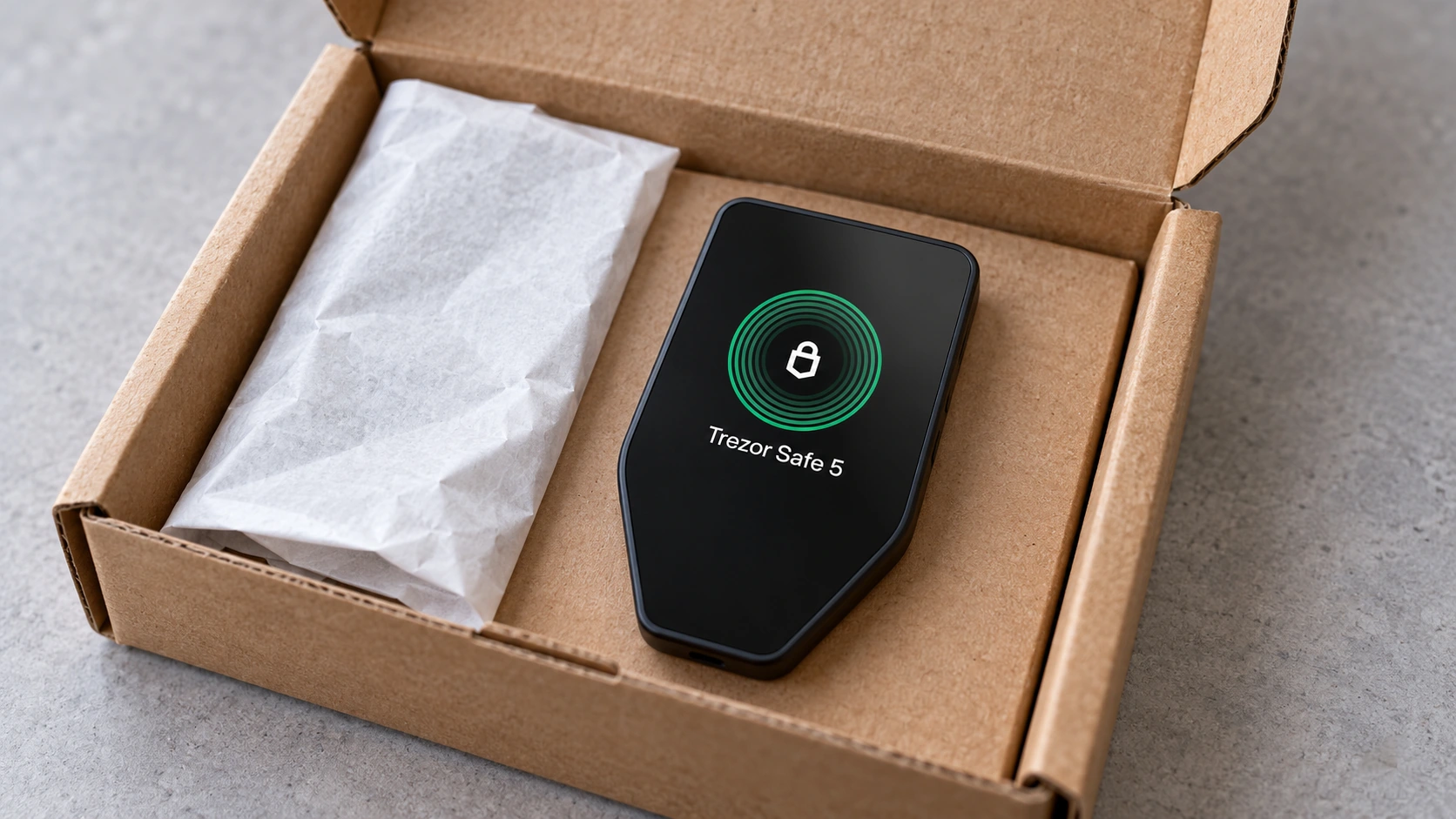
Trezor warned customers Friday about a suspected hardware implant in a Safe 5 cryptocurrency wallet sold through former reseller CryptoBilis. The manufacturer has not received the unit for laboratory examination and has not confirmed the reported modification. It is nevertheless treating the account as credible and issuing precautionary guidance, bringing attention to the physical supply chain behind self-custody.
The warning concerns the route through which a wallet reached its owner, rather than an announced failure of the underlying Bitcoin network. That difference matters for readers deciding what the incident means. A compromised device can create a serious individual risk without establishing that every device of the same model, every seller or a blockchain itself has been compromised. Device integrity and node-software security are separate layers.
One report, with important limits to the evidence
The company’s notice says an Indonesian customer reported the device on October 28 after buying it through CryptoBilis on Tokopedia in August. Trezor reviewed the account, photographs and a video interview before publishing its October 30 warning. The unit’s physical examination is still outstanding, so the suspected mechanism should be described as an allegation under investigation, rather than a completed forensic finding.
Decrypt reported that Trezor had already inspected four other devices obtained from CryptoBilis and found no evidence of tampering. The company removed the reseller on October 9 after concerns involving another manufacturer’s wallets. Those earlier checks are relevant context, but a small set of unaffected devices cannot establish the condition of every unit that passed through a seller’s inventory.
Trezor says no CryptoBilis customer has reported a loss of funds to it and that it has no reports involving another reseller. Those are carefully limited statements about the information available to the company. They should not be expanded into either a claim that losses have occurred or a guarantee that every potentially exposed buyer is unaffected.
The reported mechanism targets information on the screen
The allegation describes an additional board between the wallet’s main board and display, with a cellular module and antenna. According to the account summarized by Decrypt, it could read displayed information, including backup words, and transmit that information through a mobile network. Trezor has not independently verified that operation. It has also not identified who is responsible.
The potential significance is easier to understand from the display’s normal role. Trezor’s own technical explanation describes the device screen as a place to verify transaction information independently of an internet-connected computer. A separate display helps protect against malicious software that shows a legitimate address on a computer while substituting another address for the transaction being signed.
Physical interference with that display path raises a different question from ordinary malware on a laptop. If secret backup information were copied while it appeared on a device, keeping the normal signing keys offline would not by itself undo that disclosure. This is the security implication of the alleged mechanism, conditional on laboratory confirmation; it is not proof that the reported unit successfully transmitted a customer’s backup.
A replacement device is different from a new wallet
Trezor’s guidance covers all of its models supplied by CryptoBilis from March 2026 onward, rather than only the Safe 5 named in the report. It tells affected owners to move funds to a newly created wallet with a new backup and tells buyers who have not configured their device not to set it up. Replacement devices or vouchers are being offered through support.
The distinction between moving a device and moving funds is fundamental. Backup words are credentials for restoring access, not a protective label attached only to one piece of hardware. Importing the same potentially exposed backup into a replacement device preserves access to the same wallet. Creating a fresh wallet and transferring assets changes that relationship. The manufacturer’s guidance addresses that credential risk rather than merely swapping the casing.
A transfer also introduces ordinary transaction risks. Trezor’s sending documentation emphasizes choosing the correct network and checking the complete receiving address against its original source. It warns that addresses copied from transaction history can be misleading because of address-poisoning attacks. Those checks remain relevant during an urgent response, when a hurried transaction can create a separate loss even if the original security concern is avoided.
Supply-chain risk changes the self-custody comparison
Self-custody reduces dependence on an exchange holding assets on a customer’s behalf, but it transfers important responsibilities to the owner. Hardware origin, backup handling and transaction verification become part of the security arrangement. TTN’s coverage of a separate wallet-software vulnerability illustrates why software and physical-device risks need distinct remedies.
The incident also creates an opportunity for impersonators. A legitimate support process should not be confused with messages asking a customer to disclose backup words. Security warnings can increase the urgency of communications, which makes the source and requested action especially important. The company’s incident page is the direct reference for its response, rather than an unsolicited instruction arriving by email or phone.
The decisive next development will be Trezor’s examination of the reported unit and any confirmed change in the affected population. Until then, the useful distinction is between a credible precautionary warning and a verified account of exploitation. The report challenges assumptions about delivery and reseller controls; it does not establish a system-wide breach of hardware wallets or a failure of Bitcoin’s transaction validation.
Sources and methodology
Sources checked October 30, 2026. Official decisions, company statements and reported findings are attributed in the text. Financial and operational implications are TTN editorial analysis.