Volkswagen Posts €5.9 Billion Operating Loss as Porsche Writedown Bites
A Porsche goodwill charge deepened Volkswagen’s quarterly loss. Even before special items, weaker margins keep pressure on its restructuring.
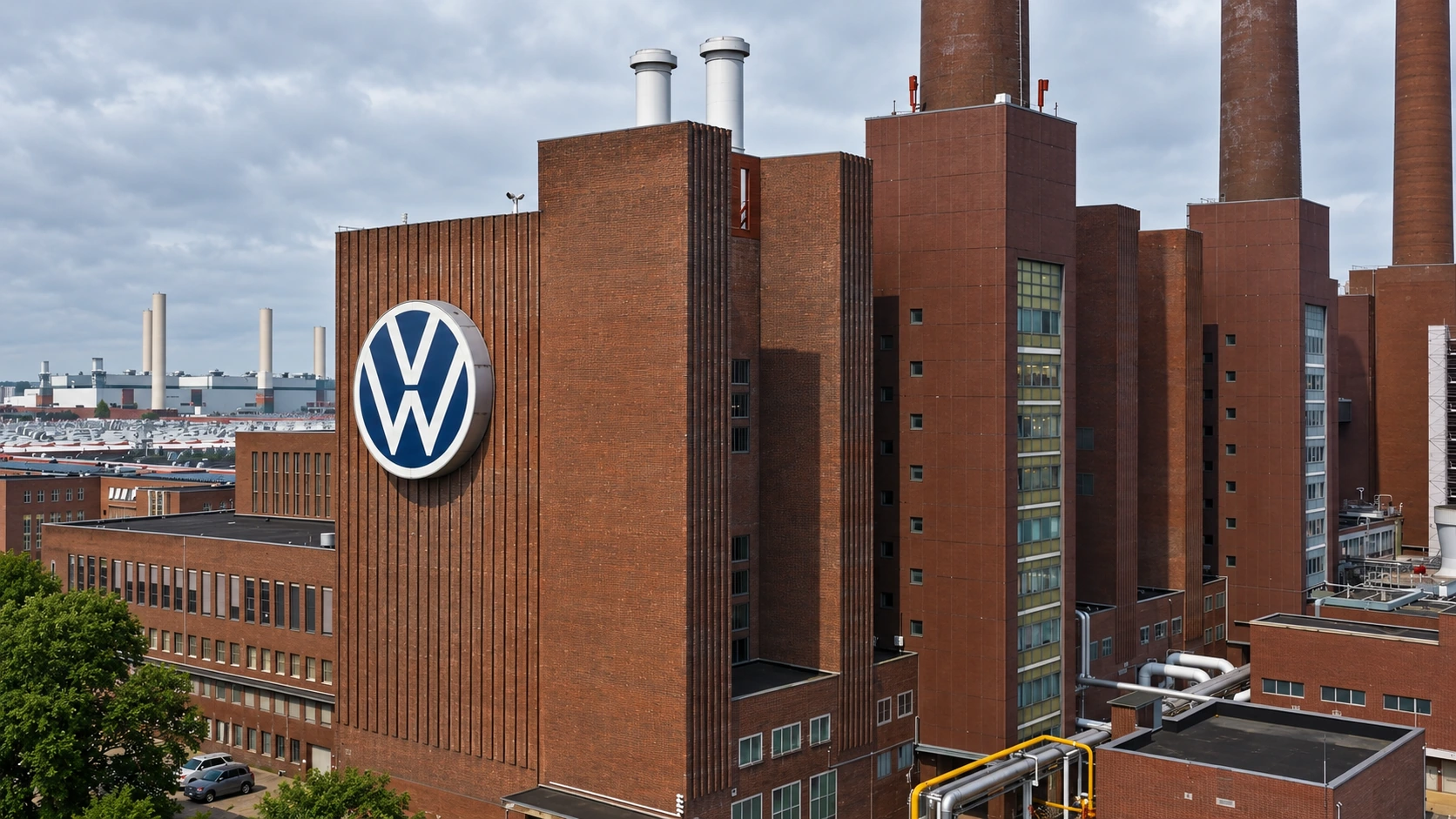
Volkswagen reported a third-quarter operating loss of €5.86 billion on Thursday, as a major Porsche goodwill impairment magnified the financial strain from weak demand and a less profitable vehicle mix. The result puts fresh numbers behind the German automaker's restructuring challenge: removing large accounting charges still leaves a business earning relatively little on its sales.
The quarterly loss widened from €1.30 billion a year earlier. Revenue fell 6.3% to €75.28 billion, according to the group's investor presentation. Reuters reported that analysts tracked by Visible Alpha had expected an operating loss of €2.6 billion. The newly published accounts therefore describe a worse quarter than that forecast, rather than a new announcement of a problem investors had never been warned about.
A large accounting charge meets thin underlying margins
Volkswagen recorded €7.76 billion in third-quarter special effects. Across the first nine months, special items reached €8.69 billion, including a €6.4 billion noncash impairment of Porsche goodwill and roughly €1 billion in impairments on assets of fully consolidated companies in China. Goodwill represents value recorded in acquisition accounting; writing it down reduces reported profit without requiring an equivalent cash payment that day.
That distinction makes the operating loss different from an immediate €5.9 billion drain on the bank account. It does not make the impairment economically irrelevant. A lower carrying value recognizes diminished expectations for the earnings associated with an acquired business. Investors must judge both the cash available now and whether the assumptions behind past investment can still be delivered.
Before special items, Volkswagen's nine-month operating result was €8.8 billion, corresponding to a 3.8% return on sales. CFO Arno Antlitz said that level was insufficient to support the company's future investment needs. The group identified lower-margin electric vehicles, greater pricing pressure and difficult conditions in China as continuing sources of earnings pressure alongside the exceptional charges.
A shift toward electric models can thus improve a manufacturer's competitive position while weighing on near-term profitability. Orders, deliveries and earnings measure different stages of the business. An expanding order book shows customer interest; it does not establish what margin will be earned when those vehicles are produced, sold and supported.
Cash flow offers a more mixed picture
For the first nine months, automotive net cash flow rose to €4.4 billion from €1.8 billion a year earlier. Volkswagen attributed the improvement partly to lower investment and portfolio transactions. Adjusted for merger-and-acquisition effects, the measure was about €3.9 billion, compared with €3.5 billion. Automotive net liquidity ended September at approximately €33 billion.
The quarterly detail was weaker than the nine-month comparison: automotive net cash flow fell to €1.23 billion from €3.15 billion in the year-earlier quarter. The two comparisons can both be correct. Readers assessing a turnaround need to distinguish accumulated cash generation from the latest quarter's pace, as well as recurring operations from disposal proceeds. TTN's free-cash-flow guide explains why those boundaries matter.
The accounts also show that the group's nine-month after-tax result was a €2.72 billion loss, despite a small positive operating result of €71 million. The Porsche goodwill impairment was not tax deductible. An operating result excludes financing and tax effects, so it should not be substituted for the amount left after those items.
The annual forecast was cut in September
Volkswagen retained its expectation of around €315 billion in annual revenue and an operating margin of up to 1%. Those targets were announced on September 18, when the group had already warned of approximately €10 billion in full-year special effects. Thursday's development is the actual quarterly performance and its detailed breakdown, rather than a fresh cut to that outlook.
The forecast assumes the current tariff environment continues and excludes effects Volkswagen says it cannot yet reliably assess from a further Middle East escalation. These are limits around the projection, not separate predictions that those events will occur. TTN's explanation of tariff costs sets out how import charges can reach manufacturers through margins, pricing and sourcing decisions.
The immediate financial task is to improve the earnings produced by each euro of sales while maintaining cash for product development and restructuring. The latest Ford earnings report illustrates a related industry problem: sales mix and cost pressure can matter as much as overall demand. For Volkswagen, progress will have to appear in underlying margins and operating cash, as well as in the eventual disappearance of exceptional charges.
Sources and methodology
Sources checked October 29, 2026. Official decisions, company statements and reported findings are attributed in the text. Financial and operational implications are TTN editorial analysis.
- Volkswagen, October 29: nine-month results, special items and divisional performance
- Volkswagen: January–September 2026 interim report and financial statements
- Volkswagen: October 29 investor presentation, quarterly data and cash flow
- Volkswagen, September 18: previously announced annual forecast
- Reuters, October 29: quarterly loss and analyst expectations