Wall Street Rebounds as Oil Drops, but Nvidia's Slide Exposes a Split in the AI Trade
U.S. stocks staged a broad Monday recovery as lower crude prices eased inflation concerns. The strength of chipmakers other than Nvidia showed how selectively investors are reassessing the AI sector.
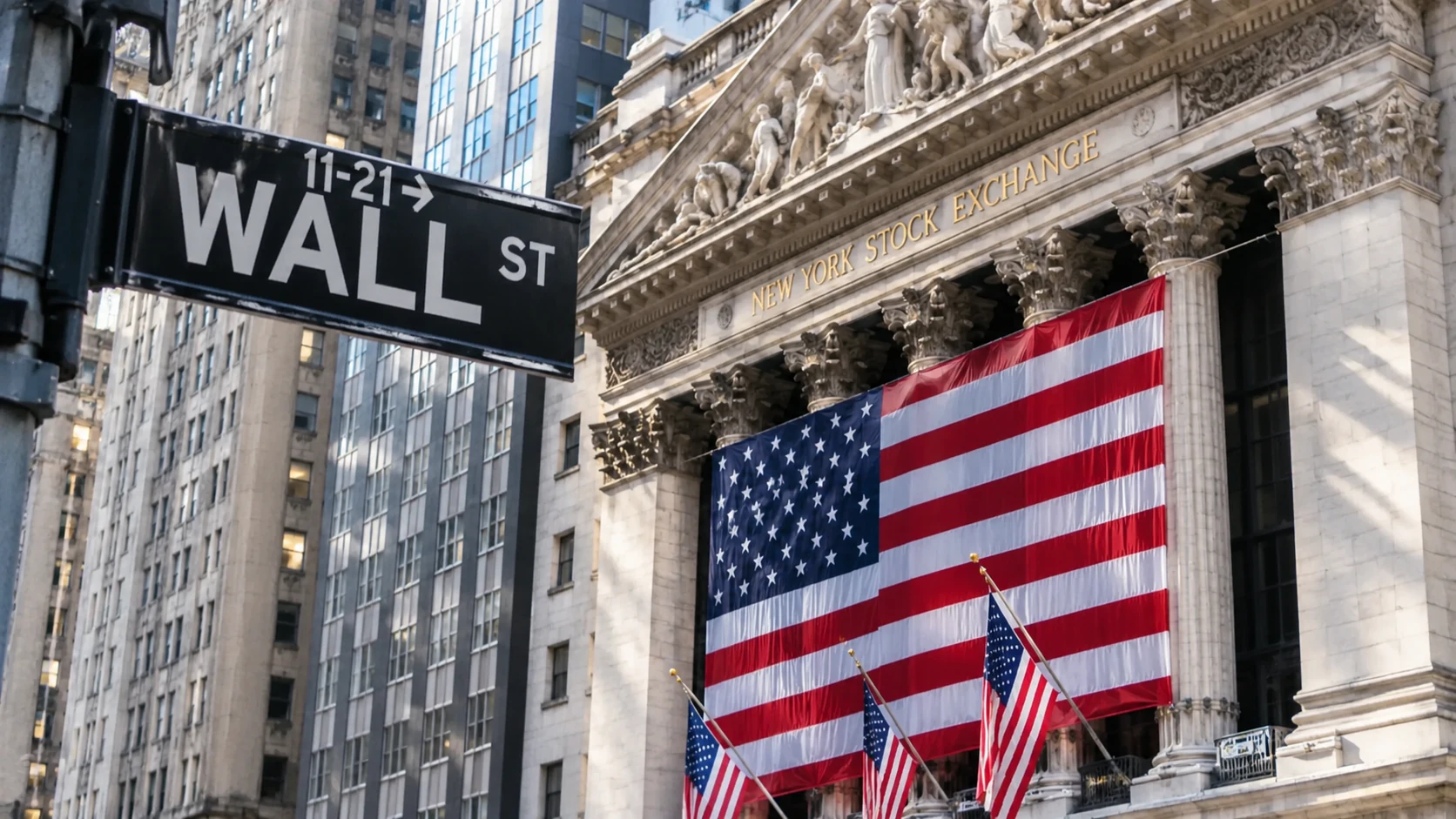
U.S. stocks rose sharply on Monday, November 9, recovering part of the previous week's technology-led selloff as crude oil prices retreated and investors returned to economically sensitive shares. By 11:45 a.m. Eastern time, the S&P 500 had advanced 2.05%, the Dow Jones Industrial Average was up 1.86% and the Nasdaq Composite had gained 2.34%, according to Reuters. The figures were intraday readings, not closing results. The rally was broad, but the divergence within artificial intelligence stocks was unusually pronounced: semiconductor shares recovered while Nvidia continued to fall.
The day's advance followed a difficult week in which concerns about financing expensive data centers, possible regulatory constraints after the U.S. midterm elections and high interest rates triggered a selloff in AI-linked businesses. Monday's move demonstrated that investors were willing to differentiate among companies rather than abandon the entire sector. It did not establish that the correction was finished.
Falling oil prices changed the immediate calculation
The most visible shift in market conditions came from energy. Associated Press reported that Brent crude was down 4.8% to $93.59 a barrel around 12:42 p.m. Eastern time, after trading above $112 at the beginning of the month. The precise price can change throughout the session, but the direction mattered: lower crude can reduce anticipated fuel costs and some of the inflation pressure faced by businesses and households.
The decline followed indications of diplomatic progress in efforts to end the Iran conflict. President Donald Trump told CNN over the weekend that renewed strikes were highly unlikely if negotiations showed progress. That statement reduced some immediate fears of another escalation, although no comprehensive resolution had been announced. Earlier TTN Finance coverage explained the risks surrounding Gulf shipping and oil markets.
For airlines and cruise operators, fuel is a direct operating cost. United Airlines gained 5.9% and Carnival rose 3.4% in the AP midday snapshot. Cheaper energy can also improve consumers' purchasing power over time, although the eventual effect depends on retail fuel prices, wages and broader inflation. An oil decline driven by stronger supply prospects is not economically equivalent to one driven by weakening demand, and the available reporting did not identify a single cause for every dollar of the move.
The broad rally concealed a striking chip-sector divide
Reuters said ten of the S&P 500's eleven principal sectors were positive around late morning. Industrial and consumer discretionary stocks helped lead the recovery. Among semiconductor businesses, Marvell and Broadcom were up approximately 9% and 8%, respectively, while Intel and Qualcomm rose more than 4%. The Philadelphia Semiconductor Index gained roughly 6%, an emphatic bounce after its worst weekly performance since March 2025.
Yet Nvidia, the central supplier to much of the AI infrastructure market, fell 6.2% in a Reuters snapshot and briefly traded at a seven-month low. AP reported a smaller 4.7% decline at a different time. Those figures represent separate moments during the session. Nvidia's board was investigating allegations concerning whether CEO Jensen Huang had been targeted by a foreign intelligence effort; the company said it had no reason to believe secrets had been compromised. The matter is discussed in our separate Nvidia report. Allegations remain unproven and must not be treated as findings.
The contrast matters because an index rebound can conceal major disagreement about individual companies. Shares in AMD, which competes in the AI computing market, rose 11.7% in AP's midday report, reversing some of its decline the prior week. CoreWeave, a cloud infrastructure operator, rose 5.6%, while Nvidia declined. Investors appeared to be distinguishing company-specific governance concerns from the wider debate about demand for AI computing.
Earnings offered another source of support
Individual corporate results contributed to the positive tone. Constellation Energy gained 9.5% after reporting summer-quarter profit and revenue above analyst expectations, according to AP. The company has signed energy-supply agreements connected to major technology customers, so its performance also offered a different angle on the data center investment cycle. Reuters reported that KKR advanced after quarterly profit reached a record.
Earnings breadth is important at a moment when investors worry that a concentrated group of technology names carries too much weight in major indexes. Reuters cited LSEG data showing that 82.4% of the 335 S&P 500 companies reporting by the previous Thursday had exceeded earnings estimates. That is a measure of results relative to forecasts, not proof that all companies are growing at the same rate or that valuations are inexpensive.
Inflation and Treasury yields remain the next tests
The recovery took place ahead of Tuesday's U.S. consumer price index report for October. Investors are especially sensitive to any indication that inflation could keep the Federal Reserve from easing monetary conditions. The market has recently been discussing the possibility of another rate increase following stronger-than-expected employment figures. A lower oil quote is helpful, but it cannot by itself settle the outlook for core inflation, which excludes food and energy.
The 10-year Treasury yield stood near 4.88%, up slightly from 4.86% late Friday, according to AP. It remained well below a level above 5.30% reached in October. Bond yields affect the discount rates investors apply to future corporate earnings, making them especially important for businesses whose valuations depend heavily on profits expected many years ahead. The same financing concerns were explored in TTN Finance's analysis of the previous AI-driven selloff.
A sustainable recovery would require more than one session of relief. Oil diplomacy needs to hold, inflation data must be absorbed by bond markets, and investors still need evidence that expensive AI infrastructure projects can produce sufficient returns. Upcoming results from cloud and hardware companies will provide another measure of demand.
Monday's trading showed a market capable of rallying even as its most influential chipmaker stumbled. That distinction is more informative than treating the session as a simple vote of confidence in artificial intelligence. The immediate relief was real at the times reported; whether it lasts depends on developments that remain unresolved.
Sources and documentation
- Reuters, “Wall St roars back as oil slide eases inflation jitters; Nvidia drops,” November 9, 2026: Original source
- Associated Press, “US stocks rally and recover more of last week's losses as oil prices swing lower,” November 9, 2026: Original source