
A discount is the beginning of the calculation
A used electric car can look compelling beside the price it carried when new. That comparison is only a starting point. The useful question is whether this particular car, with this battery, warranty and charging routine, makes sense at the price available today.
Claims that all used EVs have fallen by half or that dealers cannot sell them need dated evidence. Cox Automotive’s U.S. snapshot for August 2026 reports an average used-EV listing price of $37,441, 44,350 sales and 42 days of supply. It gives 44 days for the broader used market. These are a dated market snapshot, not a price forecast or a description of every model.
A listing average is also different from a transaction price. Changes in the mix of expensive and inexpensive cars can move an average even when the price of an individual model behaves differently. Compare the same model year, trim, mileage and condition before declaring a bargain.
Identify the car before valuing the battery
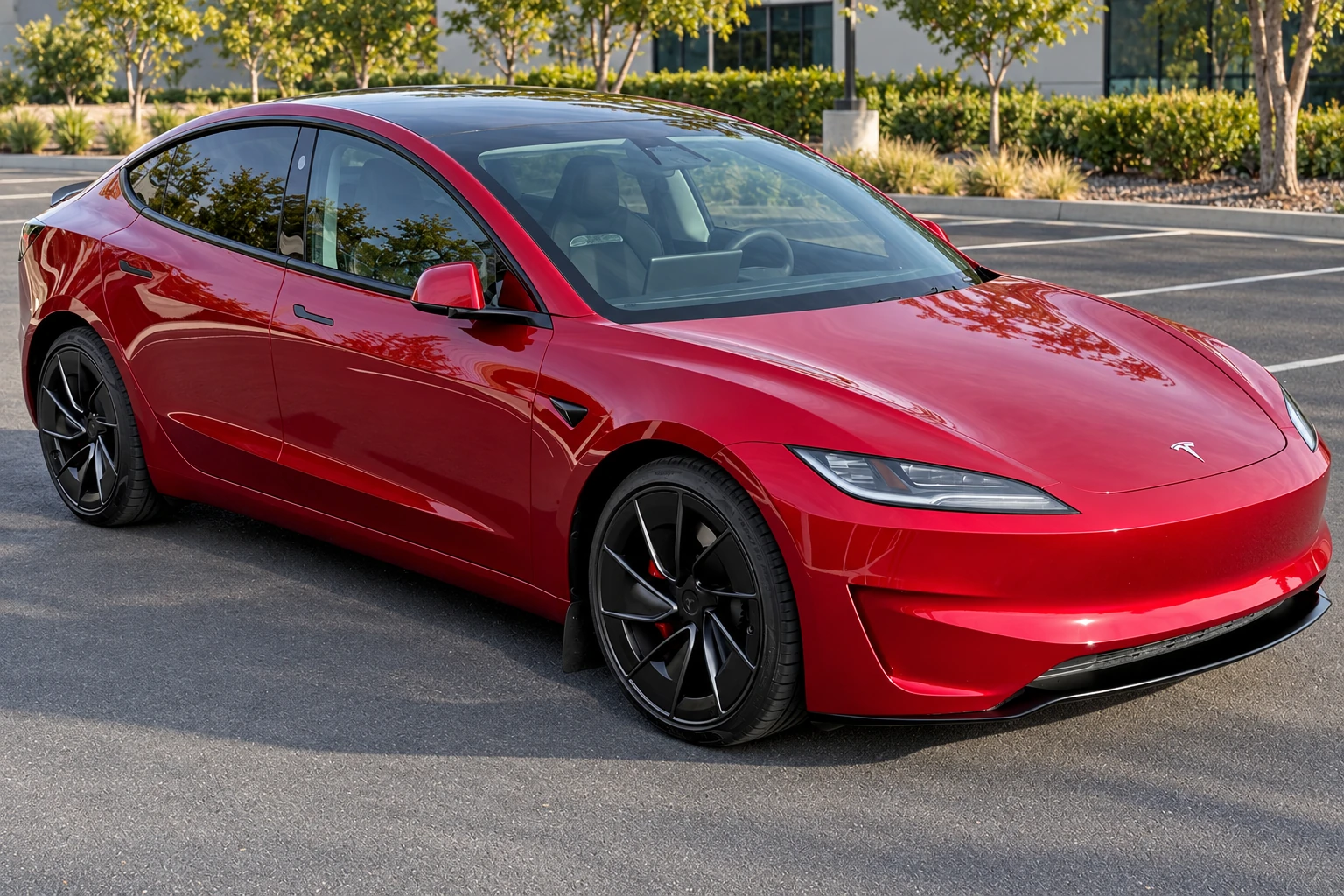
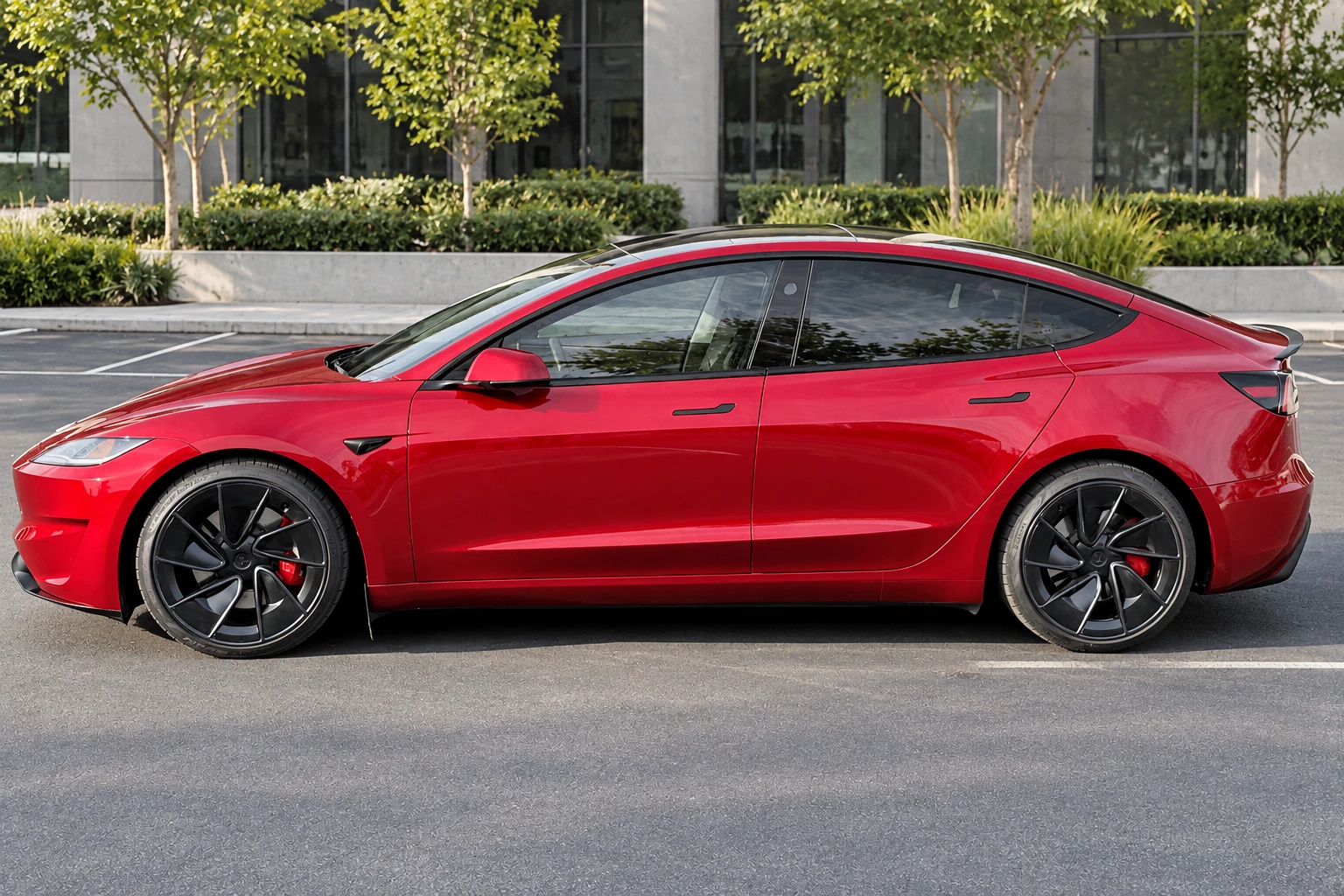
The illustrations here follow one 2024 Tesla Model 3 Performance in Ultra Red, with a black interior and factory 20-inch Warp wheels. It is an example of a specific configuration, not a claim that an old auction result represents today’s market.
Start a real purchase with the VIN, title history, model year and equipment. A battery or trim designation can affect range, charging, insurance and remaining warranty. Photographs help establish identity; they cannot certify the condition of the battery or the quality of an earlier repair.
Ask what any battery-health report actually measures, when it was produced and which method it uses. Check for relevant fault codes and inspect the vehicle with a qualified specialist. The range displayed on the dashboard is not, by itself, a measured capacity test. The EPA label describes standardized energy use and range; real journeys introduce different temperatures, speeds and loads.
Read the warranty attached to this vehicle
Tesla publishes different battery and drive-unit mileage limits across configurations, with an eight-year duration and a minimum 70-percent capacity-retention provision for covered variants. Those headline terms do not tell you how much coverage remains on a particular used car. Original warranty documents, in-service date, mileage and market are the controlling checks.
Obtain the actual terms before assuming that every repair is covered. Ask how coverage transfers, whether exclusions apply and who can perform an eligible repair. A seller’s informal assurance should not replace the written record.

Put charging into the ownership budget
The cheaper car can become the more expensive choice if its charging routine does not fit your life. Establish where you can charge, the tariff, session fees and whether installation is needed at home. Then estimate energy use for your mileage rather than copying a best-case saving from another owner.
Use the EV Charging Cost Calculator for a session and the Depreciation Calculator for alternative resale assumptions. Add insurance quotes, tires, maintenance and a repair reserve. Calculator results depend on those inputs; they do not certify a vehicle or predict its resale price.
A good used-EV purchase is a documented car at a defensible price, with a charging plan that works. The discount attracts attention. The inspection, warranty record and complete ownership budget tell you whether to act on it.
Sources & image references
Updated October 13, 2026. Original analysis; factual references are listed below. All images use the same 2024 Tesla Model 3 Performance reference vehicle. Figures refer to the U.S. August 2026 snapshot; no live listing or universal depreciation claim is implied.
Keep exploring