Deutsche Bank Turns Bullish on US Technology Stocks After October Selloff
Deutsche Bank reversed its recent downgrade after tech stocks lagged. Lower valuations strengthen its case, while AI cash returns remain uncertain.
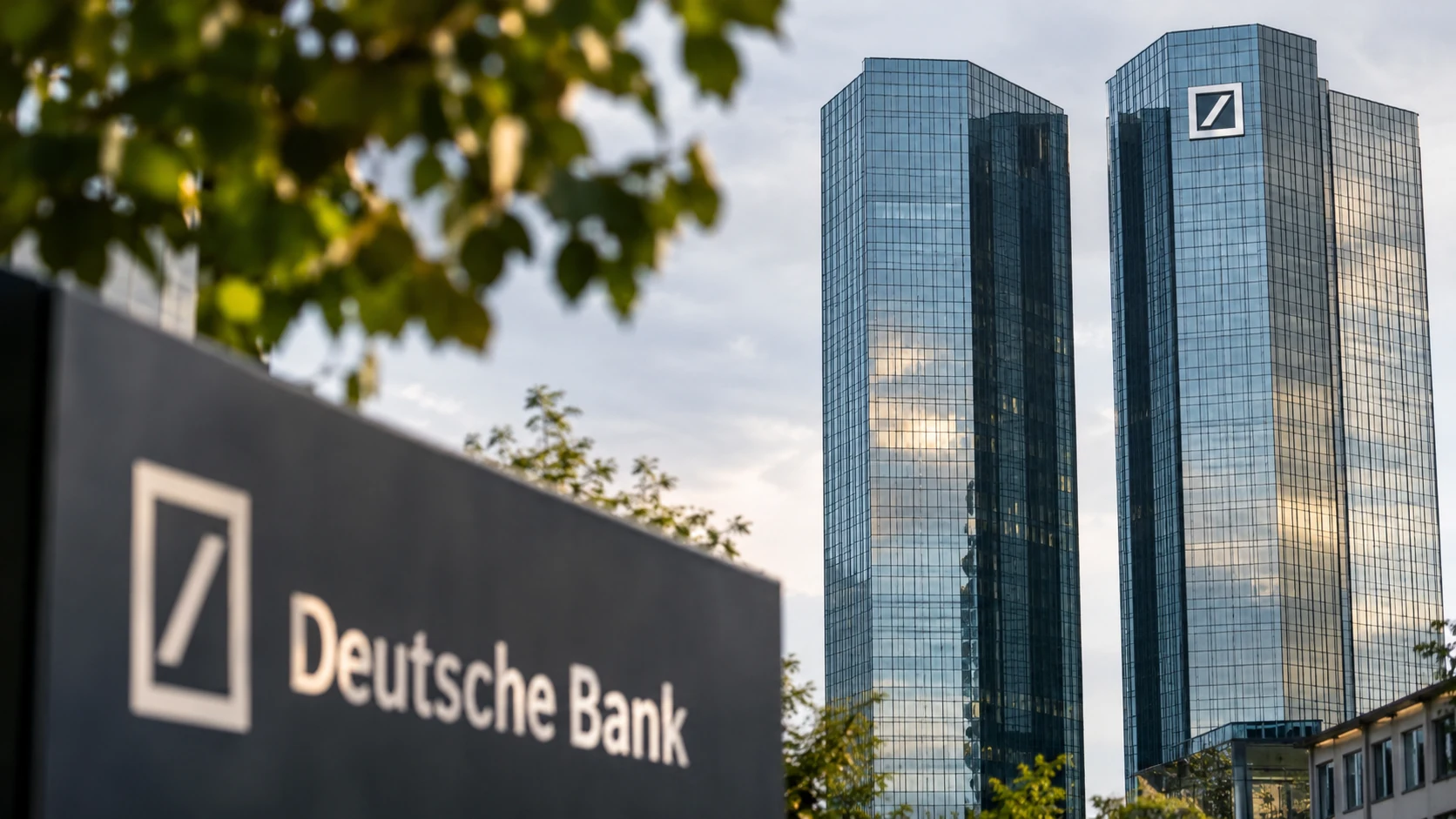
Deutsche Bank has upgraded its view of US technology stocks after a sharp October selloff, reversing a downgrade made only three weeks earlier. Strategists argue that prices and investor positioning now offer a more favourable balance of potential return and risk. The change follows a month in which more than $2 trillion was erased from the Nasdaq 100's market value, according to Reuters.
What changed in three weeks
The recent market decline went beyond routine daily volatility. Reuters reported that technology and mega-cap growth stocks fell roughly 11% over a three-week period, while the rest of the S&P 500 gained close to 6%. That left the growth group more than 16 percentage points behind the broader market excluding those stocks.
Deutsche Bank's argument, as reported by Reuters, is that much of the concern about AI investment costs is now reflected in valuations. The bank also points to lighter investor exposure, meaning fewer portfolios may be positioned for uninterrupted technology-sector gains than earlier in the year.
AI spending remains the central challenge
Large technology groups are building data centres, purchasing advanced processors and expanding energy and networking capacity to support AI services. These projects require upfront investment, often long before customers generate recurring revenue that can be clearly tied to that spending.
Capital expenditure can reduce near-term free cash flow even when a company's reported earnings remain healthy. Investors are therefore increasingly asking not just how much AI infrastructure a company can build, but what economic returns it expects from the additional capacity.
Why investor positioning matters
Investment strategists examine how much exposure asset managers already hold because crowded positions can intensify a selloff. If many investors own similar stocks and decide to reduce risk simultaneously, market declines can become sharper than changes in company fundamentals alone might justify.
Deutsche Bank cited previous technology-sector rebounds from similarly weak relative-performance levels, according to Reuters. The reported historical average gain was around 32%, alongside approximately 30 percentage points of outperformance versus the rest of the S&P 500.
That figure describes past episodes selected by the bank, not a forecast or guaranteed return for today's market. Historical comparisons can be useful context, but the sample and economic conditions matter. Interest rates, company valuations and the scale of AI spending are not necessarily the same as during earlier recoveries.
Earnings may determine whether the upgrade works
The economic backdrop presents additional variables. Bond yields influence the value assigned to future profits, while trade policy, regulation and energy costs can change the economics of AI infrastructure. Those factors could either reinforce or challenge Deutsche Bank's revised view.
Sources and methodology
Primary sources and supporting reporting.