Robot Startup Eka Raises $150 Million to Give Machines a Sense of Touch
Eka Robotics raised $150 million at a $1.45 billion valuation as investors back robots that combine vision with force feedback.
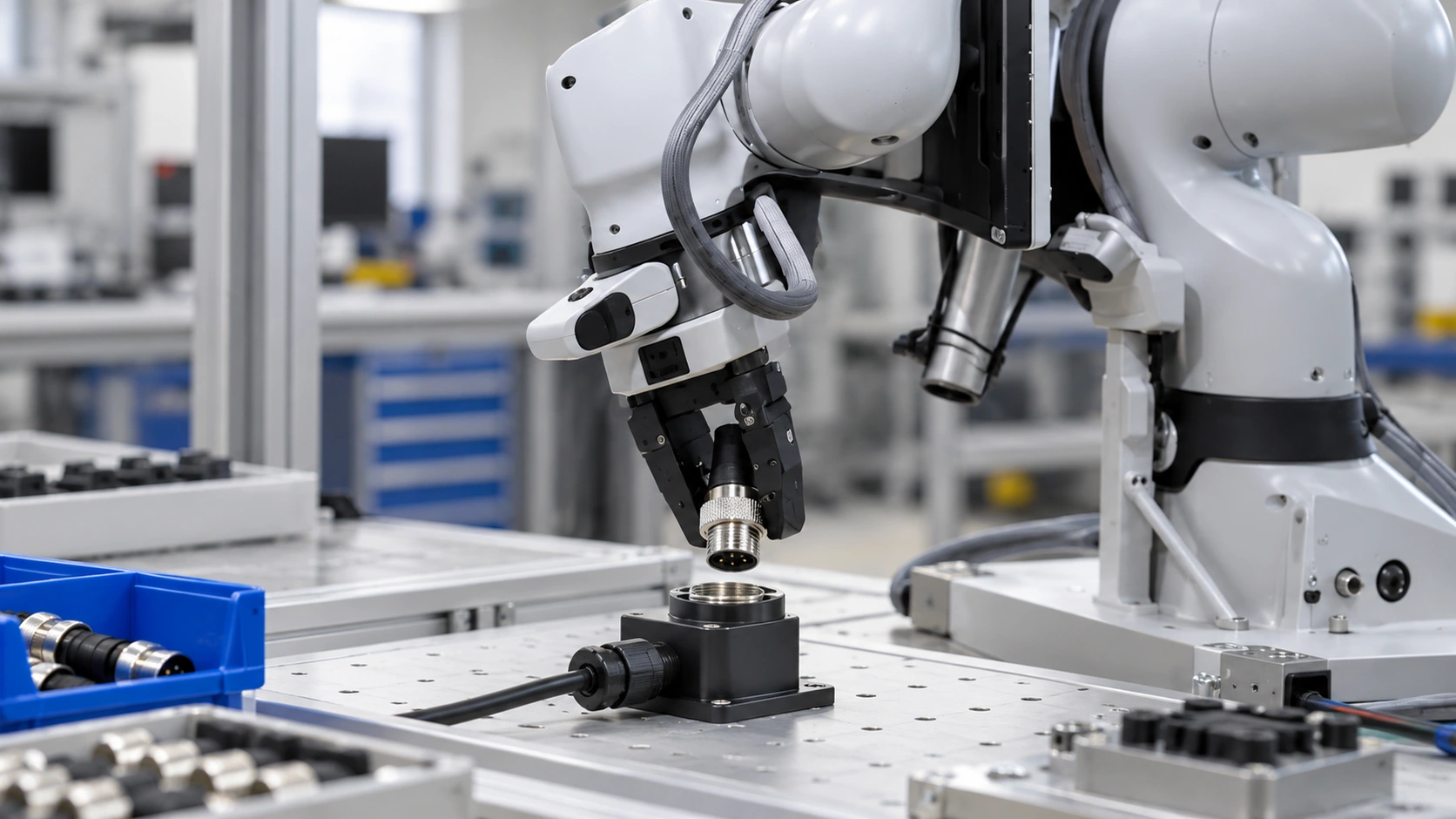
Eka Robotics raised $150 million in Series A financing at a $1.45 billion valuation, TechCrunch reported Tuesday. The funding backs a practical ambition: helping robots handle objects reliably when looking at them is not enough.
The company describes its technology as a Vision-Force-Action model. It combines what a robot sees with information from physical contact, allowing its actions to respond to resistance or a changing grip. Andreessen Horowitz confirmed that it is leading the Series A and outlined the approach in an investment announcement.
Why contact matters on a factory floor
A camera can locate a component, but fitting two parts together requires more information. Resistance can mean that a connector is misaligned, rather than that the robot needs to push harder. A system that responds to that feedback could adjust its movement before damaging the part.
That distinction matters commercially because manufacturers buy dependable output. An impressive demonstration has limited value if a machine frequently stops, rejects usable parts or requires an engineer whenever the product changes. The potential saving comes from reliable operation across the variations that ordinary production creates.
Simulation is a training ground, not proof of deployment
According to a16z, Eka trains manipulation policies through reinforcement learning in physics simulation. The approach lets virtual robots practice variations and recover from failures before the learned behavior is transferred to equipment. The investor also identifies sustained performance through full production shifts as a further test.
The distinction between a laboratory result and a working production installation is central to evaluating physical AI. Buyers need to know how often a system succeeds, how quickly it recovers from an error and how much integration and maintenance it needs. Those costs can outweigh a headline improvement in speed.
A faster demonstration still needs a production denominator
The investment announcement also identifies an important engineering constraint: contact in a simulator must transfer to contact with real equipment. Small differences in friction, material flexibility or actuator behavior can change what happens when a gripper touches an object. Training across many simulated variations is an approach to that problem, not proof that all of those variations have been mastered on a customer's line.
A buyer can test the claim by specifying a job before measuring performance. The evaluation should define which parts are used, how they are presented, the acceptable damage rate and what counts as a completed cycle. Comparing a robot that receives neatly separated parts with a worker handling a mixed container would otherwise compare different jobs. Setup and replenishment time also belong in the operating calculation.
Recovery is another economically important measurement. A failed grasp can cost more than the seconds spent attempting it if a person must stop other work, clear the machine and restart the process. Logging interventions per shift would show whether improved contact sensing reduces that burden. A high peak cycle rate can coexist with disappointing output when interruptions are frequent.
Consider a hypothetical installation that saves handling time but requires new fixtures, guarding and software integration. Its return depends on the full installation bill and the production volume over which that bill is recovered. If the product changes frequently, adaptability could be valuable because fewer engineering changes would be needed. If the task rarely changes, an existing specialized machine might remain the more economical option.
These are purchasing tests rather than forecasts of Eka's results. The financing announcement does not provide a customer-by-customer comparison of installation cost, intervention frequency and lifetime maintenance. Keeping those measures separate from the private valuation gives manufacturers and investors a clearer way to assess the next evidence without assuming that a larger funding round settles the commercial question.
What the financing establishes
The valuation is the price assigned in a private funding transaction. It does not measure customer revenue or establish that the technology is already economical across industries. The funding gives Eka resources to develop its approach; commercial results will depend on the installations that follow.
For readers following industrial automation, the useful next evidence will be customer deployments with clear operating conditions, measured uptime and total cost. Claims about general-purpose capability should be judged against those results rather than treated as a replacement for them.
Sources and methodology
Sources checked October 20, 2026. Reported facts and company expectations are attributed above; analytical explanations are TTN’s interpretation. Cover composition is illustrative; reported facts are checked against the linked sources.