The IMF’s Growth Upgrade Has an AI Dependency
AI investment supports the latest global outlook. The harder question is how much resilience remains if spending slows or borrowing becomes more expensive.
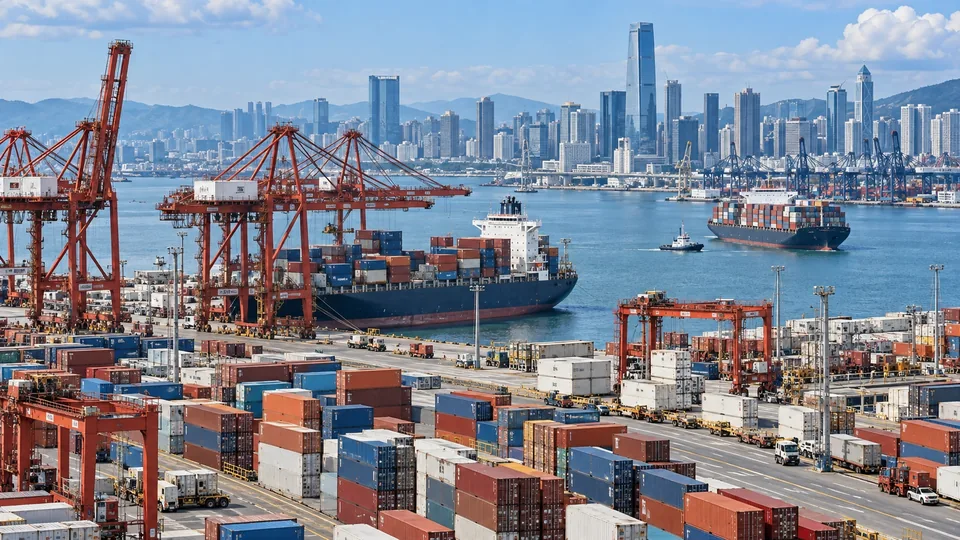
The global economy is getting support from a concentrated source of investment. Reuters reported on October 13 that the IMF raised its 2026 world growth forecast to 3.1%, from 3.0% in July, with AI infrastructure spending helping offset the effects of the Middle East conflict. The agency reported a 3.4% forecast for 2027. Those are projections, not measured full-year outcomes.
The upgrade gives investors a reason to examine the composition of growth. A larger headline number can coexist with fragile businesses, pressured households and weak demand in countries outside the investment cycle. TTN’s assessment is that the durability of the spending matters more than the small upward revision.
Construction creates activity before software proves its value
Building computing capacity puts people and equipment to work before an AI service becomes profitable. A project can support construction, electrical installation and component orders while its eventual customers are still testing applications. That sequence explains why investment can strengthen current activity without settling the debate about future returns.
There is an important accounting distinction. Spending on an asset and the income it later produces belong to different periods. A buyer can make a reasonable long-term investment that weakens near-term cash generation. Equally, activity associated with construction can be real even when the finished project subsequently disappoints.
For companies supplying the build-out, the useful evidence is therefore more specific than enthusiasm about AI. Orders need to become deliveries, deliveries need to become collections, and customer expansion plans need financing. A project announcement is earlier in that sequence than operating revenue.
A stronger aggregate can conceal weaker participation
Consider a hypothetical economy with two sectors. One expands rapidly through a large construction program while the other stagnates. Total output rises, but the typical business outside the construction supply chain may see little improvement. This is an illustration of concentration, not a calculation of the IMF forecast.
The same caution applies across countries. Selling machinery into an investment boom, importing that machinery and paying higher energy bills create different exposures. A global average does not describe those exposures equally, and it cannot substitute for a country’s employment, income or business-investment data.
This matters when assessing companies with international sales. Revenue described as global can depend on a small number of customers in a narrow set of investment destinations. Geography alone does not establish diversification. The underlying source of customer demand may still be the same.
Financing is part of the growth story
If a project depends on repeated access to new funding, its timetable becomes sensitive to financing terms. A higher required return can make an unchanged construction plan less attractive. Management may defer a phase rather than abandon the whole project, spreading the effect across suppliers over several quarters.
Public and private balance sheets should be read separately. A government’s borrowing position does not establish the credit quality of a particular company, and a profitable supplier does not guarantee that every customer can fund its plans. Treating them as one undifferentiated debt problem loses the mechanism that actually matters.
A forecast also rests on assumptions that can change. Investors should distinguish a baseline from an adverse scenario and a change in the level of output from a change in the annual growth rate. Those comparisons answer different questions. A scenario is a conditional calculation, not an announced future event.
What would make the upgrade more convincing
The stronger evidence would be investment followed by useful capacity, recurring demand and productivity gains beyond the companies building the infrastructure. That progression takes time. It should be judged through observed output and costs rather than the number of AI announcements.
For now, the growth upgrade is a sign that the investment cycle is doing economic work. It is also a reason to scrutinize how much work that cycle has been asked to do. A resilient outlook becomes more convincing when its sources of growth broaden, rather than when a single engine must run ever faster.
Sources and reporting notes (2)
Published October 13, 2026. Dated reporting and company disclosures are identified below. TTN’s interpretation is analysis; forecasts, hypothetical examples and vendor claims are distinguished from observed results.
For informational purposes. This article is not investment advice.