Venture Investor Inspired Capital Closes $450 Million Fourth Fund
Inspired Capital’s new $450 million fund adds early-stage investment capacity across technology, health care and industrial businesses.
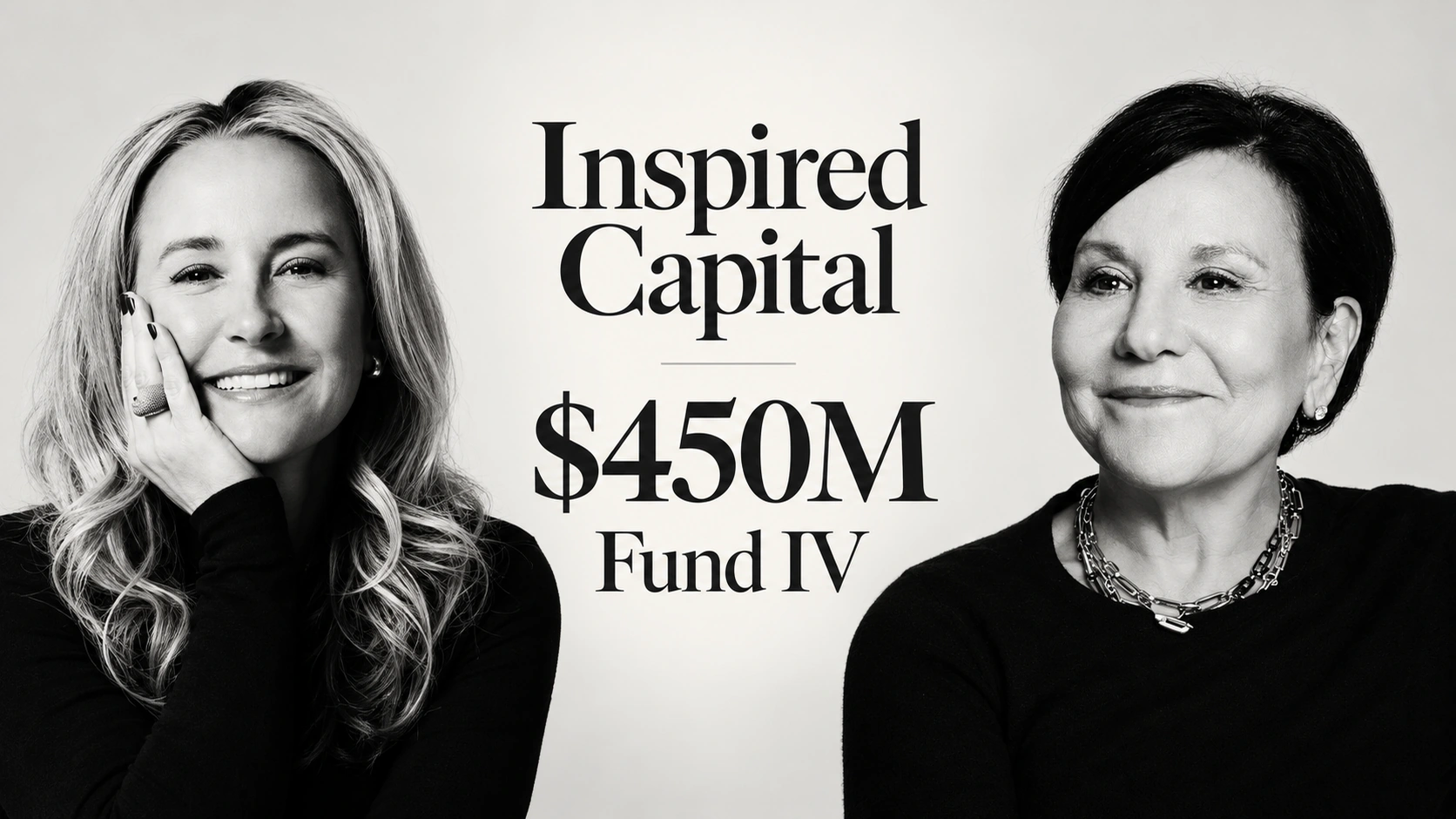
Inspired Capital announced a $450 million fourth fund on Tuesday, adding capital for investments in young businesses. The New York venture firm, founded by Alexa von Tobel and Penny Pritzker, invests across areas including AI, health care, financial technology, defense and robotics.
The firm’s official announcement says Fund IV will back early-stage founders. Its website describes a concentrated investment approach, making fewer than 10 investments a year and committing support to each company alongside the money.
A fund closing is a commitment to future investing
The $450 million figure describes the fund’s size. It is not revenue earned by the manager, a valuation of Inspired Capital or a single investment into one startup. Those distinctions matter when comparing a venture-fund announcement with the financing rounds of operating companies.
Venture funds typically invest over time, building a portfolio rather than immediately transferring the entire headline amount to businesses. The eventual outcome depends on which companies receive capital, the ownership purchased at each price and the cash returned when investments are realized.
The portfolio figures need context
In its announcement, Inspired says 10 portfolio companies have reached billion-dollar valuations. It also says 10 have passed $100 million in revenue, including four above $400 million. These are the firm’s own descriptions of its portfolio, rather than independently audited fund-performance figures.
An operating company can grow substantially while an investment still produces a disappointing return if its entry price was too high or its ownership was diluted. Likewise, a private valuation can change before an acquisition, public offering or share sale turns it into cash. Portfolio milestones therefore answer a different question from realized returns to fund investors.
Concentration changes how the fund should be evaluated
Inspired's website says it leads early-stage rounds with checks ranging from $500,000 to $20 million. That describes the firm's general approach, not a promise that Fund IV will allocate its money in equal installments or use those endpoints for every investment. Dividing $450 million by the number of annual investments would therefore not establish a typical check size.
An initial investment and a follow-on investment also serve different purposes. The first purchases a position in a young company; a later investment can help the fund maintain ownership as that business raises more capital. A manager must decide how much capacity to reserve for existing companies while continuing to find new ones. The closing announcement does not disclose a complete allocation schedule for that decision.
This matters to founders comparing potential investors. The headline size alone does not explain the ownership a manager seeks, whether it will lead a round, what governance rights it requests or how it approaches a future financing. Those details come from the specific investment terms. A larger fund can offer more financing capacity without making every proposed transaction attractive to either side.
For fund investors, private valuations and cash distributions should also be separated. A portfolio company can receive a higher valuation in a new round while the fund has returned no cash from that holding. Conversely, a sale can create a realized return even when it attracts less attention than a unicorn announcement. Entry price, dilution, the size of the original position and the costs of managing the fund all influence the outcome.
A concentrated portfolio makes individual outcomes more consequential. Fewer investments can support closer attention to each company, as Inspired describes, but a small number of disappointments can also carry more weight. Comparing managers therefore requires a consistent view of the investment vintage, realized proceeds and remaining holdings. Counts of successful companies cannot replace that comparison, particularly when they combine businesses funded at different times and at different prices.
What the new capital means for founders
For businesses seeking an early institutional investor, another fund closing creates potential financing capacity. It does not establish that every sector is seeing easier fundraising or that investors have relaxed their standards. A concentrated strategy means the manager can raise substantial capital while remaining selective about individual companies.
The useful follow-up is where Fund IV actually invests and on what terms. Subsequent financings and exits will provide more information about the strategy than the fund’s headline size alone.
Sources and methodology
Sources checked October 20, 2026. Reported facts and company expectations are attributed above; analytical explanations are TTN’s interpretation. Cover composition is illustrative; reported facts are checked against the linked sources.