Phantom brings Kalshi prediction markets to US crypto-wallet users
The rollout connects Phantom Cash to Kalshi event contracts, with identity checks, trading fees and state-specific limits.
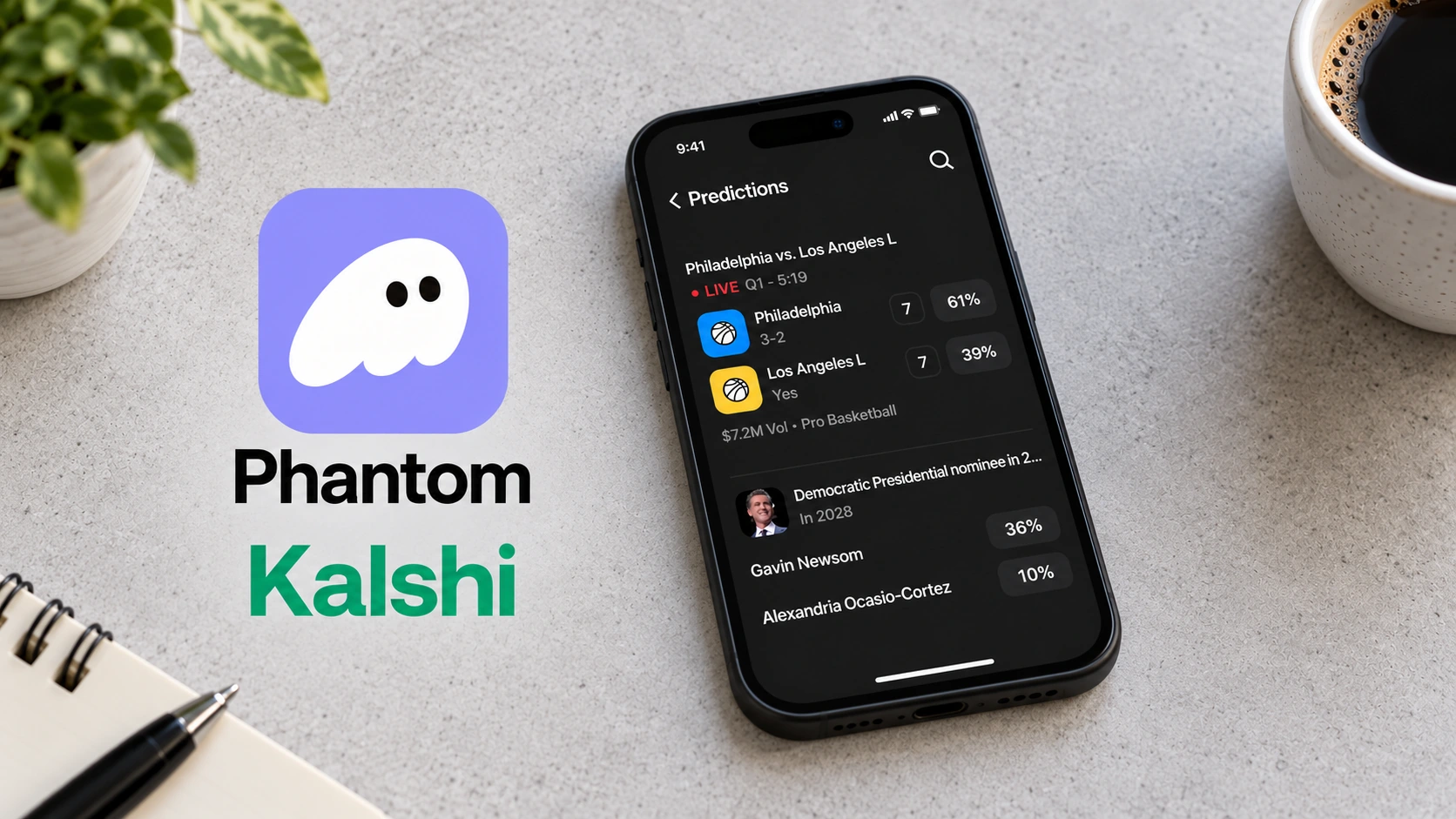
Crypto wallet provider Phantom began rolling out Kalshi prediction markets to US users Friday, adding event-contract trading to an app better known for holding and moving digital assets. The rollout will expand over the coming weeks, The Block reported. The new US arrangement connects a familiar wallet interface with a separate regulated exchange, rather than making Phantom itself the operator of the markets.
Users must complete Kalshi identity verification. The initial funding method described for the launch is CASH, Phantom's dollar-pegged stablecoin, held through Phantom Cash accounts. Funds move to Kalshi for trading and settlement, with withdrawals and winning payouts returning to the user's Cash account. That makes the payment route central to the crypto story, even though the underlying contracts concern real-world events.
A wallet interface does not remove the exchange
Phantom's US help documentation says Kalshi creates and lists contracts, sets market rules, executes trades and determines outcomes and payouts. Phantom supplies the app interface and fund-transfer experience. Understanding that division matters when a user disputes a result or encounters a delay. A familiar balance screen can make several institutions feel like one service while their responsibilities remain distinct.
The product documentation describes positions represented by Solana outcome tokens. Those technical connections do not turn an event contract into a conventional crypto holding. Its value depends on a defined outcome and the contract's settlement terms. Our explanation of prediction markets sets out how that differs from owning an asset whose future resale value remains open-ended.
The small fee has a measurable effect
Phantom's help page lists a combined prediction fee of two cents per contract traded: one cent for Phantom and one cent for Kalshi. Its example puts the charge for 10 contracts at 20 cents. A separate network-related charge can apply to moving money. The app presents the estimated fees before confirmation, so the contract price alone is not the full cost of a position.
Consider a hypothetical contract bought for 50 cents with a $1 payout if the selected outcome occurs. A two-cent purchase fee would raise the initial outlay to 52 cents, before any other applicable charge. The arithmetic is straightforward, but it illustrates why a displayed probability and the economics of a trade are different. Fees and the spread between buying and selling prices affect the result.
Early exit also requires someone willing to buy the position. A displayed gain is not a guarantee that a seller can realize that amount immediately. The help page explicitly describes liquidity constraints on cash-outs. That feature separates an indicative account value from cash already available to withdraw, an important distinction when the interface presents rapidly changing event prices.
US access comes with geographic limits
According to The Block, Phantom initially blocks sports markets in Michigan; sports, elections, politics and entertainment in Nevada; and additional categories in Washington. Those restrictions could change as legal disputes develop. The company told the publication it was comfortable proceeding, but that position should not be confused with a court resolving every dispute over the reach of state gambling laws.
The CFTC's March announcement provides narrower background. Its staff said it would not recommend introducing-broker registration enforcement against Phantom for specified software-related activities, subject to conditions. That is a conditional staff position concerning registration. It is not a blanket legal clearance for every contract, customer or jurisdiction, a distinction discussed in our coverage of the prediction-market jurisdiction dispute.
Phantom's own commercial disclosures identify another relevant incentive: the company receives a share of Kalshi exchange fees and has agreed to give the markets prominent placement for a period after launch. More activity can therefore benefit the platform regardless of a particular user's outcome. Convenient access should be assessed alongside that business model and the terms of the stablecoin used to fund it.
The launch demonstrates a broader shift in crypto wallets toward distributing financial services. The meaningful measures will be how reliably the funding and withdrawal route works, what eligible users can actually access and whether the interface makes costs and responsibilities clear. Expanding the menu of trades is the immediate development; simplifying the underlying financial risks is not an automatic consequence.
Sources and methodology
Sources checked October 23, 2026. Reported findings and company or regulatory statements are attributed in the text; discussion of financial implications is editorial analysis. The generated cover is illustrative.