Polygon Adds Solana to Its Platform for Stablecoin and Bank Payments
Polygon is connecting Solana payments with bank deposits and payouts. The goal is to make stablecoins usable without customers managing the crypto plumbing.
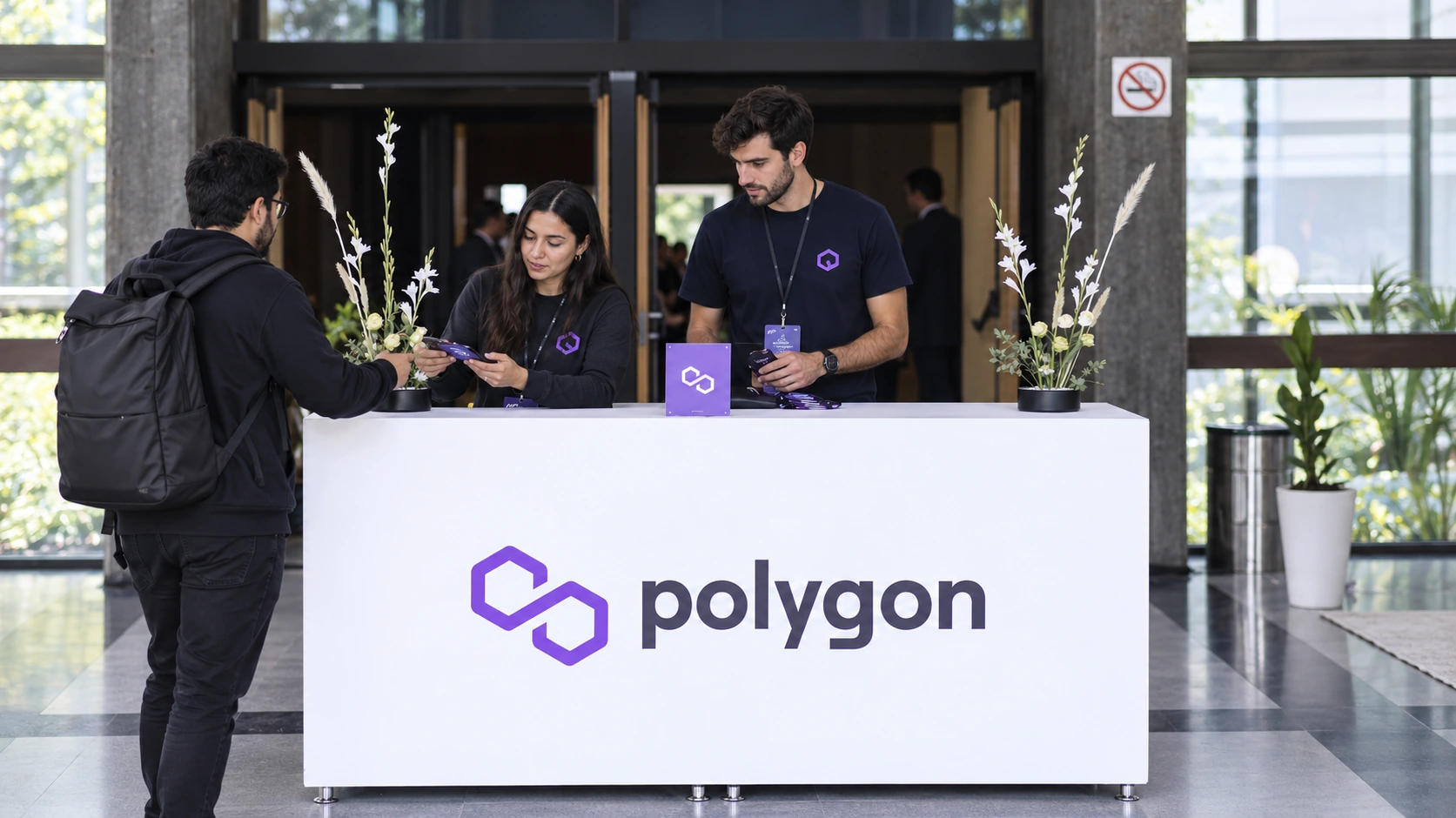
Polygon Labs said Thursday that its Open Money Stack payment platform now supports Solana, giving businesses using that blockchain a route between bank deposits, stablecoin balances and payouts. The expansion targets a practical obstacle to crypto payments: moving a token is different from delivering spendable money to the recipient’s bank account.
The company describes the Solana integration as live, rather than a proposal for future support. Businesses can use the platform to connect incoming payments, wallets, conversion and outgoing transfers. The announcement concerns payment infrastructure around Solana, not a merger of the Solana and Polygon blockchains or a change to their native tokens.
For a business selling across borders, that surrounding infrastructure can matter as much as blockchain settlement speed. A supplier may invoice in dollars, receive a stablecoin and ultimately need local bank money. Each handoff introduces a provider relationship, a conversion or an operational record that someone must reconcile.
Connecting the beginning and end of a payment
Polygon’s launch announcement lists bank transfers, cards, cash and crypto among supported entry routes. It also describes Solana wallet support and routing across Solana, Polygon and other chains. Supported assets in the routing system include USDC, USDT, PYUSD, SOL and wrapped SOL, according to the company.
An application can therefore keep Solana as its settlement network while using Polygon’s services for other stages of the transaction. Polygon says customers can adopt individual components alongside their existing infrastructure. Adding a payment route does not require a business to rebuild every part of its own ledger, wallet or compliance process around one vendor.
The Block reported that Kira is among the first customers using the Solana expansion. Kira helps businesses connect U.S. dollar accounts, stablecoins and international supplier payments. Its role makes the intended use concrete: the recipient needs money in the form required to settle an invoice, rather than necessarily wanting to keep a blockchain asset.
For users, a stablecoin’s backing and redemption arrangements remain relevant after the transfer completes. Payment software can simplify access to conversion services, but it does not make every token equivalent to an insured bank deposit. The issuer, service provider and destination account each perform different roles in the transaction.
Coinme supplies part of the regulated access
The Solana addition follows Polygon’s October 14 announcement that it completed its acquisition of Coinme. Through that U.S. payments business, Polygon said its coverage extends across 48 states, comprising 37 money transmitter licenses and 11 applicable exemptions. It also cited registration with the Financial Crimes Enforcement Network as a money services business.
Those details are more precise than describing the service as having 48 separate state licenses. They also concern the payments business’s regulatory footprint, rather than a blanket approval of every blockchain application or token. Polygon’s accompanying terms say availability depends on applicable law and that configurations may not satisfy every jurisdiction’s requirements.
That distinction matters for customers comparing providers. Technical connectivity and legal access answer different questions. A transaction can be possible on a network while a particular payout method remains unavailable for a customer, destination or business activity. Businesses still need to establish which entity handles their money and which services their agreement covers.
The commercial test is the complete transfer
Polygon’s broader payout materials describe sending funds to bank accounts, cash pickup locations, cards or crypto wallets from a common balance. The attraction is operational consolidation: fewer separate payout integrations and reconciliation files for a payments team to maintain. Its wallet materials also describe creating embedded accounts inside the customer’s own product.
That approach places crypto infrastructure closer to ordinary business cash flow, the same operational concern behind growth in faster bank-payment services. The networks differ, but a business ultimately needs a reliable record of what was paid, what arrived and what the process cost.
The launch does not itself establish transaction volumes or savings achieved by the new Solana route. The useful comparison will include conversion spreads, provider fees, payout availability and the time until a recipient can use the money. Fast blockchain settlement is one stage of that calculation, rather than the finish line for every payment.
Sources and methodology
Sources checked October 29, 2026. Official decisions, company statements and reported findings are attributed in the text. Financial and operational implications are TTN editorial analysis.
- Polygon Labs, October 29: Solana support announcement and supported payment stages
- The Block, October 29 at 9:00 a.m. EDT: Solana integration and Kira customer statement
- Polygon Labs, October 14: completed Coinme acquisition, state coverage and terms
- Polygon: payout methods and operational integration
- Polygon: embedded wallet infrastructure