TikTok Suspends “Musk” Film Account, Adding to Documentary’s Promotion Dispute
The documentary’s distributor is appealing a reported permanent TikTok suspension, putting attention on the boundary between film promotion and political advertising.
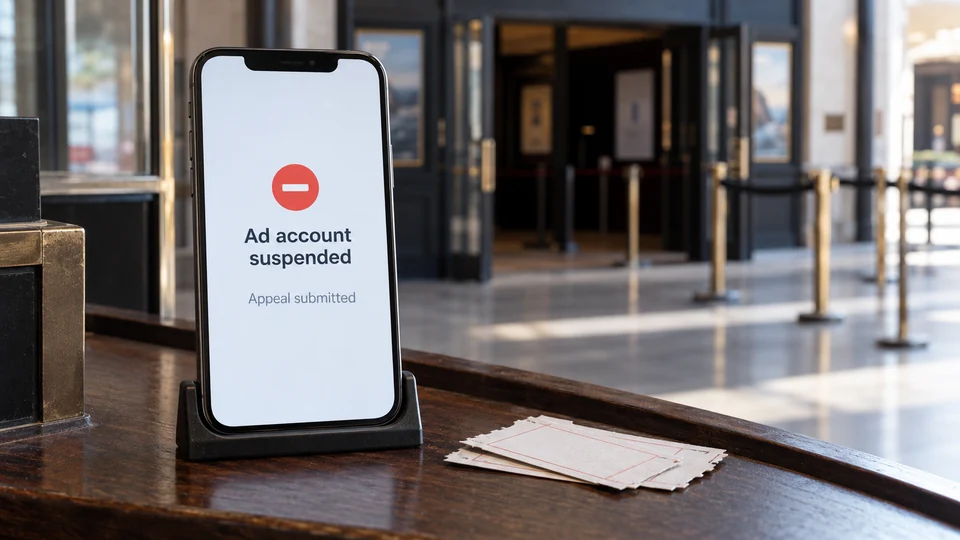
TikTok has suspended the promotional account for Alex Gibney’s documentary “Musk,” according to reports published this weekend. The action adds an account-access dispute to the film’s difficulties buying social-media advertising.
The Hollywood Reporter reported that distributor Bleecker Street had been notified of a permanent suspension and was appealing. Follow-up reporting in The Verge and Gizmodo described TikTok’s stated political-policy concerns. The publicly available accounts reviewed for this article do not identify a complete set of posts or a detailed enforcement record.
An account restriction is wider than an ad rejection
Rejecting a particular advertisement prevents that paid placement. Suspending the account used to promote a film can also disrupt the distributor’s ability to maintain a presence and communicate with an audience through that account. Those are distinct decisions with different commercial consequences.
The Verge reported that Meta and YouTube had reversed earlier advertising rejections, while TikTok and X had continued to refuse paid promotion. That history does not establish that the platforms applied identical policies or examined identical material.
The film concerns Elon Musk, whose business activities and political role make the boundary between entertainment marketing and political messaging especially consequential. The reporting does not establish that Musk directed TikTok’s decision.
What TikTok’s published rules say
TikTok’s advertising policy, last updated in July 2026, prohibits paid political advertising. The rule extends beyond conventional ad placements to compensated branded political content and promotional tools. It includes advocacy concerning officials, public policy and electoral processes.
The same policy distinguishes unpaid political discussion from paid promotion: organic political content may be shared subject to the Community Guidelines. That distinction does not provide a blanket exemption for a movie advertisement, nor does the advertising policy alone explain the removal of a particular account.
Assessing this enforcement action would require the relevant content, the precise policy applied and the reasoning supplied during review. A general rule is evidence of the platform’s published standard, not proof that a specific decision was correctly made.
A campaign can lose access without a measurable sales estimate
An advertising budget records money allocated or spent; it does not directly measure the value of an account's audience. A distributor may use unpaid posts, paid placements and other publicity together. If one channel becomes unavailable, spending might be redirected, delayed or left unused. The resulting commercial effect depends on whether another channel reaches the intended viewers at a comparable cost and time.
That makes a counterfactual especially difficult. Ticket sales following a suspension cannot be assigned wholly to the platform's decision, because reviews, release schedules and other promotion also influence demand. A credible estimate would need a stated method and evidence about what would otherwise have happened. The reports reviewed here do not provide that foundation.
The appeal is relevant for a different reason: it could clarify whether the restriction is maintained, narrowed or reversed and which rule the platform says applies. A reversal would not by itself establish that earlier lost exposure was fully recovered. An upheld suspension would not by itself demonstrate that the distributor's interpretation was unreasonable.
For readers following the dispute, the most informative evidence would be the enforcement notice, the content at issue and a substantive appeal response. Each would reduce uncertainty about the decision. Until such evidence is available, describing the restriction and attributing the competing accounts is more reliable than assigning a political motive or calculating an unsupported revenue loss.
Distribution risk extends beyond the advertising budget
For a film distributor, launch timing matters. Losing access during a release campaign can interrupt a planned route to viewers, even if an appeal later succeeds. No independently verified estimate of lost ticket sales is available in the material reviewed here.
The episode also illustrates a broader dependence on platform decisions, alongside the publisher-access issues examined in The report on Meta’s revised commercial terms. The mechanisms differ, but both affect how a media business reaches or monetizes an audience.
The next substantive development would be a decision on the appeal or a fuller explanation of the suspension. Until then, the available evidence establishes a contested restriction, not the motive behind it or a measured effect on the film’s financial performance.