Waymo and Toyota Pick the bZ4X for a Robotaxi Push Beyond the US
Toyota will build Waymo-equipped bZ4X vehicles in Japan. Testing starts in 2027, while fleet size, launch locations and commercial timing remain open.
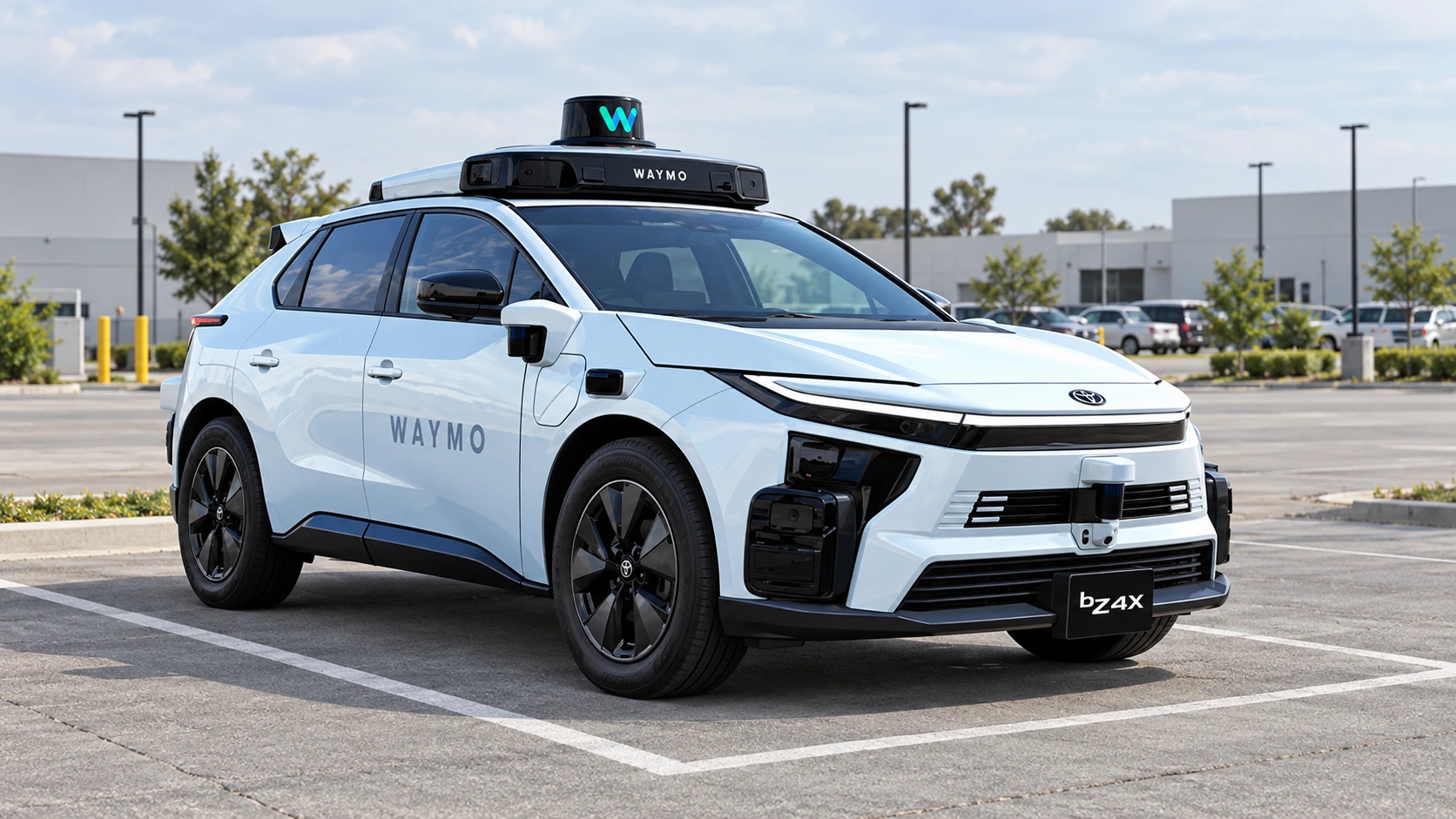
Waymo and Toyota outlined a manufacturing and testing plan Friday that moves their robotaxi partnership beyond an exploratory agreement. Toyota will build a Waymo-equipped version of its bZ4X electric vehicle in Japan, with initial testing and validation planned for 2027. The announcement gives the project a vehicle and a production site, while leaving important commercial questions unanswered.
The distinction between a testing milestone and a launched ride-hailing service is central. A factory can prepare vehicles before a fleet is ready to carry paying passengers across a defined area. Neither a future test date nor an announced international ambition establishes that the companies have completed the operational work required for a commercial service.
Manufacturing joins the autonomous-driving plan
Toyota said assembly and integration of Waymo’s autonomous-driving hardware will happen at its Takaoka plant in Toyota City, Aichi Prefecture. Bringing those steps under one roof makes the manufacturing arrangement more specific than a plan to adapt finished vehicles elsewhere. The companies also identified automatic doors, a powered liftgate and additional rear-seat space as features of the proposed vehicle.
The commercial significance lies in repeatability. A fleet operator needs vehicles it can acquire, maintain and replace consistently, rather than a collection of individually adapted prototypes. Integrating hardware into a factory process can support that goal, but the announcement does not quantify the cost reduction, production rate or maintenance savings it will deliver. Those outcomes remain to be demonstrated.
This is also a different kind of AI investment from buying additional computing capacity. Hardware, software and manufacturing have to function as one transport system. TTN’s discussion of the economics of deploying physical AI offers a relevant comparison: a working demonstration and a repeatable business operation answer different questions about reliability and return on investment.
Japan comes before broader deployment
The companies’ sequence begins with Japanese testing and validation in 2027, followed by planned deployment in the United Kingdom and other Waymo-serviced markets in subsequent years. The announcement does not give a universal launch date. Reading the sequence as an immediate international rollout would erase the development and validation stage that the companies explicitly describe.
Reuters reported that Waymo co-CEO Dmitri Dolgov identified Japan and Britain as the initial right-hand-drive markets. The companies did not disclose the starting fleet size or Japanese operating locations, and Toyota executive Hiroki Nakajima described a small initial operation. Reuters also reported that Waymo’s existing Jaguar I-PACE testing program in Japan would continue toward a planned 2027 pilot.
Those missing details affect the scale of the opportunity. A limited test fleet can establish useful engineering evidence without producing a meaningful commercial revenue stream. The number of vehicles, service geography, available operating hours and eventual utilization would all be needed to evaluate a transport business. Friday’s announcement provides a direction for expansion, rather than enough information to calculate its economics.
Level 4 describes a bounded operating capability
Toyota describes the collaboration as targeting Level 4 autonomous vehicles. Under the US National Highway Traffic Safety Administration’s explanation, Level 4 systems perform the driving task within limited service areas without requiring occupants to drive. That is different from Level 5 automation, which is defined as universal operation across conditions and roads. The distinction prevents a limited deployment from being mistaken for unrestricted autonomy.
Driver-assistance features sold in ordinary cars create another potential source of confusion. A system that helps steer or control speed can still require an attentive driver. An autonomous ride-hailing fleet has a different operating model and validation burden. The use of a recognizable Toyota model does not mean a retail buyer will receive Waymo’s driverless capability by purchasing a standard bZ4X.
The companies continue to explore technology for personally owned vehicles, but that remains a separate strand of the collaboration. Their original April 2025 announcement proposed exploring both an autonomous platform and applications for private vehicles. Friday’s factory and test plan makes the fleet project more concrete; it does not turn the private-car research into an announced consumer product.
The investment test comes after the vehicle announcement
For Alphabet shareholders, Waymo’s expansion offers another way to assess the company’s long-term AI spending. It reaches beyond selling advertising or cloud services into operating a physical service. The relevant costs include vehicles and sensors, plus the work needed to keep a fleet usable. Friday’s materials provide no project revenue forecast, vehicle purchase volume or profitability timetable.
That limits what can reasonably be inferred about near-term earnings. A manufacturing partnership can remove an obstacle to scaling while leaving demand, cost and operational questions open. TTN’s analysis of AI investment and financing costs explains why the cost of capital also matters when projects require substantial spending before their returns are visible.
The next milestones are therefore practical: the start of validation, confirmation of operating locations and fleet size, and a clearer transition from testing to service. Toyota and Waymo have advanced the project from a preliminary intention to an identified vehicle and factory arrangement. Investors and potential passengers will need those subsequent disclosures to judge how quickly it becomes a functioning international ride-hailing business.
Sources and methodology
Sources checked October 30, 2026. Official decisions, company statements and reported findings are attributed in the text. Financial and operational implications are TTN editorial analysis.