Exxon and Chevron Beat Earnings Forecasts as Refining Profits Surge Despite Lower Brent Prices
The oil giants benefited from powerful refining margins even as weaker crude prices complicated the outlook for producers.
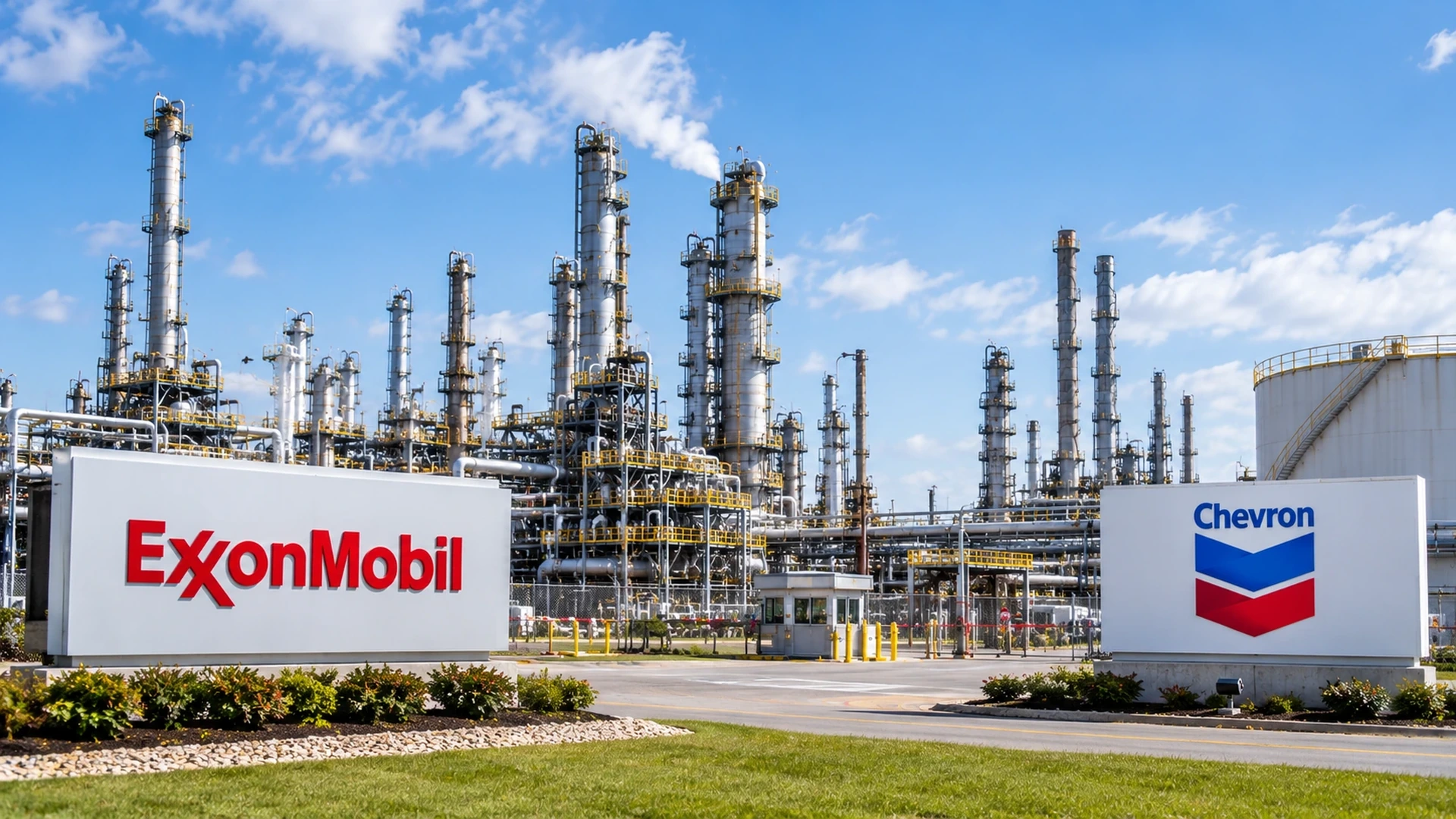
ExxonMobil and Chevron reported stronger-than-expected third-quarter results on October 30 as unusually profitable refining operations helped offset pressure from lower crude oil prices. The performance illustrates an important distinction in the energy industry: a falling Brent benchmark does not necessarily translate into weaker earnings for companies that convert crude into gasoline, diesel and aviation fuel. When the supply of refined products is tight, the value of operating a reliable refinery can increase substantially.
Refining margins drove the story
Related TTN Finance coverage examines how our coverage of BP’s quarterly results shape the energy market.
A refinery earns money by processing crude oil into products that can be sold to wholesalers and distributors. Analysts often track the relationship between fuel prices and crude input costs through refining margins or crack spreads. These margins are not identical to a company’s realized profit because energy, labor, maintenance and logistics expenses still matter. Nevertheless, they provide a useful view of operating conditions. Supply disruptions affecting fuel production and transportation supported margins during the quarter.
ExxonMobil reported approximately $17.5 billion in adjusted earnings, or $4.23 per share, above analyst forecasts. It reported roughly $15.4 billion under generally accepted accounting principles. Those two measures should not be confused: adjustments can exclude items management considers unrepresentative of ongoing operations. The company also reported strong operating cash flow and substantial shareholder distributions, reflecting its ability to generate cash across different parts of the energy value chain.
Chevron reported approximately $10.4 billion in adjusted earnings, or $5.28 per share, beating the market consensus. Its reported earnings under GAAP were approximately $9.9 billion. The company highlighted strong utilization of its US refining system, which allowed it to capture favorable product margins. Utilization is particularly relevant when a disruption elsewhere reduces the amount of fuel available in the marketplace.
Why Brent and diesel can move differently
Brent is a benchmark for crude oil, not a direct price for the fuel a truck operator or airline purchases. Even if crude becomes cheaper, outages at refineries or restrictions on fuel supply can keep refined-product prices elevated. In that environment, integrated energy companies may experience weaker upstream margins but stronger downstream earnings. That diversification helped the two US majors during the period.
Consumers often expect gasoline prices to move immediately when oil prices decline. In practice, pump prices reflect refinery output, transport costs, inventories, taxes and retail conditions, as well as the price of the underlying crude. Diesel is especially important for freight, farming and industrial activity. Sustained shortages or high diesel prices can raise operating costs throughout the broader economy, even if the Brent benchmark does not rise by the same amount.
Geopolitical disruption has uneven effects
The global fuel market is sensitive to refining outages, changes in trade routes, attacks on energy infrastructure and shipping constraints. A refinery operating safely outside a disrupted region may benefit from higher product prices. But the same market volatility can affect demand, procurement, insurance and distribution. A quarterly windfall should therefore not be treated as a permanent improvement in economics.
This distinction is particularly relevant for investors comparing ExxonMobil, Chevron and companies specializing in either crude production or refined products. Integrated groups combine businesses whose profits respond differently to input and output prices. Their results can be more resilient, though they remain exposed to commodity markets, geopolitical events and capital-intensive operations.
What investors should monitor
The durability of current margins is the central question. Repair work at damaged facilities, a shift in consumption or a change in trade flows could restore fuel supply and narrow the spread between refined products and crude. Meanwhile, an increase in Brent prices without a comparable increase in fuel prices could squeeze refiners even while helping upstream producers. Operational reliability, refinery maintenance schedules and cash flow after capital spending will also shape coming quarters.
Investors should separate the effects of temporary supply disruption from changes produced by efficiency, scale or lower operating costs. The two companies may continue to benefit from diversified portfolios, but earnings forecasts should not simply extrapolate one exceptional quarter. Their latest results offer a clear lesson for the broader market: energy is not a single price, and oil-company profits depend on where a business operates within the chain from extraction to the final customer.
Quarterly adjusted earnings should also be compared with cash generation and capital expenditure. A strong accounting result can look less impressive if a company must spend heavily to maintain refining capacity or replace aging infrastructure. Investors therefore need to consider free cash flow alongside refining margins, rather than treating any one earnings figure as the complete picture.
Sources and methodology
Primary company statements and technical documentation; market interpretation is TTN Finance editorial analysis.