Marvell Agrees to Buy Lumentum in $115 Billion AI Connectivity Deal
The proposed all-stock combination joins custom chips with optical networking, placing a $115 billion enterprise value on a larger AI infrastructure supplier.
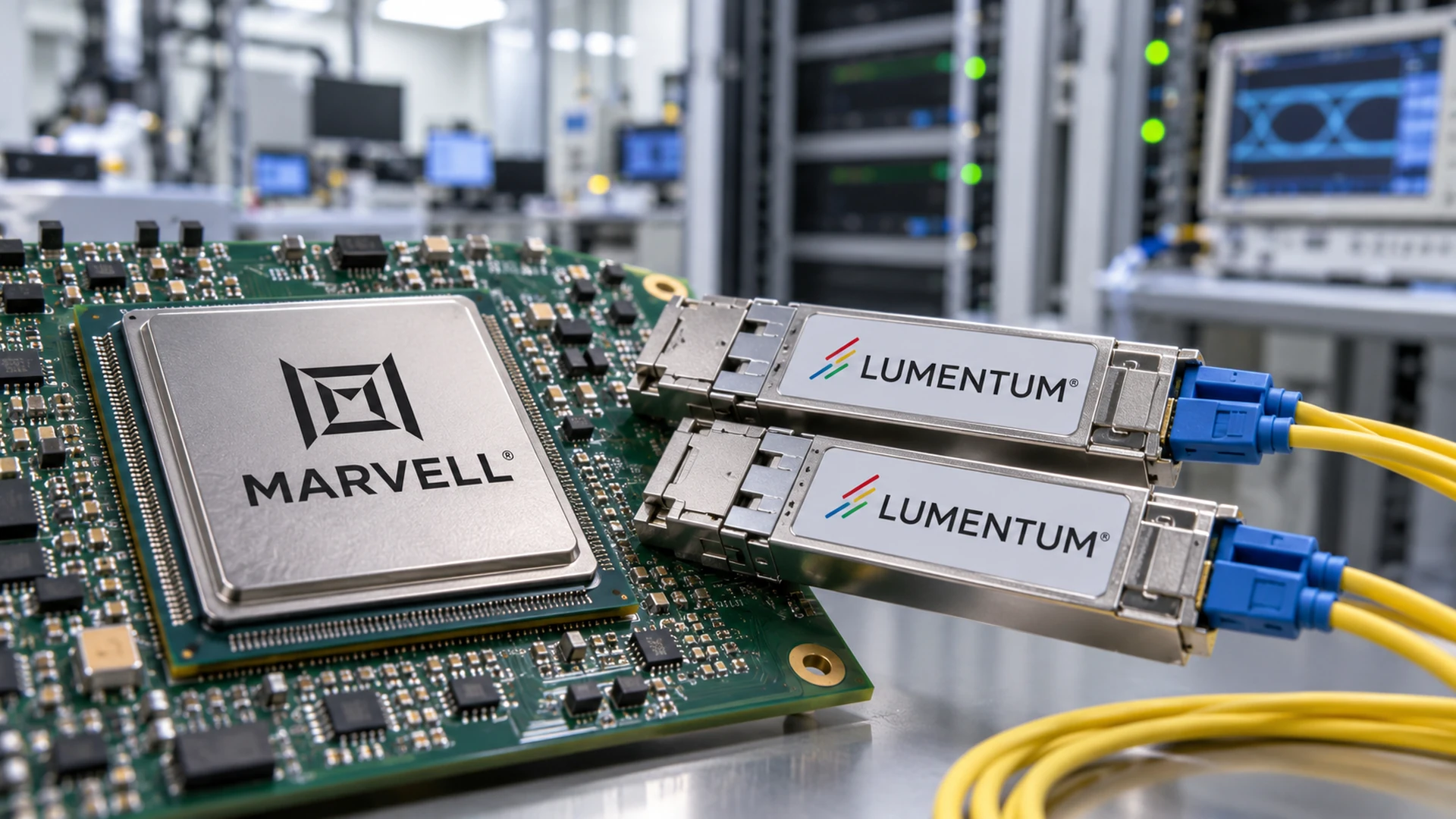
Marvell Technology has agreed to buy Lumentum Holdings in an all-stock transaction valued at approximately $115 billion including debt, making optical connectivity a central bet on the next stage of artificial-intelligence infrastructure. The agreement announced on November 2 brings together Marvell’s custom processors and networking chips with Lumentum’s lasers and optical components. The price is an enterprise-value figure, not a cash payment to shareholders, and the transaction remains subject to approvals before it can close.
Reuters reported an equity valuation of about $102.54 billion and an implied offer of roughly $1,132 for each Lumentum share, representing a premium of 23.9 percent to the October 28 closing price before reports of advanced talks. Lumentum shareholders are due to receive Marvell shares rather than cash. The fixed exchange ratio of 4.5 Marvell shares for every Lumentum share makes the eventual market value sensitive to the acquiring company’s stock price.
The distinction matters because an all-stock acquisition does not require the buyer to finance the headline price with cash or new debt in the same way as a cash takeover. Instead, existing Marvell holders would share ownership of the combined company with Lumentum investors. Both sides therefore remain exposed to the market’s verdict on the future earnings power of optical networking and the costs of integrating two highly specialized businesses.
Why optical links matter for AI
The computing challenge at a large AI data center is not limited to the speed of any single accelerator. Thousands of processors must exchange information rapidly, and the cables, switches and optical equipment connecting them can become bottlenecks. As data-center operators deploy ever-larger clusters, improving the flow of information can be as important as adding more chips. Lasers and optical transceivers help carry that data across distances where electrical connections become less practical.
Marvell already sells networking silicon and participates in the design of custom chips for major cloud providers. Lumentum supplies optical technology used to move signals through networks. Combining the portfolios could let the group offer a more complete set of components for AI facilities, though customers would still evaluate cost, performance, availability and whether integrated suppliers offer better economics than independent competitors.
The valuation and the risk
The purchase would be Marvell’s largest transaction and would substantially reshape its business. Reuters said the companies see an addressable market as large as $550 billion, a forward-looking industry estimate rather than contracted revenue. Such figures can help explain management’s strategy, but they should not be confused with sales already earned or a reliable measure of the eventual merger’s return on investment.
The enormous valuation amplifies execution risk. Product roadmaps, manufacturing supply arrangements, overlapping customer relationships and research teams will all need to be coordinated. Optical technology moves quickly; a design victory today can lose value if a rival finds a more efficient architecture or if major cloud providers change the way they build clusters. Regulators and shareholders must also review the proposed combination before completion.
What investors should watch next
The most useful milestones are the formal shareholder disclosures, the timing of regulatory decisions and updates to closing conditions. Management will also need to quantify expected cost savings and any revenue opportunities without treating potential sales as assured. Because the consideration is stock, changes in Marvell’s share price could alter the effective value received by Lumentum investors while the deal is pending.
Marvell’s strategy also fits into a wider surge of capital expenditure by large technology firms. TTN Finance has covered how cloud operators are diversifying AI compute infrastructure and why energy demand can constrain data-center expansion. Faster optical links may ease one bottleneck without resolving the others, including power, cooling or the commercial economics of AI services.
Sources and methodology
Primary sources and supporting reporting.